
Beginner, Intermediate, or Master Quilter: How Do You Know Where You Belong?
I've been quilting long enough that I should comfortably qualify as an intermediate quilter. At least, that's what I tell myself. I've completed quilts, learned a variety of techniques, accumulated a respectable collection of tools, and developed enough knowledge to recognize when something isn't going quite right.
And yet, there are days when I look at my work and wonder whether I've progressed nearly as much as I should have.
It's not that I don't know how to quilt. I do. I understand the fundamentals, can follow patterns, make adjustments, and occasionally figure things out without instructions. I've even become rather good at identifying mistakes, particularly after I've sewn an entire row of blocks together.
It's the comparison that gets me.
I see what other quilters are creating, look back at my own projects, and wonder why mine don't look quite as good. Why my points aren't always as precise. Why my fabric choices don't seem as inspired. Why something that looked wonderful in my head didn't translate quite so beautifully into the finished quilt.
And then there's the familiar thought that accompanies nearly every completed project.
I could have done that better.
Which has me wondering what actually separates a beginner from an intermediate quilter, and an intermediate quilter from someone we might consider a master.
More importantly, who gets to decide?
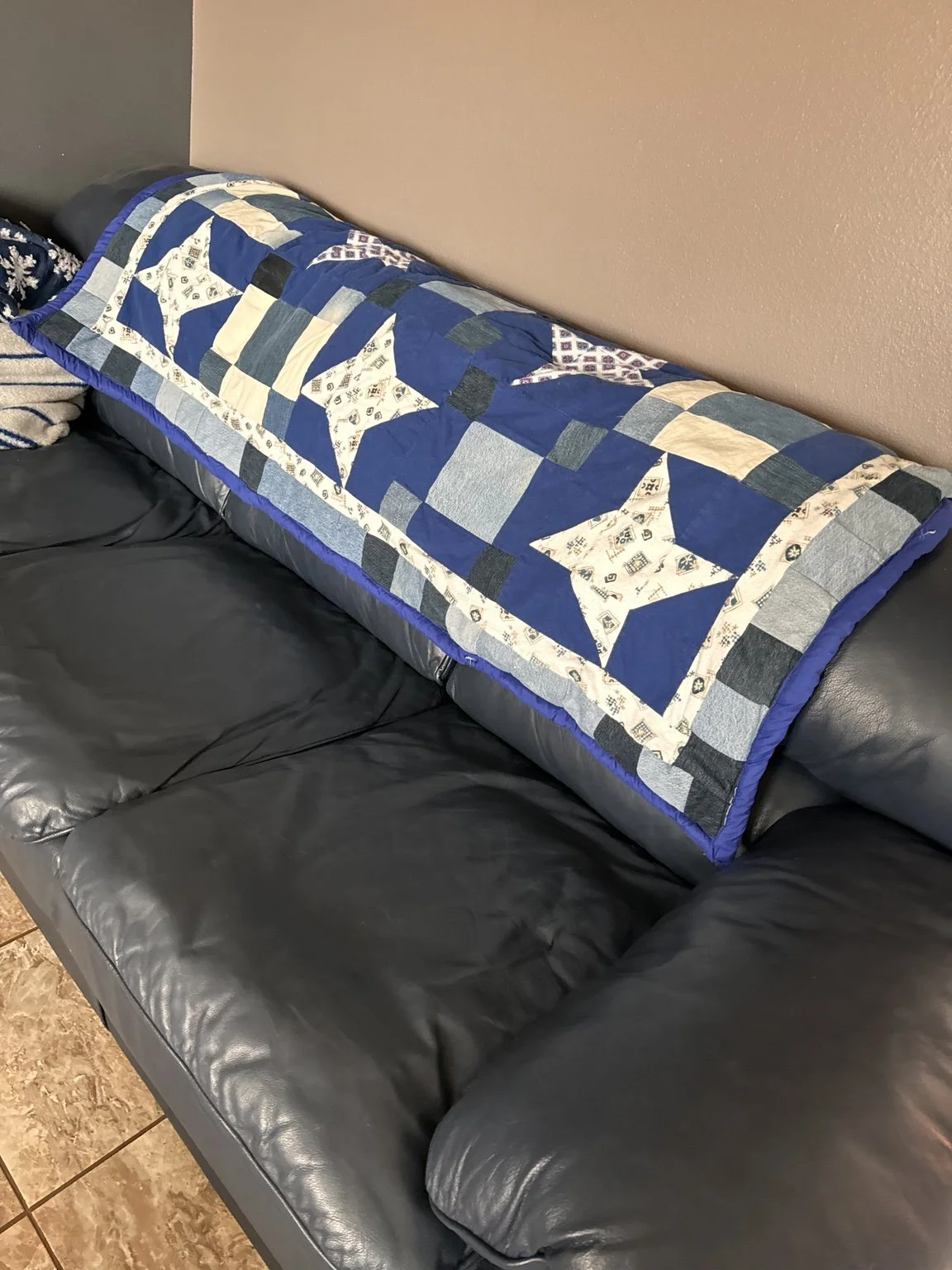
My very first quilt
What Makes Someone a Beginner?
When I think about a beginning quilter, I picture someone learning the fundamentals: cutting fabric accurately, maintaining a quarter-inch seam allowance, understanding how blocks are constructed, and discovering that pressing and ironing are apparently two different activities.
There's a lot to learn before the first quilt is finished.
But even the definition of beginner becomes complicated when you consider how many different skills fall under the general heading of quilting.
Someone who has sewn clothing for thirty years might be making their first quilt. They're certainly not inexperienced with fabric or a sewing machine, but piecing quilt blocks introduces a different set of considerations.
Likewise, someone might have made dozens of quilts using traditional piecing methods but never attempted foundation paper piecing, needle-turn appliqué, or curved seams.
Does that make them a beginner?
Not necessarily. It makes them inexperienced with those particular techniques.
And I think that's where our categories begin to lose some of their usefulness.
Somewhere in the Middle
Intermediate is where I believe I belong.
I can construct a quilt. I understand how the pieces fit together, why accurate cutting matters, and what happens when a quarter-inch seam allowance becomes more of a suggestion than a measurement.
I've worked with piecing, appliqué, embroidery, and hand quilting. I've learned to use different tools and techniques, and I'm increasingly comfortable making changes to patterns or figuring out how to construct something myself.
There's also an aspect of quilting where I feel considerably more confident, and that's understanding and explaining the process.
I can discuss different construction techniques, explain how they work, and help someone understand why one approach might be preferable to another. I enjoy talking about color theory, how value and contrast affect a design, and why certain fabric combinations work while others don't. I'm comfortable advising someone on fabric selections and helping them think through the choices they're making.
In fact, I sometimes find it easier to explain how to accomplish something than to produce a result that meets my own expectations.
Which is an interesting contradiction.
I can recognize what makes a quilt visually successful. I can explain the techniques involved in constructing it. I can help someone else work through a problem or make a design decision.
Then I sit down with my own fabric, make those same decisions, and spend the next several hours questioning them.
Apparently, knowing what you're doing and being satisfied with what you've done are not necessarily the same thing.
And knowing how to do something doesn't mean consistently executing it to the standard you have in mind.
I can sew a reasonably accurate seam, but that doesn't mean every point meets exactly where it should. I understand fabric placement, but I can still finish a block and wish I'd arranged the colors differently. I've completed quilts I'm proud of, while simultaneously keeping a mental inventory of everything I'd change if I made them again.
I don't look at my finished quilts and think I don't know what I'm doing. I look at them and see all the things I know enough to wish I'd done differently.
Perhaps that's part of becoming more experienced. You begin to recognize details that might not have bothered you when you were first learning.
Unfortunately, recognizing those details doesn't automatically mean you've developed the patience to correct every single one of them.
I know a point is slightly off. I know I could take the block apart and fix it. I also know I've already taken that block apart twice, and there are limits to how much quality time I wish to spend with my seam ripper.
Sometimes I fix it. Sometimes I decide it's close enough.
Then I spend the next three days wondering whether I should have fixed it.
The Comparison Problem
I enjoy looking at other quilters' work. I follow quilting blogs, browse Pinterest, watch demonstrations, and admire the extraordinary things people create with fabric and thread.
There are quilters whose precision amazes me. Others have an instinct for color and design that I find difficult to explain, much less reproduce. Some create original patterns that are so beautifully thought out that I wonder how their brains even arrived at the idea.
And I would be lying if I said I never felt a little envious.
Not in the sense that I resent their talent. Quite the opposite. I appreciate it enormously.
I just wish some of it would rub off on me.
I can look at a quilt and recognize the skill involved, understand the construction techniques, and appreciate the decisions that went into making it. Then I look at something I've made and immediately begin comparing the two.
Of course, that comparison is rarely fair.
I might be looking at the work of someone who has spent decades developing a particular technique. Perhaps they specialize in appliqué, while I'm moving between traditional piecing, embroidery, bags, hand quilting, and whatever other project has caught my attention that week.
We're not necessarily working toward the same goals or developing the same skills.
And there's something else worth acknowledging.
Sometimes their work really is better than mine.
I'm not going to pretend that every quilt is equally well constructed or that differences in skill don't exist. They do. Some people have developed extraordinary technical abilities, artistic judgment, or both.
I admire that. I'd like to learn from it.
What I haven't quite figured out is how to appreciate someone else's skill without immediately using it as evidence of my own shortcomings.
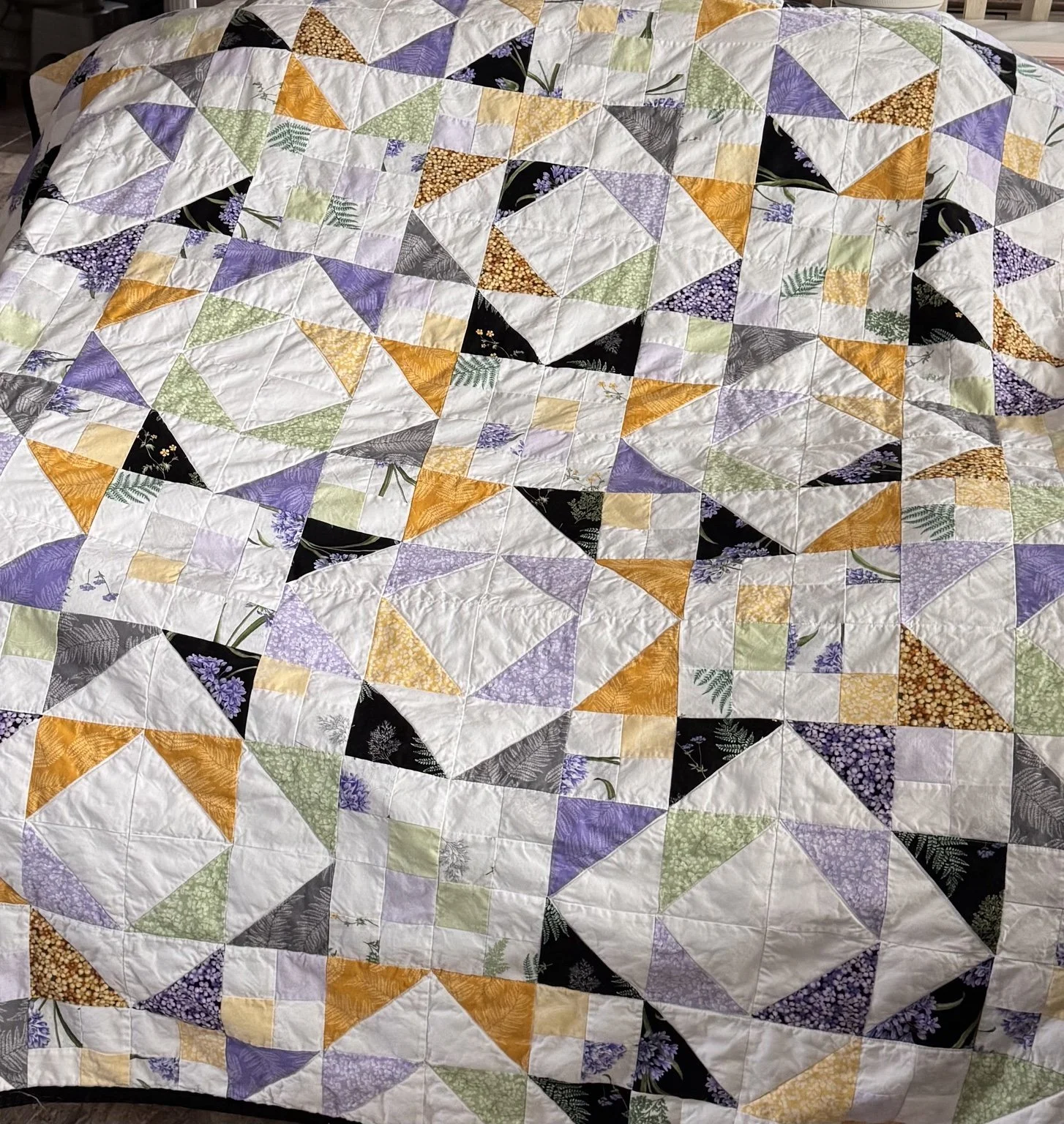
A few years later…..
What Does It Mean to Master Quilting?
The term master quilter interests me because quilting encompasses so many different disciplines.
Is a master quilter someone who can execute nearly any technique? Someone who creates original designs? Someone whose construction is consistently precise? Someone who understands the principles behind the craft well enough to teach others? Or someone who has spent decades perfecting one particular aspect of quilting?
Consider an exceptional hand quilter whose stitches are beautifully consistent and whose work reflects years of practice. Would that person be any less accomplished because they had never attempted a complicated foundation paper-pieced pattern?
What about someone who creates extraordinary modern quilts but has never worked with traditional needle-turn appliqué?
Or a longarm quilter whose quilting designs are works of art but who rarely pieces a quilt top?
I don't think mastery requires knowing everything. There are simply too many techniques, traditions, and creative approaches for that to be a realistic expectation.
And I'm not convinced that the person who produces the most technically impressive quilt is necessarily the person best equipped to explain how it was made.
Teaching requires its own set of skills. Being able to break down a complicated process, recognize where someone is struggling, and explain a technique in a way that makes sense involves more than simply knowing how to perform it.
The same is true of design. Understanding color relationships, value, contrast, balance, and composition is knowledge that can be developed and shared, even when our own projects don't always turn out exactly as envisioned.
Perhaps mastery has more to do with the depth of someone's understanding, their ability to make thoughtful decisions, solve problems, and execute their work with a high degree of skill.
Even then, mastery in one area doesn't guarantee mastery in another.
Which brings me back to the question of whether these labels really tell us very much about ourselves.
When Your Expectations Outpace Your Abilities
One of the more frustrating things about gaining experience is developing a better eye for quality before you've necessarily developed the skills to achieve it consistently.
I can recognize beautifully matched points. I understand why certain fabric combinations work better than others. I notice the way thoughtful quilting enhances the piecing rather than competing with it.
And when I see those things, I want to produce work of the same caliber.
Sometimes I can. Sometimes I can't.
There are projects I've finished that I'm genuinely pleased with. There are others that look fine until I begin examining the details. And there are a few that taught me considerably more than I wanted to learn.
But I wonder whether my expectations have changed more quickly than my actual abilities.
When I first started quilting, completing a quilt was an accomplishment in itself. I was learning how everything worked, and I didn't necessarily recognize every construction issue or questionable design choice.
Now I notice those things.
I see where my seams could be more accurate, where I should have paid closer attention to fabric placement, and where taking a little more time might have improved the result.
That knowledge is useful. It's how I identify what I need to practice.
But it's also how I can take a good finish and turn it into a list of things I wish I'd done differently.
What's particularly interesting is that I don't apply quite the same standard when I'm looking at someone else's work.
I can help another quilter understand why a color combination isn't working without questioning whether they have any talent. I can explain how to improve the accuracy of a block without assuming they don't know how to sew. I can recognize that someone is learning a new technique and appreciate the effort and progress involved.
Yet when I'm evaluating my own work, I sometimes forget to extend myself that same consideration.
I know better, which apparently doesn't prevent me from doing it.
And I do wonder how much of that is productive self-evaluation and how much is simply being unnecessarily critical of my own work.
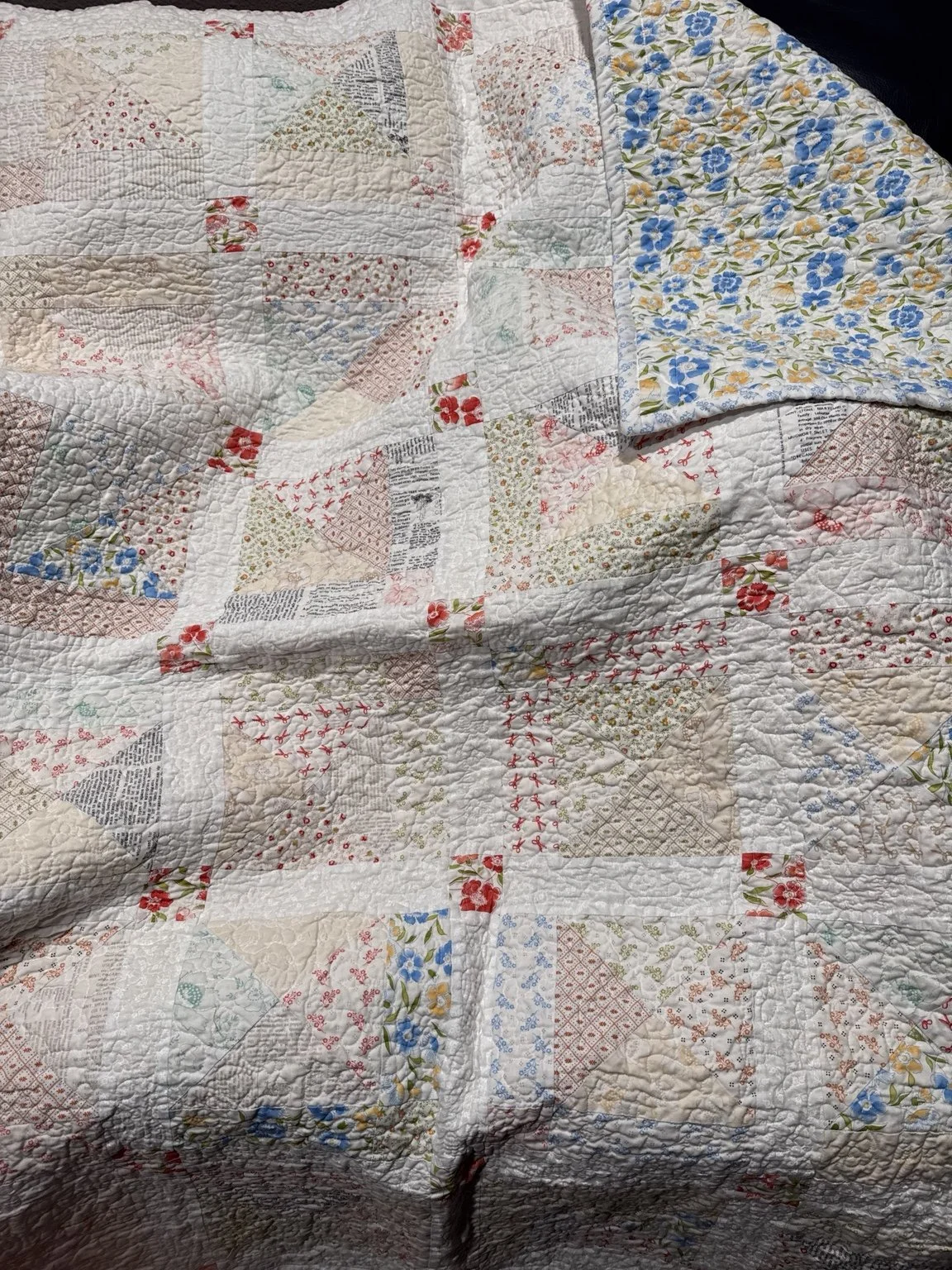
A few years later….
So, Am I an Intermediate Quilter?
I think so.
Not because I've reached some imaginary milestone where every seam is accurate and every fabric choice is inspired, but because I've developed a foundation of knowledge and experience that I didn't have when I began.
I can recognize problems, understand why they happen, and usually figure out how to correct them. I can explain techniques, discuss design choices, and help someone else understand concepts that once seemed complicated to me.
That knowledge didn't appear overnight. It came from reading, practicing, experimenting, making mistakes, and spending a considerable amount of time with fabric and thread.
And I should probably give myself some credit for it.
I also have plenty left to learn.
There are techniques I haven't attempted, skills I'd like to improve, and areas of quilting where I would very much consider myself a beginner.
I suspect that will always be true.
Maybe the problem isn't that I haven't progressed far enough. Maybe it's that I've been treating intermediate as a level of accomplishment where I should no longer feel uncertain about my abilities.
But why would that be the case?
Experience doesn't eliminate mistakes. It gives us a better understanding of how they happen, how to prevent them, and which ones are worth correcting.
And being able to recognize room for improvement doesn't necessarily mean the work wasn't good. Sometimes it means we've learned enough to recognize what could make the next project better.
I'm still working on that distinction.
For now, I'll continue calling myself an intermediate quilter, although I reserve the right to question that designation whenever I encounter a particularly complicated pattern or spend an unreasonable amount of time trying to make two points meet.
I also intend to keep admiring the work of quilters whose abilities exceed mine. There's too much beautiful work out there not to appreciate it.
I just need to get a little better at remembering that someone else's beautiful quilt doesn't make mine any less worthy of having been made.
And perhaps I should occasionally look at a finished project and appreciate what went right before conducting a full investigation into everything that could have gone better.
That might be a skill worth mastering all by itself.
I'm curious how other quilters think about this. Do you consider yourself a beginner, intermediate, or advanced quilter? What makes you place yourself in that category? And when you finish a quilt, do you see what you've accomplished first, or do you immediately notice everything you wish you'd done differently?
Chris
