
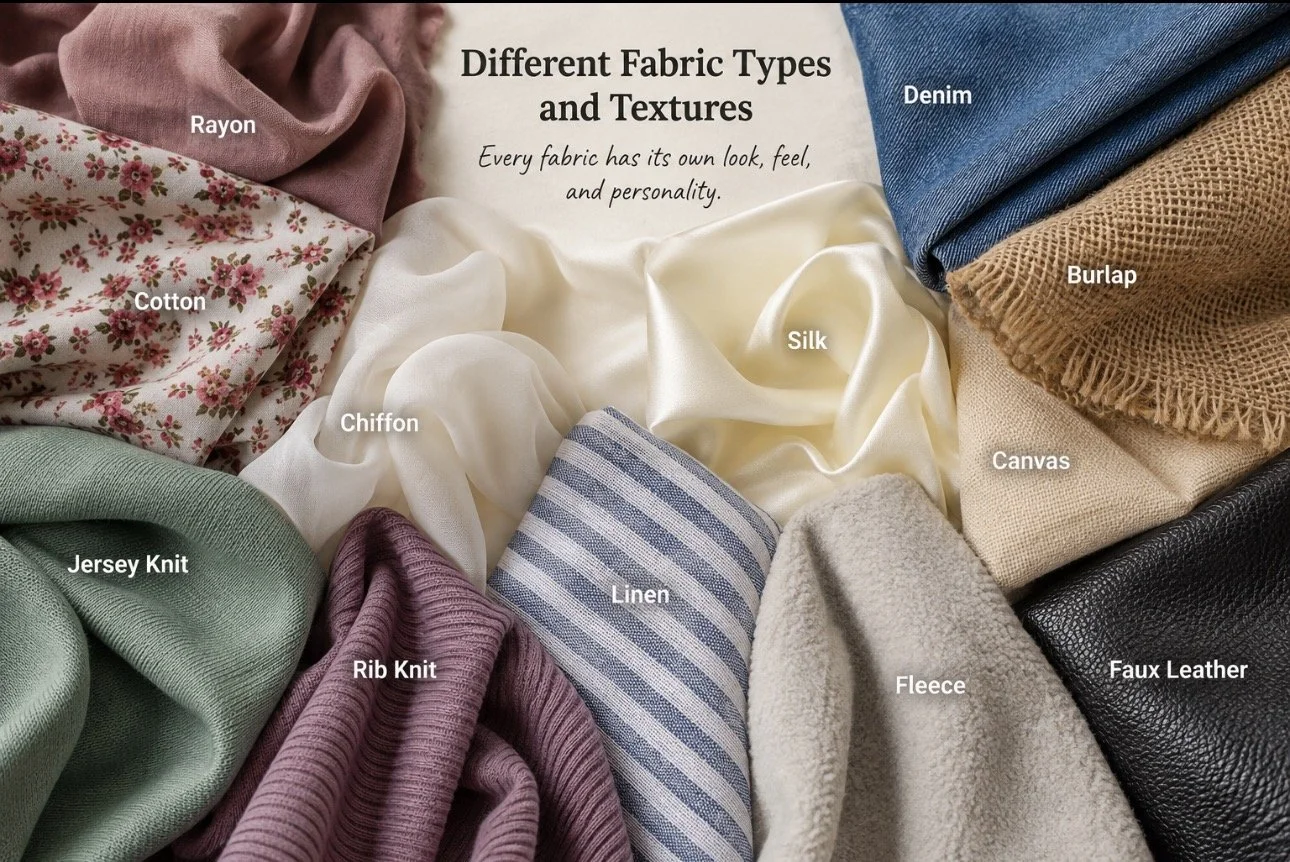
Fabric Matters More Than You Think
Ever wonder why one project turns out exactly as planned while another seems determined to fight you every step of the way?
The secret often isn't the pattern—it's the fabric.
From quilting cotton and denim to rayon, linen, knits, and canvas, every fabric has its own personality, strengths, quirks, and occasional attitude problem. Understanding how different fabrics feel, drape, stretch, and wear can completely change the outcome of your sewing projects.
In this post, we're diving into fabric types, textures, print scale, and why choosing the right fabric can be the difference between "I made this!" and "What on earth happened here?"
Grab your favorite beverage and let's talk fabric—because fabric matters more than you think.
Why Your Fabric Choice Can Make or Break a Project
If you've spent any time around quilters or sewists, you've probably heard someone say, "Fabric is fabric." (More Thoughts on Fabric)
Those people are wrong.
Not necessarily bad people. Just wrong.
Choosing fabric for a project is a little like choosing ingredients for a recipe. Sure, technically you can substitute things. But if a recipe calls for flour and you dump in powdered sugar instead, don't be surprised when things get weird.
The same thing happens with fabric.
One of the biggest surprises for new sewists is discovering that the fabric you choose often matters more than the pattern itself. The same pattern sewn in different fabrics can look, fit, feel, and behave like completely different projects.
That's why understanding fabric is one of the most valuable sewing skills you can develop.
Quilting Cotton: The Reliable Friend
Quilting cotton is the fabric most of us start with. (Read more here: Why I Prefer 100% Cotton)
It's stable, easy to cut, easy to sew, presses beautifully, and generally behaves itself.
Think of quilting cotton as the golden retriever of the fabric world.
Friendly.
Predictable.
Eager to cooperate.
It's perfect for:
Quilts
Tote bags
Table runners
Pillow covers
Home décor projects
Many beginner sewing projects
It comes in an endless variety of colors and prints, which is one reason fabric collections become... well... collections.
And by collections, I mean enough fabric to survive several generations after the zombie apocalypse.
Apparel Fabrics: A Whole Different Personality
Once you move into garment sewing, things get interesting.
Fabric suddenly develops opinions.
Some fabrics drape softly and flow around the body.
Others stand at attention like they just enlisted in the military.
A dress pattern made from rayon will look completely different than the same dress made from linen.
A blouse sewn from cotton lawn will feel different than one sewn from flannel.
This is where terms like:
Drape
Hand
Weight
Stretch
Recovery
start becoming important.
Drape
Drape is how fabric hangs.
Rayon and challis tend to flow and move.
Denim and canvas tend to hold their shape.
Neither is right or wrong.
They're simply different tools for different jobs.
Hand
Hand refers to how fabric feels.
Soft.
Crisp.
Silky.
Smooth.
Textured.
It's one of those sewing terms that sounds strange until you've handled enough fabric to immediately understand it.
The Print Matters Too
Fabric selection isn't just about the type of fabric.
The print matters every bit as much.
A large floral can make a dramatic statement.
A tiny floral can read almost like a solid from a distance.
Buffalo check creates a completely different visual effect than polka dots.
Stripes can lengthen or widen the appearance of a garment depending on how they're used.
Large-scale prints may disappear entirely if they're cut into small pattern pieces.
Ever fall in love with a fabric featuring giant sunflowers only to discover the pattern pieces are so small each one ends up looking like a random yellow blob?
Ask me how I know.
Actually don't.
I'm still recovering.
Scale Changes Everything
One of the biggest lessons in sewing is learning to pay attention to print scale.
Small Prints
Small prints tend to:
Look more subtle
Blend visually
Work well in detailed garments
Play nicely with complicated piecing
Large Prints
Large prints tend to:
Make bold statements
Showcase artwork
Work beautifully on larger garment pieces
Sometimes get lost in small projects
Neither is better.
They're simply creating different effects.
Denim Deserves Its Own Category
Let's talk about denim.
Not because it's difficult.
Because denim seems to multiply when nobody is looking.
Most sewists are completely incapable of throwing away fabric.
Not scraps.
Not remnants.
Not old jeans.
Not shirts with holes.
Not jackets missing buttons.
Because the minute you suggest throwing them away, our brains immediately scream:
"But I could use that for something!"
And honestly?
Sometimes we're right.
Old denim becomes bags.
Patches.
Appliqué.
Rug projects.
Storage baskets.
Journal covers.
Quilt blocks.
Dog toys.
Or it sits in a tote for seven years waiting for the perfect project.
Which is still technically a plan.
Fabric Rules Exist... But They're Not Laws
One thing I love about sewing is that there are recommendations everywhere.
Use this fabric.
Avoid that fabric.
Don't mix these.
Never do that.
And while those recommendations exist for good reasons, they aren't laws.
They're information.
Knowing the rules helps you predict the results.
Once you understand the likely outcome, you can intentionally break every rule in the book if that's the effect you're after.
That's where creativity lives.
The Real Secret
The goal isn't learning which fabrics are "right."
The goal is learning what each fabric does.
Once you understand how a fabric behaves, you stop guessing and start designing.
You begin choosing fabrics intentionally rather than simply because they're pretty.
Although let's be honest...
Sometimes we absolutely buy fabric because it's pretty.
No project.
No plan.
No justification whatsoever.
Just pure fabric-induced loss of self-control.
And that's okay too.
I won't judge.
Mostly because my own fabric shelves are listening.
~Chris
Coming Soon: We'll take a deeper dive into fabric precuts, including fat quarters, fat eighths, jelly rolls, layer cakes, charm packs, mini charms, honey buns, fabric panels, and how fabric collections are designed to work together. Because apparently fabric companies discovered that naming things after desserts is an excellent way to convince quilters to buy more fabric.
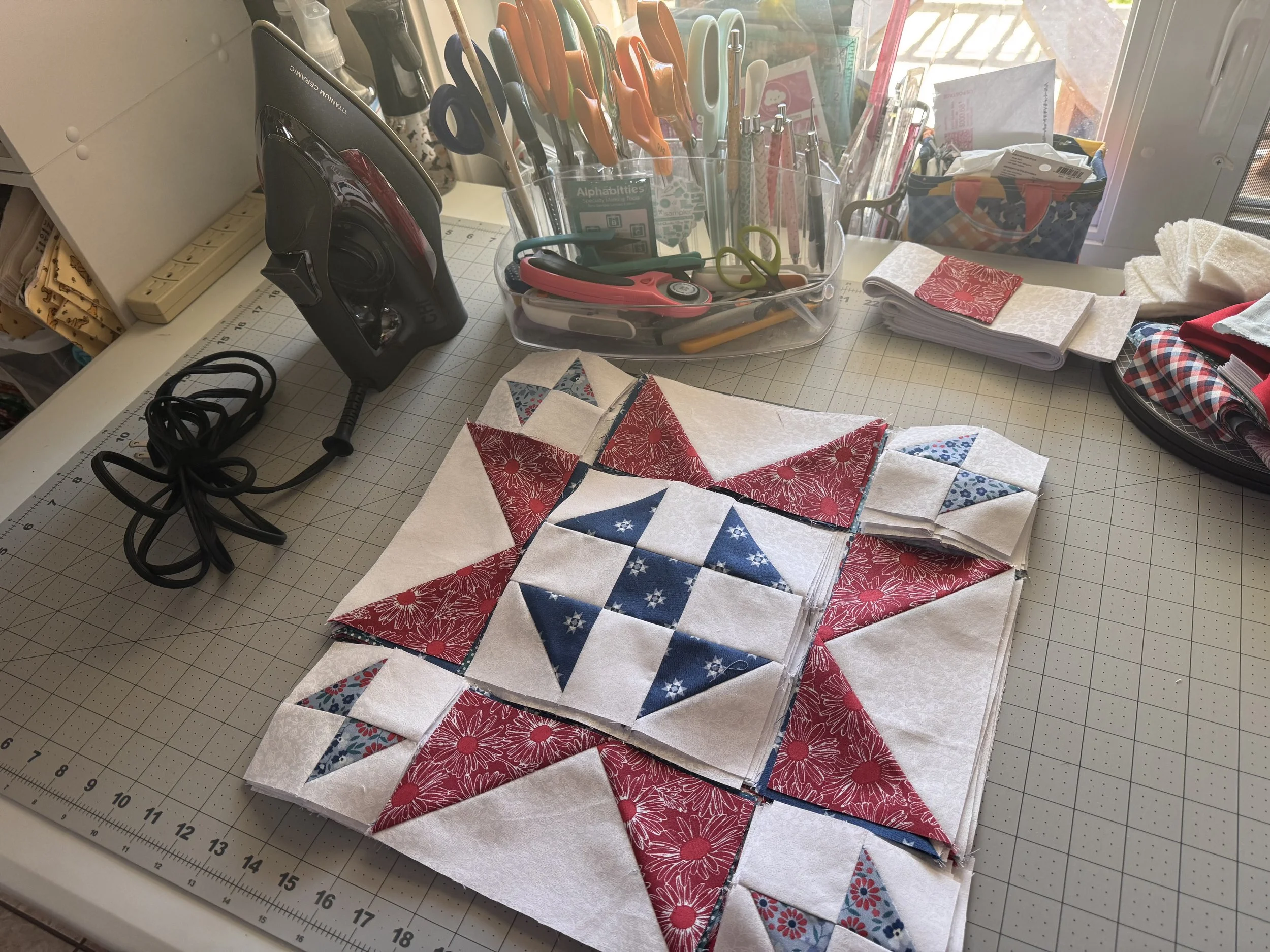
10 Things I Wish Someone Had Told Me Before I Started Sewing
I bought a sewing machine, used it twice, packed it away for fifteen years, and had no idea how much it would eventually change my life. Here are ten things I wish someone had known to tell me before I started sewing.
If you'd told me ten years ago that I'd eventually own more fabric than any reasonable person needs, spend hours debating thread choices, and launch a quilting blog, I would have laughed.
Mostly because my sewing machine was sitting in a closet.
For fifteen years.
I bought my first sewing machine with good intentions. I used it once or twice, packed it away, and didn't touch it again for about fifteen years.
Apparently, I wasn't ready.
Then one day I pulled it back out.
What I expected was a hobby.
What I got was a full-blown obsession, an education, a creative outlet, countless hours of enjoyment, enough fabric to insulate a small house, and a hobby that has taught me far more about myself than I ever expected.
Looking back, here are ten things I really wish someone had told me before I started sewing.
1. THIS HOBBY IS WAY MORE ADDICTIVE THAN ANYONE ADMITS
People talk about sewing like it's a hobby.
A hobby is collecting stamps.
A hobby is occasionally playing golf.
Sewing is more of a lifestyle choice.
At first, you'll make one project.
Then another.
Then you'll start looking at furniture and thinking, I could recover that.
You'll walk through stores evaluating curtains by construction quality.
You'll find yourself inspecting handbags to figure out how they were assembled.
You stop seeing objects and start seeing patterns.
There should probably be a warning label on sewing machines.
Caution: May result in complete obsession.
2. SAVING MONEY IS NOT USUALLY HOW THIS WORKS
I distinctly remember thinking sewing would save me money.
That's adorable.
Technically, yes, sewing can save money.
In the same way that buying a fishing boat can save money on fish.
You'll start with a machine.
Then you'll need fabric.
Then better scissors.
Then a rotary cutter.
Then a cutting mat.
Then rulers.
Then thread.
Then specialty feet.
Then storage containers for all the supplies you now apparently own.
Before long, you've invested enough money that you're explaining purchases using phrases like:
"Well, technically I needed it."
And honestly?
Most of us are perfectly okay with that.
3. FABRIC HAS A MYSTERIOUS ABILITY TO REPRODUCE
Nobody warns beginners that fabric breeding programs apparently exist.
You buy two yards for a project.
Then four.
Then six.
Then a fat quarter bundle follows you home.
Then a jelly roll.
Then an entire fabric collection because you loved one print and somehow convinced yourself the other twenty-six were absolutely necessary too.
Eventually you'll have a fabric stash.
You will stop calling it "too much fabric" and start referring to it as "inventory."
This is normal.
At least that's what we tell each other.
4. YOU WILL DEVELOP STRONG OPINIONS ABOUT THINGS YOU NEVER KNEW EXISTED
Needles.
Pins.
Thread.
Interfacing.
Batting.
Seam allowances.
Fabric grain.
Rotary blades.
You don't know it yet, but someday you'll have an opinion about all of them.
A strong opinion.
Possibly one you're willing to defend.
It's a strange transformation.
One day you're a normal person.
The next you're explaining the difference between a quilting needle and a universal needle to someone who didn't actually ask.
5. SEAM RIPPERS ARE NOT EVIDENCE OF FAILURE
This one would have saved me a lot of frustration.
Beginners think experienced sewists don't make mistakes.
That's adorable too.
Experienced sewists make mistakes all the time.
The difference is they've accepted that mistakes are part of the process.
Sometimes you sew something upside down.
Sometimes inside out.
Sometimes perfectly wrong.
Sometimes you discover your mistake immediately after proudly announcing, "Look how good this is turning out."
The seam ripper isn't proof you're bad at sewing.
It's proof you're sewing.
In fact, if your seam ripper is buried in a drawer, I'm going to assume you're either a beginner or a liar.
6. PRESSING AND IRONING ARE NOT THE SAME THING
I truly did not know this.
I thought ironing was ironing.
Apparently not.
Pressing is one of those things that seems incredibly boring until you realize it can completely change the outcome of a project.
Good pressing can make average sewing look fantastic.
Skipping it can make fantastic sewing look average.
I resisted this lesson.
The lesson won.
7. SEWING WILL TEACH YOU MORE ABOUT YOURSELF THAN YOU EXPECT
This one surprised me.
Sewing isn't just fabric and thread.
It's problem solving.
Patience.
Perseverance.
Creativity.
Humility.
Sometimes all in the same afternoon.
A project will reveal exactly how you handle frustration.
How you react when things don't go according to plan.
How willing you are to try again after you've already tried three times.
There have been projects that taught me more about myself than some self-help books.
Although, to be fair, I was probably listening to a self-help book while making them.
8. AUDIOBOOKS AND SEWING ARE A DANGEROUS COMBINATION
No one prepared me for this relationship.
I started listening to audiobooks years ago, but once sewing entered the picture, my listening hours skyrocketed. There are only so many hours in a day, and apparently I've figured out how to spend most of them either sewing, listening to books, or doing both at the same time.
At this point, I honestly think I should own shares in Audible. My listening stats are ridiculous, my library is enormous, and any fellow book lover would either be impressed or mildly concerned.
You learn new skills.
You hear great stories.
You discover new ideas.
And before long you've created a habit where sewing and learning happen at the same time.
The downside?
You'll occasionally have to rewind because you became completely absorbed in matching seams and have no idea what happened in the last chapter.
Or you'll be listening to a mystery novel and suddenly realize you've spent the last twenty minutes suspecting the wrong character while also sewing two blocks together backwards.
Neither situation is ideal.
9. HANDMADE THINGS CARRY PIECES OF YOUR LIFE
Every project becomes attached to a memory.
A season.
A person.
A stage of life.
I can look at certain quilts and immediately remember where I was emotionally when I made them.
Who they were for.
What was happening in life at the time.
Years later, those stitches still tell the story.
I didn't realize sewing would become a way of documenting life.
But in many ways, that's exactly what it has become.
Every quilt becomes a scrapbook made from fabric instead of paper.
10. SOMETIMES THE RIGHT HOBBY FINDS YOU AT THE RIGHT TIME
For me, sewing wasn't love at first stitch.
I bought the machine.
Used it a couple of times.
Packed it away.
And then ignored it for fifteen years.
Apparently the timing wasn't right.
When I finally pulled it back out, something clicked.
What started as curiosity became creativity.
Creativity became learning.
Learning became confidence.
Confidence became a room full of fabric, a long list of projects, and eventually this blog.
Looking back, I'm glad I didn't force it all those years ago.
Sometimes hobbies come into our lives when we're ready for them.
And sometimes they quietly wait in a closet until then.
FINAL THOUGHTS
If you're just getting started, welcome.
You're about to learn a lot.
You'll make mistakes.
You'll buy fabric you don't technically need.
You'll probably lose your scissors at least once a week.
You'll discover that bobbins are always empty at the worst possible moment.
You'll start referring to fabric purchases as "investments."
And you'll eventually reach the point where non-sewing people ask, "Do you really need more fabric?" while sewists immediately respond, "What did you buy?"
And somewhere along the way, you'll create something with your own two hands that makes you step back and think:
"I made that."
That's the moment that keeps us coming back.
Not because every project turns out perfectly.
Trust me, they don't.
But because sewing teaches us that mistakes can be fixed, skills can be learned, and creativity grows every time we sit down and try again.
Even if that creativity eventually takes over an entire room of the house.
And honestly?
I wouldn't have it any other way.
~Chris