
Fabric Matters More Than You Think
Ever wonder why one project turns out exactly as planned while another seems determined to fight you every step of the way?
The secret often isn't the pattern—it's the fabric.
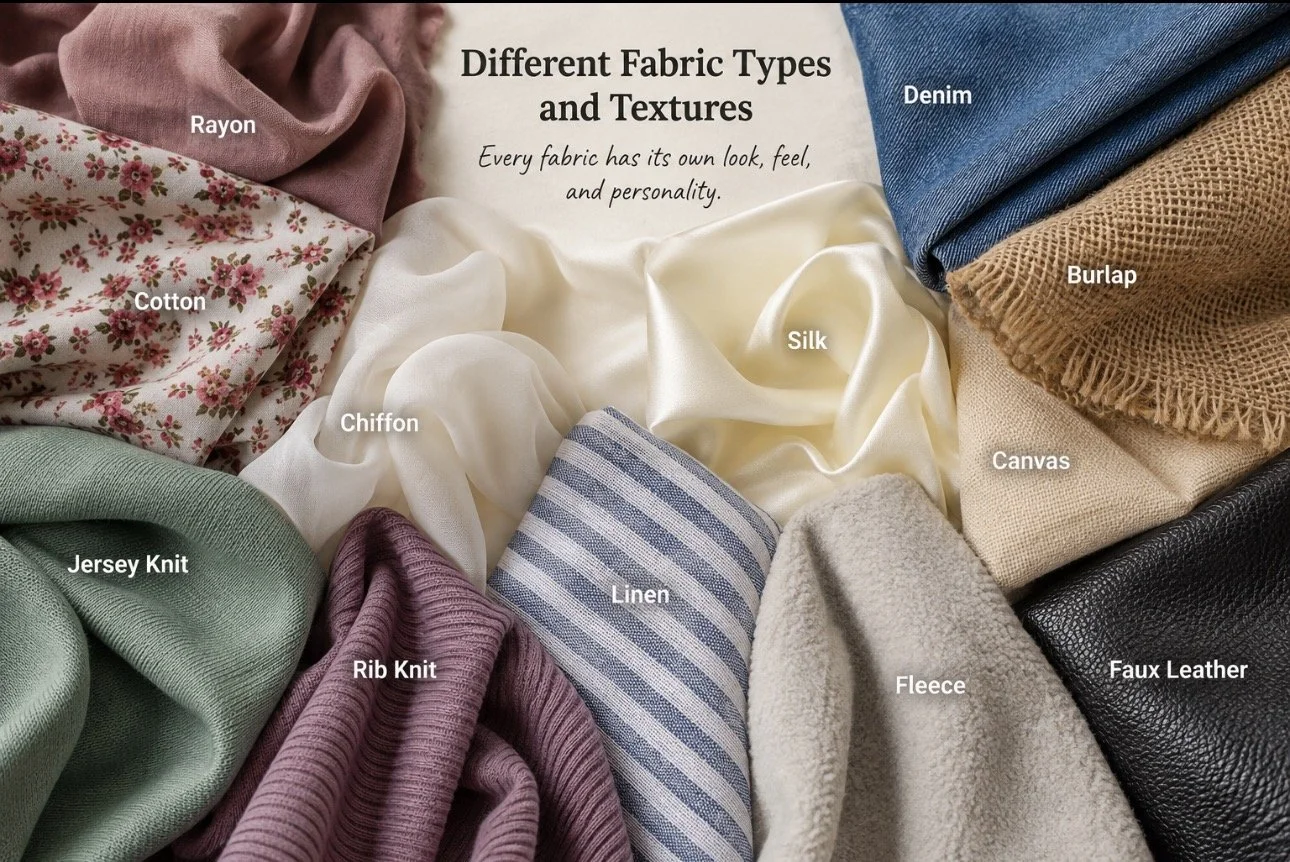
From quilting cotton and denim to rayon, linen, knits, and canvas, every fabric has its own personality, strengths, quirks, and occasional attitude problem. Understanding how different fabrics feel, drape, stretch, and wear can completely change the outcome of your sewing projects.
In this post, we're diving into fabric types, textures, print scale, and why choosing the right fabric can be the difference between "I made this!" and "What on earth happened here?"
Grab your favorite beverage and let's talk fabric—because fabric matters more than you think.
Why Your Fabric Choice Can Make or Break a Project
If you've spent any time around quilters or sewists, you've probably heard someone say, "Fabric is fabric." (More Thoughts on Fabric)
Those people are wrong.
Not necessarily bad people. Just wrong.
Choosing fabric for a project is a little like choosing ingredients for a recipe. Sure, technically you can substitute things. But if a recipe calls for flour and you dump in powdered sugar instead, don't be surprised when things get weird.
The same thing happens with fabric.
One of the biggest surprises for new sewists is discovering that the fabric you choose often matters more than the pattern itself. The same pattern sewn in different fabrics can look, fit, feel, and behave like completely different projects.
That's why understanding fabric is one of the most valuable sewing skills you can develop.
Quilting Cotton: The Reliable Friend
Quilting cotton is the fabric most of us start with. (Read more here: Why I Prefer 100% Cotton)
It's stable, easy to cut, easy to sew, presses beautifully, and generally behaves itself.
Think of quilting cotton as the golden retriever of the fabric world.
Friendly.
Predictable.
Eager to cooperate.
It's perfect for:
Quilts
Tote bags
Table runners
Pillow covers
Home décor projects
Many beginner sewing projects
It comes in an endless variety of colors and prints, which is one reason fabric collections become... well... collections.
And by collections, I mean enough fabric to survive several generations after the zombie apocalypse.
Apparel Fabrics: A Whole Different Personality
Once you move into garment sewing, things get interesting.
Fabric suddenly develops opinions.
Some fabrics drape softly and flow around the body.
Others stand at attention like they just enlisted in the military.
A dress pattern made from rayon will look completely different than the same dress made from linen.
A blouse sewn from cotton lawn will feel different than one sewn from flannel.
This is where terms like:
Drape
Hand
Weight
Stretch
Recovery
start becoming important.
Drape
Drape is how fabric hangs.
Rayon and challis tend to flow and move.
Denim and canvas tend to hold their shape.
Neither is right or wrong.
They're simply different tools for different jobs.
Hand
Hand refers to how fabric feels.
Soft.
Crisp.
Silky.
Smooth.
Textured.
It's one of those sewing terms that sounds strange until you've handled enough fabric to immediately understand it.
The Print Matters Too
Fabric selection isn't just about the type of fabric.
The print matters every bit as much.
A large floral can make a dramatic statement.
A tiny floral can read almost like a solid from a distance.
Buffalo check creates a completely different visual effect than polka dots.
Stripes can lengthen or widen the appearance of a garment depending on how they're used.
Large-scale prints may disappear entirely if they're cut into small pattern pieces.
Ever fall in love with a fabric featuring giant sunflowers only to discover the pattern pieces are so small each one ends up looking like a random yellow blob?
Ask me how I know.
Actually don't.
I'm still recovering.
Scale Changes Everything
One of the biggest lessons in sewing is learning to pay attention to print scale.
Small Prints
Small prints tend to:
Look more subtle
Blend visually
Work well in detailed garments
Play nicely with complicated piecing
Large Prints
Large prints tend to:
Make bold statements
Showcase artwork
Work beautifully on larger garment pieces
Sometimes get lost in small projects
Neither is better.
They're simply creating different effects.
Denim Deserves Its Own Category
Let's talk about denim.
Not because it's difficult.
Because denim seems to multiply when nobody is looking.
Most sewists are completely incapable of throwing away fabric.
Not scraps.
Not remnants.
Not old jeans.
Not shirts with holes.
Not jackets missing buttons.
Because the minute you suggest throwing them away, our brains immediately scream:
"But I could use that for something!"
And honestly?
Sometimes we're right.
Old denim becomes bags.
Patches.
Appliqué.
Rug projects.
Storage baskets.
Journal covers.
Quilt blocks.
Dog toys.
Or it sits in a tote for seven years waiting for the perfect project.
Which is still technically a plan.
Fabric Rules Exist... But They're Not Laws
One thing I love about sewing is that there are recommendations everywhere.
Use this fabric.
Avoid that fabric.
Don't mix these.
Never do that.
And while those recommendations exist for good reasons, they aren't laws.
They're information.
Knowing the rules helps you predict the results.
Once you understand the likely outcome, you can intentionally break every rule in the book if that's the effect you're after.
That's where creativity lives.
The Real Secret
The goal isn't learning which fabrics are "right."
The goal is learning what each fabric does.
Once you understand how a fabric behaves, you stop guessing and start designing.
You begin choosing fabrics intentionally rather than simply because they're pretty.
Although let's be honest...
Sometimes we absolutely buy fabric because it's pretty.
No project.
No plan.
No justification whatsoever.
Just pure fabric-induced loss of self-control.
And that's okay too.
I won't judge.
Mostly because my own fabric shelves are listening.
~Chris
Coming Soon: We'll take a deeper dive into fabric precuts, including fat quarters, fat eighths, jelly rolls, layer cakes, charm packs, mini charms, honey buns, fabric panels, and how fabric collections are designed to work together. Because apparently fabric companies discovered that naming things after desserts is an excellent way to convince quilters to buy more fabric.