
The Things We Make and the Things We Buy
The Sewing Chair | November 1, 2026
I've been thinking about how much easier it has become to buy things than to make them. Nearly anything we want can be purchased from the comfort of our living rooms, often without getting up, putting on shoes, or locating our wallets. In fact, the most physically demanding part of shopping these days may be retrieving the package from the front porch.
I appreciate convenience as much as anyone. Between my husband, six children, seven grandchildren, four dogs, two cats, a mental health clinic to run, and a quilting website that has somehow become another full-time job, my days are hardly lacking in things to do. Add a list of sewing projects that could probably keep me occupied until I'm 103, and it's a wonder I accomplish anything that doesn't involve a keyboard, a sewing machine, or feeding somebody. I have neither the time nor the desire to churn my own butter, weave my own bedsheets, or raise sheep for their wool. Although, knowing myself, I might briefly consider the sheep if someone showed me a particularly interesting spinning wheel.
But I've been wondering whether, somewhere along the way, we began confusing convenience with progress. They're not necessarily the same thing.
There was a time when making things was simply part of running a household. Clothing was sewn, altered, handed down, and repaired. Worn sheets became cleaning rags. Scraps of fabric became quilts. Meals were prepared from whatever was available, and very little was discarded until it had served every possible purpose, including a few purposes that probably weren't recommended by the manufacturer.
Of course, we shouldn't romanticize the past. Domestic labor was demanding, time-consuming, and disproportionately carried by women. I'm quite fond of my washing machine, thank you very much, and I have no intention of standing over a boiling kettle of laundry in the backyard. My ancestors worked hard enough to spare me that particular experience, and I intend to honor their sacrifice by using the permanent press cycle.
Still, there is something worth examining in the skills that previous generations considered necessary and many of us now consider hobbies.
Take sewing, for example.
Once upon a time, knowing how to sew meant you could clothe your family, mend a torn garment, replace a button, or turn something worn into something useful. It was an essential household skill.
Today, we buy sewing machines with an astonishing range of features, collect fabric as though we're personally responsible for keeping the textile industry afloat, and dedicate entire rooms to storing the supplies necessary to make things we could easily buy at a store.
I say this with absolutely no judgment, considering I have personally taken over our dining room with enough fabric and equipment to make it difficult to remember that the room was originally intended for eating.
And I suspect that most quilters have, at some point, confidently announced that they could make something themselves, only to discover that the project required considerably more supplies than originally anticipated. By then, we're committed. We have a vision. We've watched two videos, purchased a specialty ruler, and decided that the store-bought version wasn't particularly attractive anyway.
Besides, we can make it in better colors.
There's also the small matter of our time. If we calculated the hours involved in making a quilt and paid ourselves for every one of them, some of our finished projects would need to be insured separately from the house.
Yet we keep making them.
Why?
I don't believe it's simply because we enjoy sewing, although that's certainly part of it. I think making something satisfies a need that purchasing something doesn't always fulfill. We get to solve problems, make decisions, develop skills, and see the physical results of our effort. We take a collection of unrelated materials and turn them into something useful, beautiful, or occasionally so badly constructed that it becomes a valuable lesson in what not to do again.
And even our failures teach us something. A purchased item that doesn't work is generally returned or discarded. A handmade disaster might spend six months sitting on the dining room table while we convince ourselves we can still fix it.
Not that I would know anything about that.
I've also been thinking about the way we assign value to the things we own.
We tend to measure value in dollars. What did it cost? Could we have purchased it for less? Was it worth the expense?
Those are sensible questions, especially when household budgets are tight. I'm certainly not suggesting that making everything ourselves is the answer to saving money. Anyone who has walked into a quilt shop for one spool of thread and emerged carrying a bag that required financial justification understands the limitations of that argument.
But price is only one measure of value.
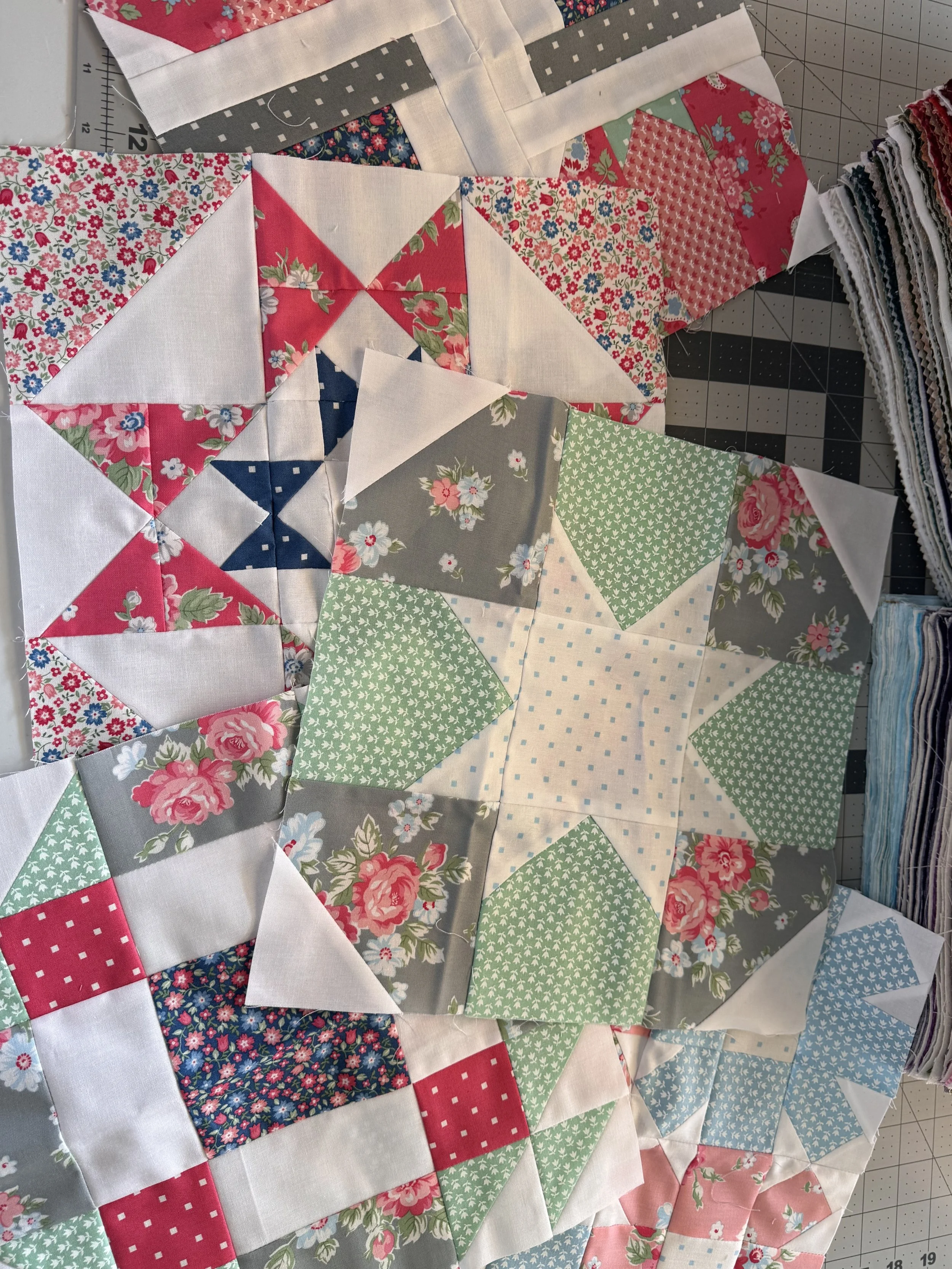
Every Christmas, our extended family has a handmade gift exchange that includes my parents, siblings, children, and other family members. Each person makes one gift, with an agreed-upon limit for materials. Then we draw names, and whoever draws your name receives the gift you made.
It's a tradition I love, partly because of the creativity involved and partly because you never quite know what somebody is going to come up with. With several generations of family participating, you can imagine the range of personalities, skills, and ideas involved.
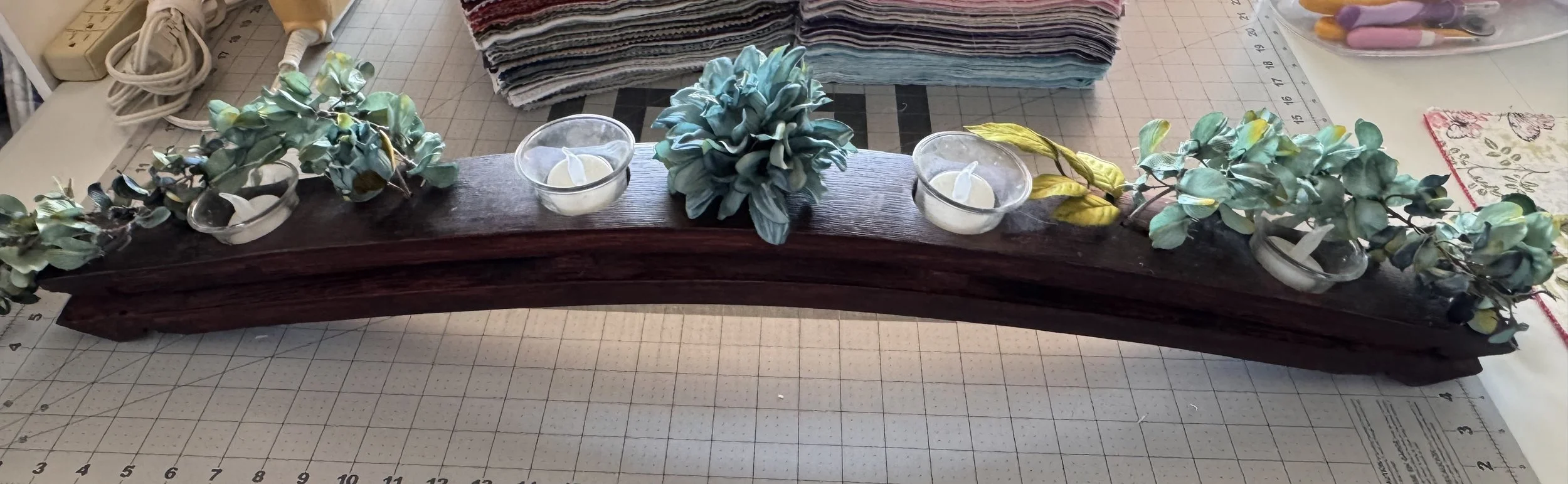
A gift I received one Christmas, made by my dad
And before anyone reading this starts looking for hints about this year's gift, forget it. I'm not telling.
What I appreciate most about the exchange is that everyone contributes something they have made themselves. Not everyone has the same skills, tools, or interests. Some projects may be wonderfully practical, others beautifully decorative, and a few may inspire questions about what exactly the maker was thinking.
But someone spent time on each one. They considered what to make, figured out how to make it, and followed through. Even if following through involved a few choice words and an emergency trip to the hardware store.
The finished gifts carry a story that wouldn't exist if we had simply exchanged gift cards.
I'm also becoming increasingly interested in the things we already own and what we might do with them before purchasing something new. Old clothing can become quilts. Fabric scraps can become useful household items. A worn piece of furniture might need a repair rather than a replacement. And an afternoon spent figuring out how to make something work can be surprisingly satisfying.
Sometimes, though, it's an afternoon spent discovering why somebody else charges to do it.
That's valuable information, too.
I don't think we need to abandon convenience or attempt to recreate the domestic lives of our great-grandmothers. They would probably take one look at our modern appliances, thank the good Lord, and wonder why on earth we're voluntarily spending our evenings cutting expensive fabric into tiny pieces just so we can sew it back together again.
It's a fair question, really.
Perhaps what we need is a little more balance. We can appreciate the convenience of modern life while maintaining the skills that allow us to be capable and resourceful. We can learn to repair things, make things, and use what we already have without turning every household activity into a competition for who can be the most self-sufficient.
And we can acknowledge that sometimes buying the finished product is the sensible choice.
I will happily purchase my socks, thank you. I have enough trouble keeping track of matching pairs without becoming responsible for their manufacture.
But I hope we don't lose the satisfaction that comes from making something with our own hands. There is pleasure in knowing how to do something, in improving through practice, and in creating an object that might someday remind another person of us.
A quilt doesn't need to be cheaper than a store-bought blanket to be worthwhile. A handmade gift doesn't need to look like something from a department store to be appreciated. And a skill doesn't need to produce income to deserve the time we spend learning it.
Perhaps the real question isn't whether we can make something cheaper than we can buy it.
Perhaps it's whether everything worth making needs to justify itself financially.
Now, if you'll excuse me, I have some sewing to do. There's a dining room table somewhere under all that fabric. I haven't seen the entire surface in quite some time, but I'm fairly certain it's still there.
Eventually.
Chris
