
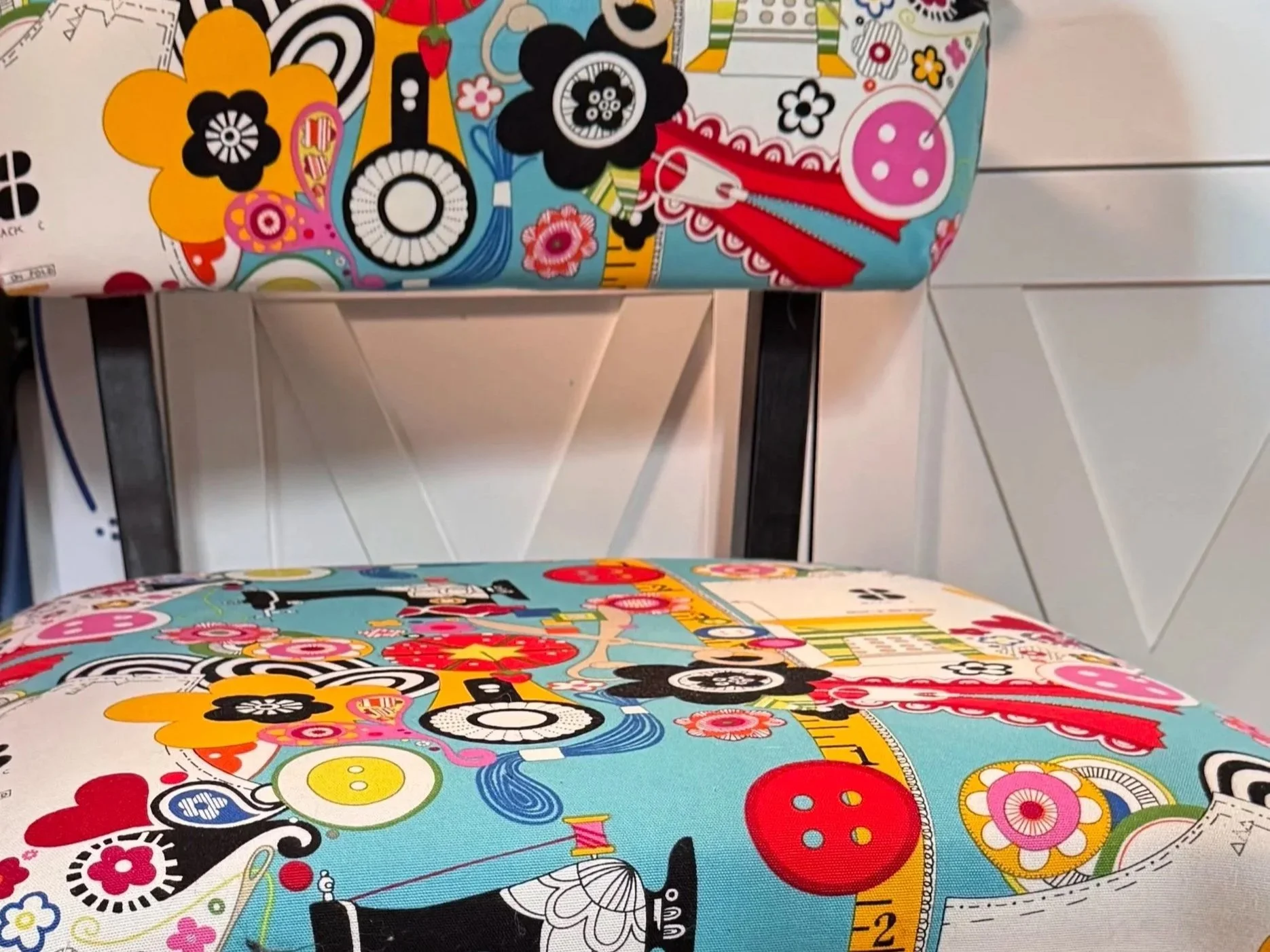
The Sewing Chair no. 1
The Sewing Chair is a Sunday invitation to slow down for a few minutes. Through quilting, creativity, and quiet reflection, we'll explore how making something with our hands can steady our minds and remind us to care for ourselves as faithfully as we care for everyone else. Pull up a chair—you're welcome here anytime.
An Invitation to Slow Down
6/21/26
Welcome to the very first Sunday reflection
If you've spent any time around quilters, you know we can spend an absurd amount of time talking about sewing chairs.
We compare cushions, lumbar support, seat height, armrests, and whether the wheels glide smoothly across the floor. We look for something comfortable enough to sit in for hours and supportive enough to carry us through another quilt, another project, another idea.
We don't choose a sewing chair because it's the prettiest one in the room.
We choose it because it takes care of us while we create.
Somewhere between finishing a quilt top and shopping for an ergonomic chair, I realized that's exactly what I wanted this Sunday column to be.
A place to sit for a few minutes.
A place to rest.
A place to collect scattered thoughts before heading back into a busy week.
A place to remember that making something is never wasted time.
Chris Cross Quilts will always be about quilting. We'll talk fabric, color, tools, techniques, quilt history, mistakes, successes, and the occasional moment when we spend twenty minutes looking for the rotary cutter that's been in our hand the entire time.
But every Sunday, I'd like to pull up a sewing chair and have a different kind of conversation.
This idea arrived in the middle of an ordinary quilting session.
I was finishing a quilt top, chain piecing one seam after another, when I noticed something I had never really paid attention to before. The constant stream of thoughts that usually races through my mind had slowed down. The endless mental checklist became one simple question:
"What's the next stitch?"
Piece by piece, the noise became quieter.
By the time I stood up, the problems hadn't disappeared, the laundry still needed folding, emails still waited to be answered, and life hadn't magically become easier.
But it had become manageable.
I've come to realize that quilting isn't just something I make.
It's something that quietly remakes me.
I suspect the same thing happens whether your hands are holding a needle, knitting needles, embroidery floss, a paintbrush, a crochet hook, or a block of wood in a workshop. There is something about creating with our hands that gives our minds permission to slow down enough to catch up with our hearts.
In a world that constantly asks us to produce more, answer faster, scroll longer, and hurry everywhere, choosing to make something by hand feels almost rebellious.
So that's what The Sewing Chair is.
Not a tutorial.
Not a checklist.
Not another thing to accomplish.
Just a comfortable place to pause, breathe a little deeper, and remember that caring for other people starts with caring for ourselves first.
No perfect quilts required.
No experience necessary.
You're welcome here anytime.
Thanks for stopping by. I'd love to have you back next Sunday.
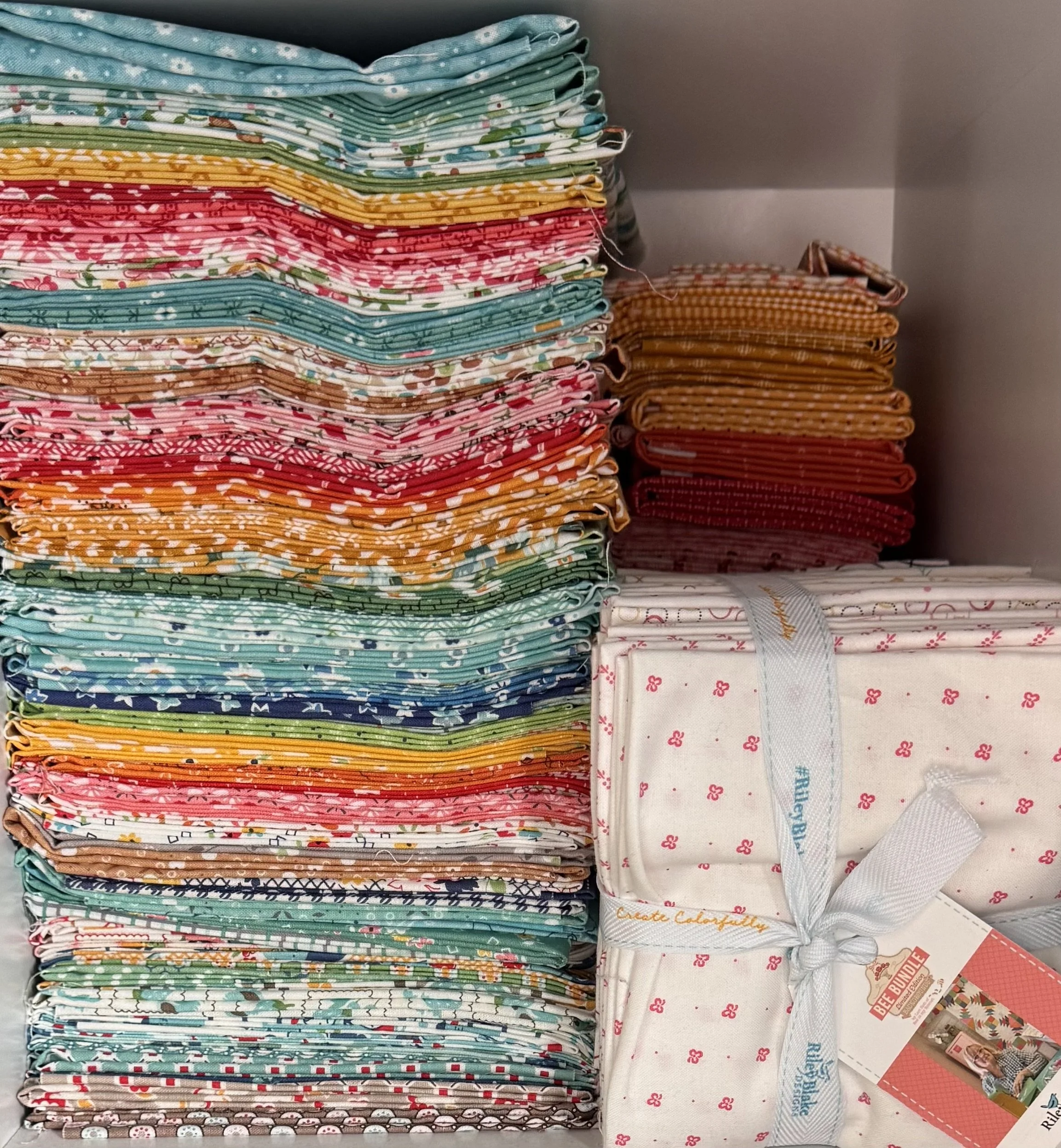
more thoughts on fabric
I used to think fabric was the easy part. Then I started sewing. Here's what I've learned about fabric, why quilters care so much about it, and how the right choice can make a project far more enjoyable.
Because “fabric is fabric” is one of the biggest myths in sewing
If you've spent any time around quilters or sewists, you've probably heard someone say, "Fabric is fabric."
Those people are wrong.
Not necessarily bad people. Just wrong.
Choosing fabric for a project is a little like choosing ingredients for a recipe. Sure, technically you can substitute things, but don't be surprised when things get weird.
The same thing happens with fabric.
One of the biggest surprises for new sewists is discovering that the fabric you choose often matters more than the pattern. Different fabrics can look, feel, and behave like completely different projects.
That's why understanding fabric is one of the most valuable sewing skills you can develop. (10 things I wish I knew) (Fabric Matters more than you think)
Quilting Cotton: The Reliable Friend
If quilting had an official mascot, it would probably be quilting cotton. (Why I Prefer 100% Cotton)
There's a reason quilters are obsessed with it.
Quality quilting cotton is stable, predictable, easy to cut, easy to sew, and available in enough colors and prints to make your fabric stash multiply faster than anyone thinks possible.
When you're learning, quilting cotton is incredibly forgiving. It presses well, holds its shape, and generally behaves the way you expect it to behave.
That's important because your sewing machine will eventually provide enough surprises on its own.
Not All Cotton Is Created Equal
One thing that surprised me when I started sewing was learning that cotton isn't just cotton.
The quilting cotton you find at a quilt shop is often very different from bargain fabric found elsewhere.
Higher-quality quilting cotton typically has a tighter weave, better color retention, less stretching, and better durability.
Can you make a quilt from less expensive fabric?
Absolutely.
Will it necessarily age the same way, wash the same way, or hold up the same way?
Not always.
This doesn't mean you need the most expensive fabric available for every project. It simply means that fabric quality matters more than many beginners realize.
Drape Changes Everything
One of the most important characteristics of fabric is drape.
Drape refers to how fabric hangs and moves.
Quilting cotton has structure. It tends to hold its shape.
Rayon is soft and fluid.
Linen has body but softens over time.
Denim is sturdy and substantial.
Fleece is cozy and thick.
The same pattern sewn in different fabrics can look like entirely different projects.
That's why patterns often recommend specific fabric types. The designer isn't being difficult. They're trying to help you avoid disappointment.
Stretch Can Be Your Friend or Your Enemy
Woven fabrics and knit fabrics behave very differently.
Most quilting cottons are woven and have very little stretch.
Knit fabrics stretch significantly and require different techniques, needles, and expectations.
Ask a woven-fabric sewist to sew knits for the first time and they may suddenly question all of their life choices.
Ask me how I know.
Actually, don't. Some memories are best left buried.
The point is that stretch affects fit, construction, and durability. Understanding it makes sewing much easier.
Fabric Affects More Than Appearance
Many beginners focus primarily on color and print.
I did too.
The problem is that beautiful fabric isn't always the right fabric.
A fabric may look gorgeous on the bolt but be completely wrong for the project you have in mind.
Before buying fabric, consider:
How will it be used?
How often will it be washed?
Does it need structure or softness?
Does it need durability?
Will it be worn, carried, cuddled, or displayed?
The answers matter.
The Best Way to Learn
The truth is that no article can replace experience.
Touch fabric.
Compare fabrics.
Sew with different fabrics.
Pay attention to what you like and what frustrates you.
Over time you'll begin recognizing fabrics by feel, understanding what works for specific projects, and making better choices before the first cut is ever made.
That knowledge saves time, money, and occasionally prevents projects from becoming permanent residents of the unfinished-project pile.
Final Thoughts
Fabric isn't just the thing you cut into pieces before sewing.
It's one of the most important design decisions you'll make.
The right fabric can make a project feel effortless.
The wrong fabric can make even a simple project frustrating.
So the next time you're standing in a fabric store debating between two options, remember:
The pattern matters.
Your tools matter.
Your skills matter.
But fabric matters more than most people think.
What fabric surprised you the most when you started sewing or quilting? I'd love to hear about it in the comments.
The Saturday Stitch Report #1
Welcome to the very first Saturday Stitch Report! This week I'm sharing what’s currently under my needle, the fabric collections I’m eagerly awaiting, upcoming sew-alongs, and an update on the newest (and furriest) members of the household as they settle into their roles as potential Sewing Room Supervisors. Grab a cup of coffee and join me for a little quilting conversation.
Disclosure: This post contains affiliate links. If you purchase through these links, I may earn a small commission at no additional cost to you. I only recommend products, services and supplies I personally use, love, or believe will be valuable to my readers.
New Projects, New Fabric, and Two New Supervisors
Welcome to the very first Saturday Stitch Report!
I'm not entirely sure whether this is a newsletter, a sewing diary, a weekly status report, or simply proof that I spend far too much time thinking about fabric.
Perhaps it's all of the above.
What I'm Working On
This week I've been working on a project from my December Sew Sampler box from Fat Quarter Shop. It has been nice to pull out something that has been patiently waiting its turn and finally give it some attention.
Like many quilters, I occasionally suffer from what I call "project optimism." This is the belief that I can start new things at a rate significantly faster than I can finish old things.
The evidence suggests otherwise.
Still, progress is progress, and stitches were made this week.
What's Arriving in the Sewing Room
Fat Quarter shops Limited Edition Liberty box greeted me on my porch earlier this week, well worth it as always, and the monthly Sew Sampler subscription box will be arriving soon! If you’ve ever been curious about the program, or looking for an easy way to avoid choosing your next project, you can learn more about this subscription here.
I also have a few fabric collections on my wish list that I'm eagerly awaiting.
At the top of that list are:
Poinsettia & Pear by Sherri & Chelsi for Moda
Little Ladies by Tami Jones for Andover Fabrics
I'm especially excited about Little Ladies because it's Tami's very first fabric collection. There is something special about watching a designer's debut collection make its way into the quilting world.
What's Next
Over the next few weeks, I'm hoping to complete:
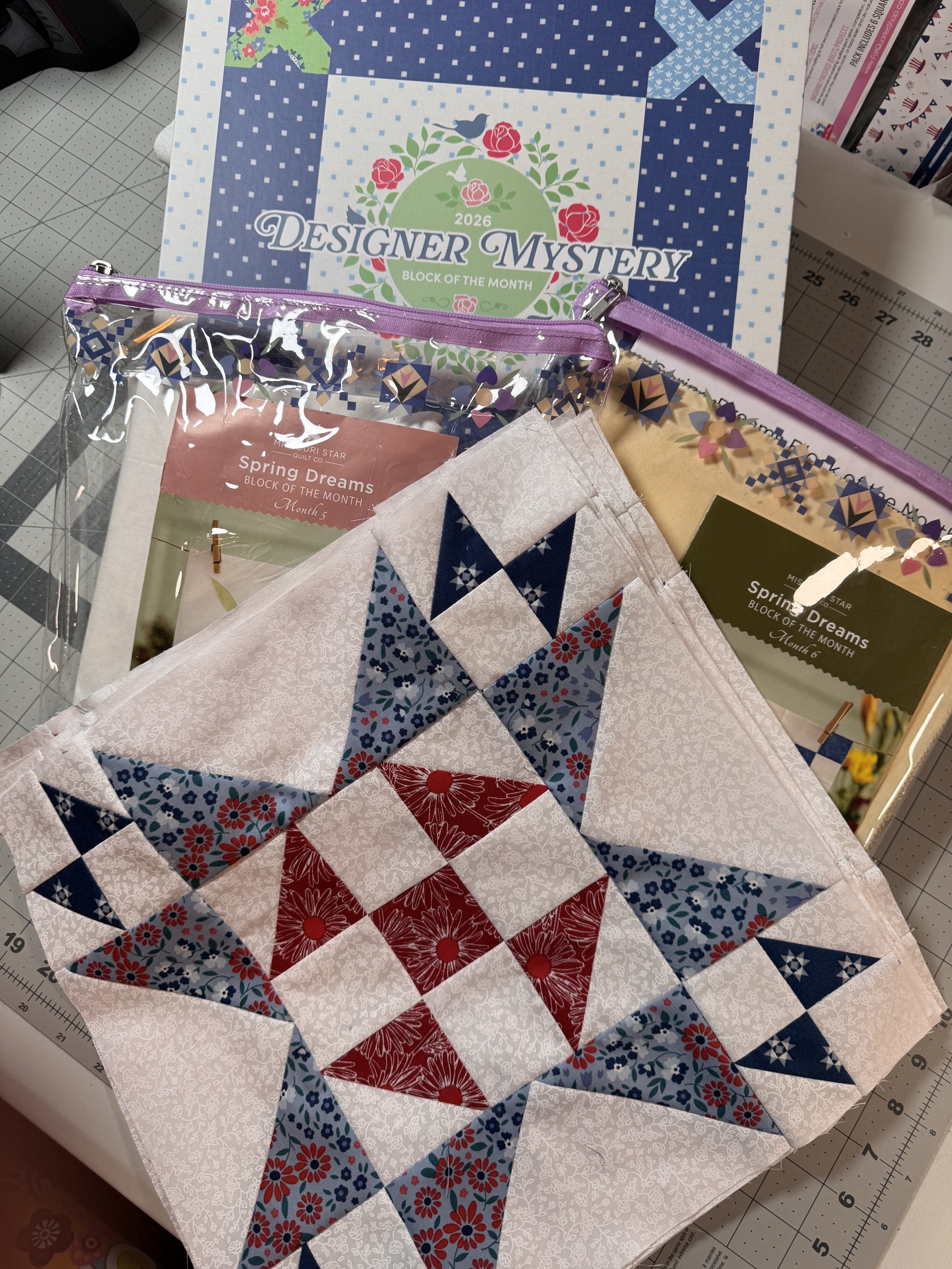
The May and June blocks for the Missouri Star Spring Dreams block of the month.
The first block for Fat Quarter Shop's 2026 Designer Mystery Block of the Month
I'm also looking forward to participating in Fat Quarter Shop's Jolly Tree Farm sew along when those weekly patterns are released at the end of June. This is a free seasonal quilt along done for various holidays and I LOVE them.
There is absolutely no possibility that I have overcommitted myself.
Please do not check my project baskets for confirmation.
This Week's Lesson
This week's reminder is simple:
Progress counts.
Not every sewing session results in a finished quilt. Sometimes progress looks like organizing fabric, trimming blocks, pressing seams, or making a plan for what comes next.
A quilt is built one seam at a time, and sometimes one seam is enough.
Around the Blog
This week on Chris Cross Quilts:
10 Things I Wish Someone Had Told Me Before I Started Sewing
coming soon:
Why I Prefer 100% Cotton
Quilt Shop Fabric vs. Big Box Store Fabric
If you're new here, welcome! Grab a cup of coffee, look around, and stay awhile.
The Adjustment Period
The newest members of the household are still settling into their new surroundings. As expected, the first few days have included a little uncertainty, some growling, a few hisses, and extensive inspections of every available hiding place.
Both felines are gradually becoming more comfortable, though each is handling the move differently. One has decided that exploring is an acceptable pastime as long as nobody makes any sudden movements. The other is taking a more cautious approach and appears to be conducting a thorough risk assessment before fully committing to family life.
For now, they have not yet assumed their official roles as Sewing Room Supervisors. Their current duties seem to consist primarily of observing household activities, evaluating the dogs from a safe distance, claiming their territory and determining whether the humans are sufficiently trained.
The adjustment period is going about as expected. There have been encouraging moments, a few dramatic moments, and several reminders that cats rarely read the instruction manuals humans write for them. Each day brings a little more confidence, a little more curiosity, and a little less concern about the strange new place they've landed.
I suspect it won't be long before they discover the true purpose of a quilting studio: sitting directly on the project you're working on, stealing the warmest chair in the room, and contributing cat hair to every quilt as a signature design element, this may not go over well with me…. we shall see.
If all continues to go well, they may become regular contributors to future Stitch Reports. For now, they're still in orientation.
Until Next Saturday...
Thank you for spending a little time in my sewing room this week.
May your seams stay straight, your bobbin stay full, and your favorite rotary cutter be exactly where you left it.
(Unlike my scissors, which continue to disappear under mysterious circumstances.)
Until next Saturday,
~Chris
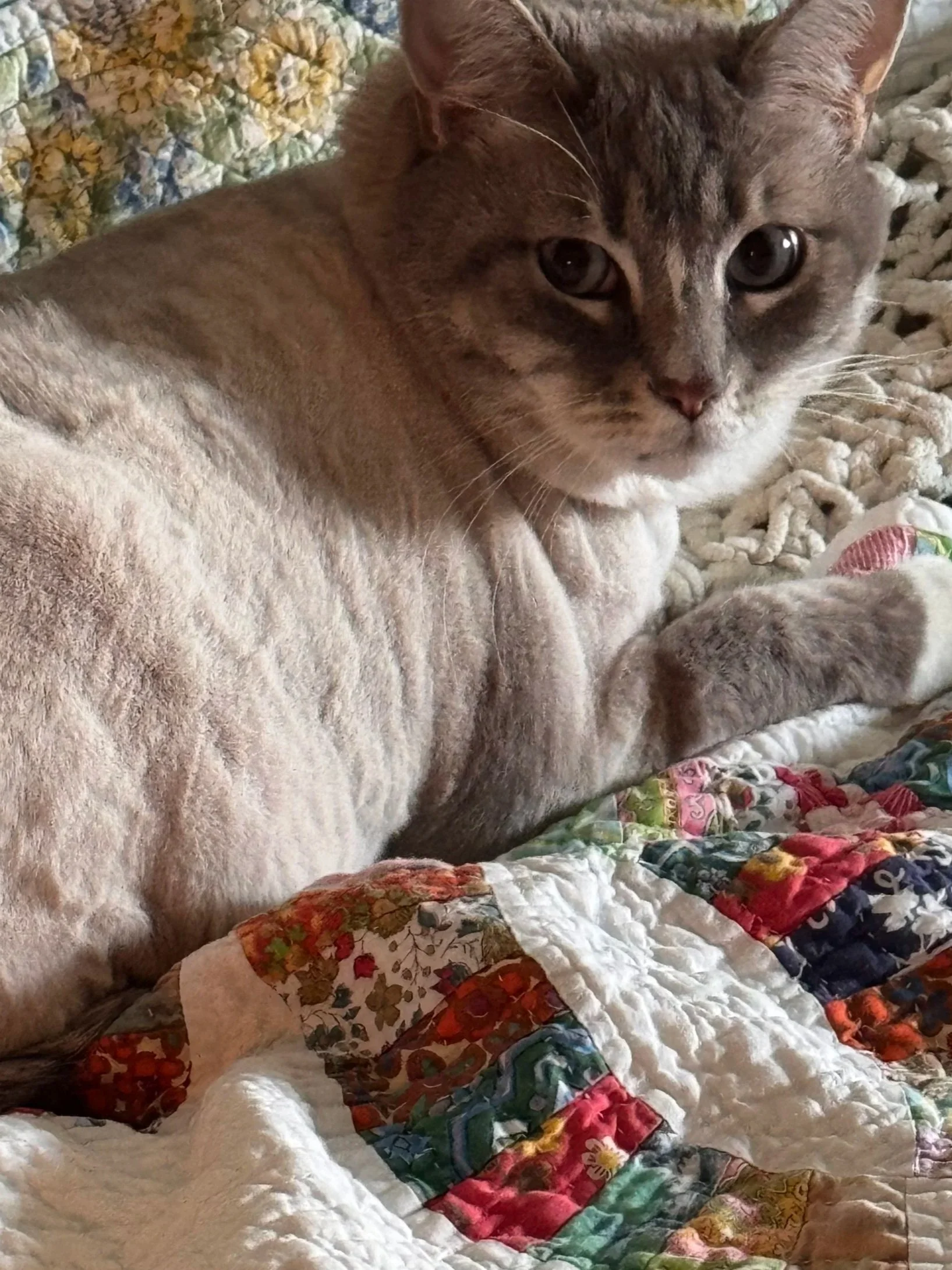
Nobody Warned Me Quilting Eventually Comes With Cats
When I started quilting, I expected fabric, rotary cutters, rulers, and unfinished projects.
What I did not expect was cats.
After spending nearly six decades convinced I didn't like cats (and being allergic to them), I somehow ended up with two feline supervisors, cat trees, specialty cat food, and enough HEPA filtration to support a small nation.
I've become convinced that nobody tells you the whole truth when you start quilting: eventually, cats seem to become part of the hobby.
This is the story of how a lifelong dog person accidentally became owned by two cats, and why I now believe quilting and cats are mysteriously connected.
When I started quilting, I expected fabric.
Lots and lots of fabric.
I expected rotary cutters.
I expected rulers.
I expected unfinished projects.
I expected to spend far more money on cotton than any reasonable person should.
I expected fabric collections to arrive faster than completed quilts.
All of that happened.
What I did not expect was cats.
I did not expect cat trees.
I did not expect specialty cat food.
I did not expect heavy-duty HEPA air purifiers capable of filtering the atmosphere of a small country.
Nobody tells you this when you start quilting.
They tell you about fabric addiction.
Nobody mentions that quilting may eventually require feline furniture and an upgraded air filtration system.
Somewhere along the way, quilting became significantly more expensive than advertised.
For 57 years, I successfully avoided cat ownership.
Not only because I'm allergic to cats.
I was also fully convinced I didn't like them.
At all.
Dogs made sense to me.
Dogs are straightforward.
Dogs are thrilled you're alive.
Dogs act like you've returned from a heroic military deployment every time you come back from checking the mailbox.
Cats, on the other hand, seemed suspicious.
Judgmental.
Like tiny furry middle managers constantly evaluating my performance.
If you had told me a year ago that I would someday be researching cat behavior, discussing litter box placement, feeding specialty cat food designed to reduce the protein I'm allergic to, and worrying about whether two cats felt comfortable in my home, I would have laughed directly in your face.
Then a stray cat showed up.
Which was unfortunate.
Because it turns out my opinion of cats was based entirely on not knowing any cats.
For over a year she lived outside.
I fed her.
I worried about her.
I checked on her.
I made sure she survived North Dakota weather, which is basically every weather condition known to mankind plus a few experimental ones.
But she remained outside.
This seemed like the perfect arrangement.
I could care about a cat without actually owning a cat.
Or more accurately, without admitting I owned a cat.
Or so I thought.
Then I brought her inside.
Ten days later, she was gone.
And somehow my response to that situation was:
"Perhaps what I need is more cats."
I realize this logic makes absolutely no sense.
Yet here we are.
Looking back, I suspect the stray cat had been slowly converting me for over a year.
Like a tiny furry missionary.
By the time I realized what was happening, it was already too late.
The paperwork had been processed.
The transfer of ownership was complete.
I no longer owned myself.
I belonged to cats.
I just hadn't been notified.
Now, to be completely honest, I was kind of looking for cats.
This realization was almost as shocking as the cats themselves.
A year earlier I was firmly convinced I didn't like cats.
The allergy part wasn't even debatable. My immune system had receipts.
Now I was scrolling through cat listings.
I wasn't searching for a specific breed.
I wasn't making spreadsheets.
I wasn't comparing features and benefits.
I was simply looking for a cat that needed a home.
As it turns out, two cats needed a home.
And apparently the woman who is allergic to cats, disliked cats, and had successfully avoided cat ownership for nearly six decades was suddenly volunteering for the position.
I would love to tell you there was a well-thought-out decision-making process.
There was not.
There were cats.
They needed a home.
I had a home.
The math was surprisingly simple.
This is the sort of decision that makes perfect sense to animal lovers and absolutely no sense to anyone else.
Before I knew it, Skiddy and Bobo had arrived.
And with them came the reminder.
Cats do not have owners.
Cats have staff.
I thought I was adopting two cats.
Instead, I appear to have accepted an entry-level management position in a small but highly demanding feline corporation.
The compensation package remains unclear.
Sometimes I receive purring.
Sometimes I receive judgment.
The performance reviews appear to occur daily.
The expectations are never communicated in advance.
One cat currently believes growling is an acceptable form of conversation.
The other appears to be conducting extensive research from underneath furniture.
Honestly, we're all adjusting.
Looking back, I can actually chart the progression.
First came the fabric.
Then came the rulers.
Then came the patterns.
Then came the storage totes.
Then came additional storage totes for the fabric that no longer fit in the original storage totes.
Then came the cats.
Then came the cat trees.
Then came the specialty food.
Then came the industrial-strength HEPA filters.
At no point did anyone provide a roadmap for this journey.
But as I've navigated this unexpected chapter of life, I've started noticing something.
Every quilting group has cats.
Every quilting magazine has cats.
Every quilting Facebook page has cats.
Every quilting influencer has cats.
Every quilt laid out on the floor appears to summon cats from neighboring zip codes.
For years I assumed this was coincidence.
Now I'm beginning to suspect cats are somehow included with quilting, like a notion or a sewing machine.
Required.
And honestly, I should have picked up on the pattern earlier.
Every quilting Facebook group.
Every quilting Instagram account.
Every quilt retreat.
Every sewing room tour.
Cats.
The evidence was everywhere.
Nobody tells you this when you start.
They tell you about seam allowances.
They tell you about batting.
They tell you about quarter-inch feet.
They tell you about fabric grain.
Nobody tells you that eventually you'll be discussing feline behavior with complete sincerity.
Nobody tells you that cats consider a quilt in progress to be a personal invitation.
Nobody tells you that the quilting community and the cat community apparently merged sometime in the distant past and nobody remembers exactly when.
The longer I quilt, the more evidence I find.
Need proof?
Try laying a quilt on the floor.
Just once.
Leave the room.
I am convinced there is a signal emitted by unfinished quilts that can be detected by cats from several counties away.
They arrive.
They sit.
They shed.
They stare at you as if you're the one being unreasonable.
At this point, I have concluded that quilting is not one hobby.
It's two hobbies.
The first hobby is quilting.
The second hobby is …. Cats.
Experienced quilters are laughing right now because they know exactly how this ends.
The cat wins.
The cat always wins.
The longer I quilt, the more I realize quilting was never really about quilts.
The quilts are wonderful.
But quilting also brought friendships.
Creativity.
Confidence.
Learning.
A community.
This blog.
People who understand why owning enough fabric to survive several economic collapses seems perfectly reasonable.
And somehow, in a completely unexpected turn of events, cats.
I thought quilting would bring fabric into my life.
Instead, it brought friendships, creativity, community, and somehow managed to convince a woman who is still allergic to cats and absolutely certain she disliked them to open her home to two of them.
That's a pretty impressive hobby.
Now I'm curious.
What did quilting bring into your life that you never expected?
Was it lifelong friendships?
Travel?
Teaching?
A business?
A creative confidence you didn't know you had?
Or are you, too, sitting there reading this while a cat supervises you?
Because I genuinely did not know cats and quilting were so intricately connected.
And before anyone asks, no, I do not let them lay on my quilts.
Yet.
Although based on every quilter I've ever met, every quilting photo I've ever seen, and every warning I've received since bringing home Skiddy and Bobo, I suspect that battle has already been lost.
The cats probably know it.
Everyone else probably knows it.
I am apparently the last one to figure it out.
Fabric Matters More Than You Think
Ever wonder why one project turns out exactly as planned while another seems determined to fight you every step of the way?
The secret often isn't the pattern—it's the fabric.
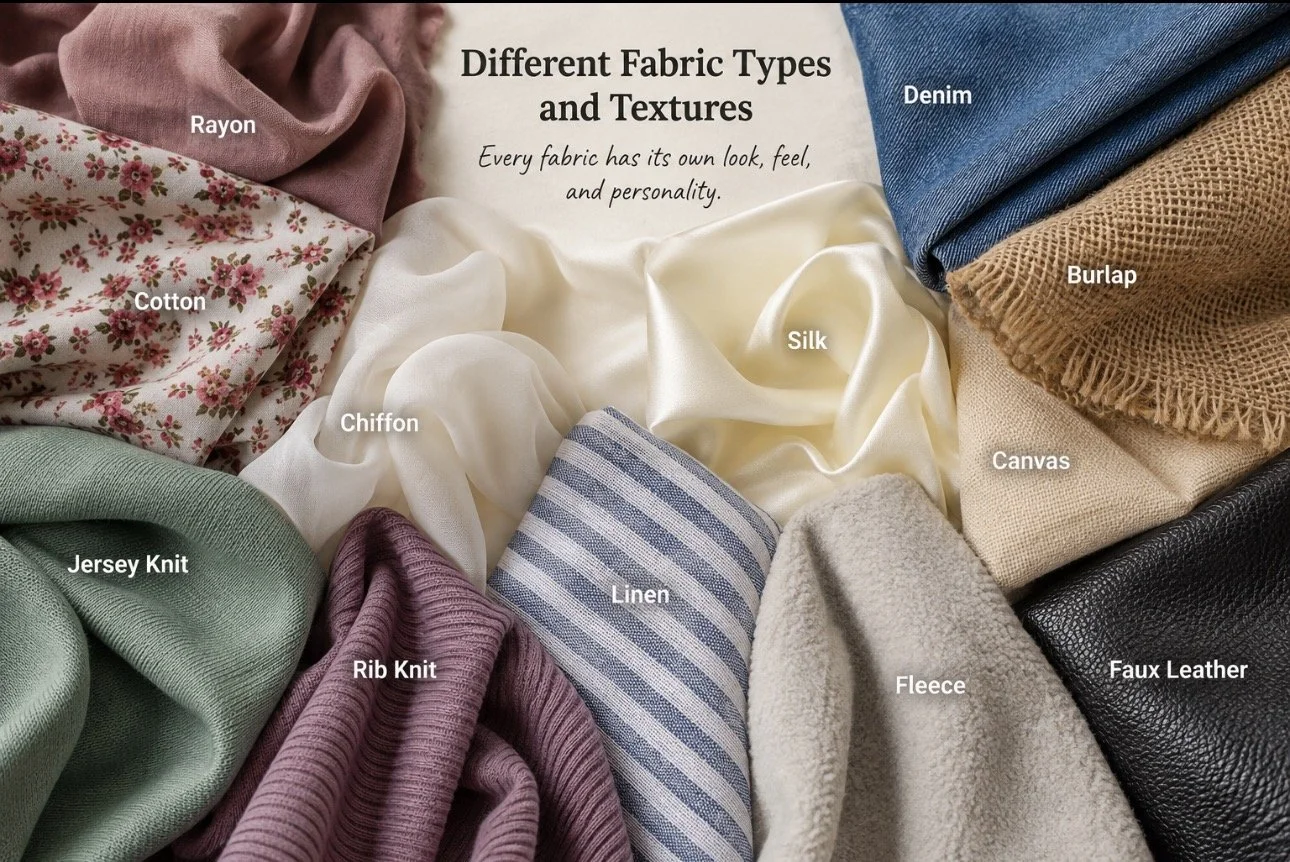
From quilting cotton and denim to rayon, linen, knits, and canvas, every fabric has its own personality, strengths, quirks, and occasional attitude problem. Understanding how different fabrics feel, drape, stretch, and wear can completely change the outcome of your sewing projects.
In this post, we're diving into fabric types, textures, print scale, and why choosing the right fabric can be the difference between "I made this!" and "What on earth happened here?"
Grab your favorite beverage and let's talk fabric—because fabric matters more than you think.
Why Your Fabric Choice Can Make or Break a Project
If you've spent any time around quilters or sewists, you've probably heard someone say, "Fabric is fabric." (More Thoughts on Fabric)
Those people are wrong.
Not necessarily bad people. Just wrong.
Choosing fabric for a project is a little like choosing ingredients for a recipe. Sure, technically you can substitute things. But if a recipe calls for flour and you dump in powdered sugar instead, don't be surprised when things get weird.
The same thing happens with fabric.
One of the biggest surprises for new sewists is discovering that the fabric you choose often matters more than the pattern itself. The same pattern sewn in different fabrics can look, fit, feel, and behave like completely different projects.
That's why understanding fabric is one of the most valuable sewing skills you can develop.
Quilting Cotton: The Reliable Friend
Quilting cotton is the fabric most of us start with. (Read more here: Why I Prefer 100% Cotton)
It's stable, easy to cut, easy to sew, presses beautifully, and generally behaves itself.
Think of quilting cotton as the golden retriever of the fabric world.
Friendly.
Predictable.
Eager to cooperate.
It's perfect for:
Quilts
Tote bags
Table runners
Pillow covers
Home décor projects
Many beginner sewing projects
It comes in an endless variety of colors and prints, which is one reason fabric collections become... well... collections.
And by collections, I mean enough fabric to survive several generations after the zombie apocalypse.
Apparel Fabrics: A Whole Different Personality
Once you move into garment sewing, things get interesting.
Fabric suddenly develops opinions.
Some fabrics drape softly and flow around the body.
Others stand at attention like they just enlisted in the military.
A dress pattern made from rayon will look completely different than the same dress made from linen.
A blouse sewn from cotton lawn will feel different than one sewn from flannel.
This is where terms like:
Drape
Hand
Weight
Stretch
Recovery
start becoming important.
Drape
Drape is how fabric hangs.
Rayon and challis tend to flow and move.
Denim and canvas tend to hold their shape.
Neither is right or wrong.
They're simply different tools for different jobs.
Hand
Hand refers to how fabric feels.
Soft.
Crisp.
Silky.
Smooth.
Textured.
It's one of those sewing terms that sounds strange until you've handled enough fabric to immediately understand it.
The Print Matters Too
Fabric selection isn't just about the type of fabric.
The print matters every bit as much.
A large floral can make a dramatic statement.
A tiny floral can read almost like a solid from a distance.
Buffalo check creates a completely different visual effect than polka dots.
Stripes can lengthen or widen the appearance of a garment depending on how they're used.
Large-scale prints may disappear entirely if they're cut into small pattern pieces.
Ever fall in love with a fabric featuring giant sunflowers only to discover the pattern pieces are so small each one ends up looking like a random yellow blob?
Ask me how I know.
Actually don't.
I'm still recovering.
Scale Changes Everything
One of the biggest lessons in sewing is learning to pay attention to print scale.
Small Prints
Small prints tend to:
Look more subtle
Blend visually
Work well in detailed garments
Play nicely with complicated piecing
Large Prints
Large prints tend to:
Make bold statements
Showcase artwork
Work beautifully on larger garment pieces
Sometimes get lost in small projects
Neither is better.
They're simply creating different effects.
Denim Deserves Its Own Category
Let's talk about denim.
Not because it's difficult.
Because denim seems to multiply when nobody is looking.
Most sewists are completely incapable of throwing away fabric.
Not scraps.
Not remnants.
Not old jeans.
Not shirts with holes.
Not jackets missing buttons.
Because the minute you suggest throwing them away, our brains immediately scream:
"But I could use that for something!"
And honestly?
Sometimes we're right.
Old denim becomes bags.
Patches.
Appliqué.
Rug projects.
Storage baskets.
Journal covers.
Quilt blocks.
Dog toys.
Or it sits in a tote for seven years waiting for the perfect project.
Which is still technically a plan.
Fabric Rules Exist... But They're Not Laws
One thing I love about sewing is that there are recommendations everywhere.
Use this fabric.
Avoid that fabric.
Don't mix these.
Never do that.
And while those recommendations exist for good reasons, they aren't laws.
They're information.
Knowing the rules helps you predict the results.
Once you understand the likely outcome, you can intentionally break every rule in the book if that's the effect you're after.
That's where creativity lives.
The Real Secret
The goal isn't learning which fabrics are "right."
The goal is learning what each fabric does.
Once you understand how a fabric behaves, you stop guessing and start designing.
You begin choosing fabrics intentionally rather than simply because they're pretty.
Although let's be honest...
Sometimes we absolutely buy fabric because it's pretty.
No project.
No plan.
No justification whatsoever.
Just pure fabric-induced loss of self-control.
And that's okay too.
I won't judge.
Mostly because my own fabric shelves are listening.
~Chris
Coming Soon: We'll take a deeper dive into fabric precuts, including fat quarters, fat eighths, jelly rolls, layer cakes, charm packs, mini charms, honey buns, fabric panels, and how fabric collections are designed to work together. Because apparently fabric companies discovered that naming things after desserts is an excellent way to convince quilters to buy more fabric.
10 Things I Wish Someone Had Told Me Before I Started Sewing
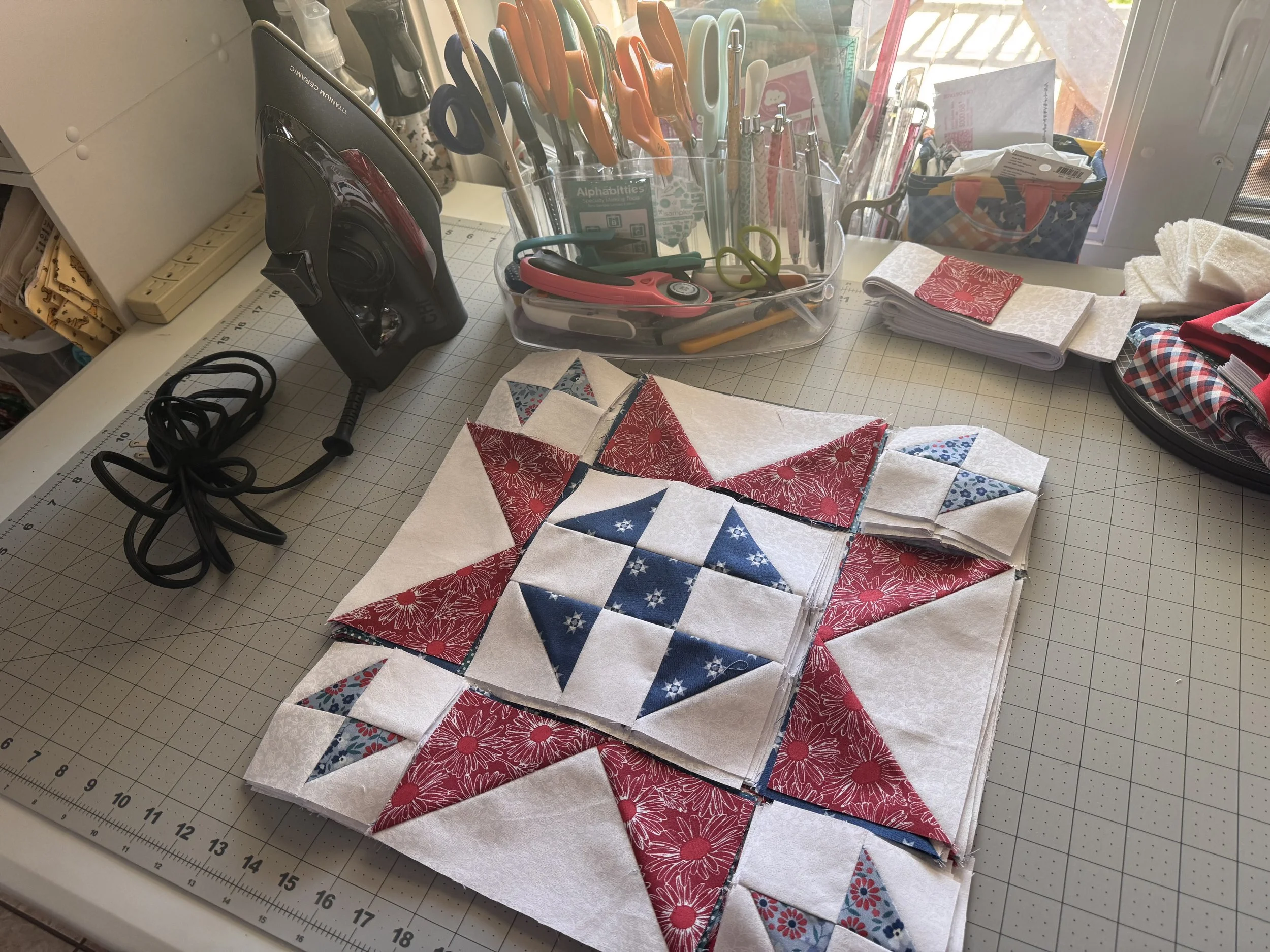
I bought a sewing machine, used it twice, packed it away for fifteen years, and had no idea how much it would eventually change my life. Here are ten things I wish someone had known to tell me before I started sewing.
If you'd told me ten years ago that I'd eventually own more fabric than any reasonable person needs, spend hours debating thread choices, and launch a quilting blog, I would have laughed.
Mostly because my sewing machine was sitting in a closet.
For fifteen years.
I bought my first sewing machine with good intentions. I used it once or twice, packed it away, and didn't touch it again for about fifteen years.
Apparently, I wasn't ready.
Then one day I pulled it back out.
What I expected was a hobby.
What I got was a full-blown obsession, an education, a creative outlet, countless hours of enjoyment, enough fabric to insulate a small house, and a hobby that has taught me far more about myself than I ever expected.
Looking back, here are ten things I really wish someone had told me before I started sewing.
1. THIS HOBBY IS WAY MORE ADDICTIVE THAN ANYONE ADMITS
People talk about sewing like it's a hobby.
A hobby is collecting stamps.
A hobby is occasionally playing golf.
Sewing is more of a lifestyle choice.
At first, you'll make one project.
Then another.
Then you'll start looking at furniture and thinking, I could recover that.
You'll walk through stores evaluating curtains by construction quality.
You'll find yourself inspecting handbags to figure out how they were assembled.
You stop seeing objects and start seeing patterns.
There should probably be a warning label on sewing machines.
Caution: May result in complete obsession.
2. SAVING MONEY IS NOT USUALLY HOW THIS WORKS
I distinctly remember thinking sewing would save me money.
That's adorable.
Technically, yes, sewing can save money.
In the same way that buying a fishing boat can save money on fish.
You'll start with a machine.
Then you'll need fabric.
Then better scissors.
Then a rotary cutter.
Then a cutting mat.
Then rulers.
Then thread.
Then specialty feet.
Then storage containers for all the supplies you now apparently own.
Before long, you've invested enough money that you're explaining purchases using phrases like:
"Well, technically I needed it."
And honestly?
Most of us are perfectly okay with that.
3. FABRIC HAS A MYSTERIOUS ABILITY TO REPRODUCE
Nobody warns beginners that fabric breeding programs apparently exist.
You buy two yards for a project.
Then four.
Then six.
Then a fat quarter bundle follows you home.
Then a jelly roll.
Then an entire fabric collection because you loved one print and somehow convinced yourself the other twenty-six were absolutely necessary too.
Eventually you'll have a fabric stash.
You will stop calling it "too much fabric" and start referring to it as "inventory."
This is normal.
At least that's what we tell each other.
4. YOU WILL DEVELOP STRONG OPINIONS ABOUT THINGS YOU NEVER KNEW EXISTED
Needles.
Pins.
Thread.
Interfacing.
Batting.
Seam allowances.
Fabric grain.
Rotary blades.
You don't know it yet, but someday you'll have an opinion about all of them.
A strong opinion.
Possibly one you're willing to defend.
It's a strange transformation.
One day you're a normal person.
The next you're explaining the difference between a quilting needle and a universal needle to someone who didn't actually ask.
5. SEAM RIPPERS ARE NOT EVIDENCE OF FAILURE
This one would have saved me a lot of frustration.
Beginners think experienced sewists don't make mistakes.
That's adorable too.
Experienced sewists make mistakes all the time.
The difference is they've accepted that mistakes are part of the process.
Sometimes you sew something upside down.
Sometimes inside out.
Sometimes perfectly wrong.
Sometimes you discover your mistake immediately after proudly announcing, "Look how good this is turning out."
The seam ripper isn't proof you're bad at sewing.
It's proof you're sewing.
In fact, if your seam ripper is buried in a drawer, I'm going to assume you're either a beginner or a liar.
6. PRESSING AND IRONING ARE NOT THE SAME THING
I truly did not know this.
I thought ironing was ironing.
Apparently not.
Pressing is one of those things that seems incredibly boring until you realize it can completely change the outcome of a project.
Good pressing can make average sewing look fantastic.
Skipping it can make fantastic sewing look average.
I resisted this lesson.
The lesson won.
7. SEWING WILL TEACH YOU MORE ABOUT YOURSELF THAN YOU EXPECT
This one surprised me.
Sewing isn't just fabric and thread.
It's problem solving.
Patience.
Perseverance.
Creativity.
Humility.
Sometimes all in the same afternoon.
A project will reveal exactly how you handle frustration.
How you react when things don't go according to plan.
How willing you are to try again after you've already tried three times.
There have been projects that taught me more about myself than some self-help books.
Although, to be fair, I was probably listening to a self-help book while making them.
8. AUDIOBOOKS AND SEWING ARE A DANGEROUS COMBINATION
No one prepared me for this relationship.
I started listening to audiobooks years ago, but once sewing entered the picture, my listening hours skyrocketed. There are only so many hours in a day, and apparently I've figured out how to spend most of them either sewing, listening to books, or doing both at the same time.
At this point, I honestly think I should own shares in Audible. My listening stats are ridiculous, my library is enormous, and any fellow book lover would either be impressed or mildly concerned.
You learn new skills.
You hear great stories.
You discover new ideas.
And before long you've created a habit where sewing and learning happen at the same time.
The downside?
You'll occasionally have to rewind because you became completely absorbed in matching seams and have no idea what happened in the last chapter.
Or you'll be listening to a mystery novel and suddenly realize you've spent the last twenty minutes suspecting the wrong character while also sewing two blocks together backwards.
Neither situation is ideal.
9. HANDMADE THINGS CARRY PIECES OF YOUR LIFE
Every project becomes attached to a memory.
A season.
A person.
A stage of life.
I can look at certain quilts and immediately remember where I was emotionally when I made them.
Who they were for.
What was happening in life at the time.
Years later, those stitches still tell the story.
I didn't realize sewing would become a way of documenting life.
But in many ways, that's exactly what it has become.
Every quilt becomes a scrapbook made from fabric instead of paper.
10. SOMETIMES THE RIGHT HOBBY FINDS YOU AT THE RIGHT TIME
For me, sewing wasn't love at first stitch.
I bought the machine.
Used it a couple of times.
Packed it away.
And then ignored it for fifteen years.
Apparently the timing wasn't right.
When I finally pulled it back out, something clicked.
What started as curiosity became creativity.
Creativity became learning.
Learning became confidence.
Confidence became a room full of fabric, a long list of projects, and eventually this blog.
Looking back, I'm glad I didn't force it all those years ago.
Sometimes hobbies come into our lives when we're ready for them.
And sometimes they quietly wait in a closet until then.
FINAL THOUGHTS
If you're just getting started, welcome.
You're about to learn a lot.
You'll make mistakes.
You'll buy fabric you don't technically need.
You'll probably lose your scissors at least once a week.
You'll discover that bobbins are always empty at the worst possible moment.
You'll start referring to fabric purchases as "investments."
And you'll eventually reach the point where non-sewing people ask, "Do you really need more fabric?" while sewists immediately respond, "What did you buy?"
And somewhere along the way, you'll create something with your own two hands that makes you step back and think:
"I made that."
That's the moment that keeps us coming back.
Not because every project turns out perfectly.
Trust me, they don't.
But because sewing teaches us that mistakes can be fixed, skills can be learned, and creativity grows every time we sit down and try again.
Even if that creativity eventually takes over an entire room of the house.
And honestly?
I wouldn't have it any other way.
~Chris
Well… This Happened.
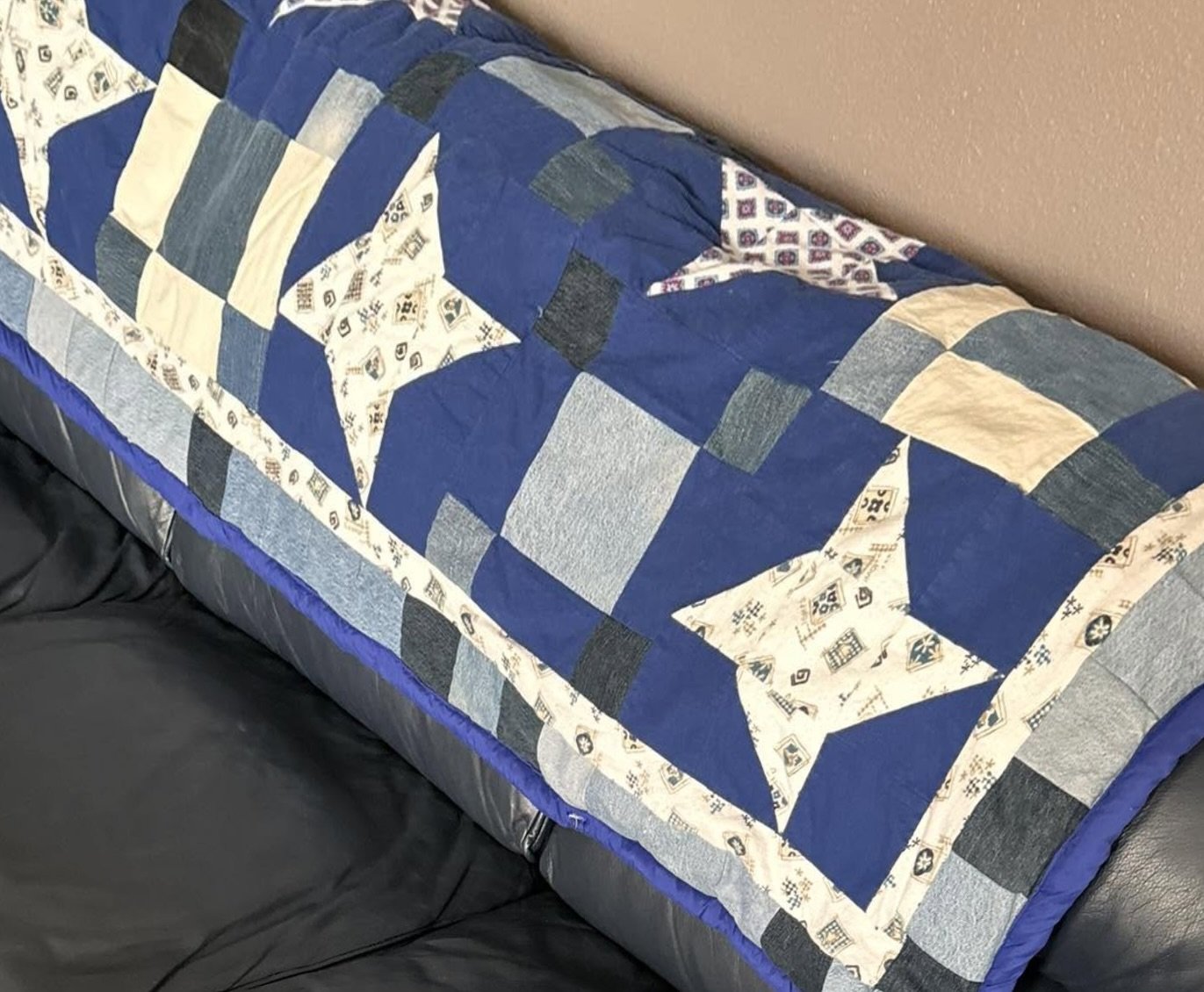
The very first quilt made, using old jeans and scrap fabric from my mother in law.
Welcome to Chris Cross Quilts and More.
Or, as I like to call it, the place where a perfectly reasonable adult somehow developed an unhealthy relationship with fabric.
If you bought fabric 5 years ago for a project you haven’t started yet, hidden another new fat quarter bundle from your spouse, or found yourself explaining why you absolutely needed another shade of blue, you’re among friends here.
A few years ago, I didn’t sew.
Not at all.
I wasn’t raised quilting. I didn’t grow up making my own clothes. I wasn’t one of those people who inherited generations of sewing wisdom or knew what a quarter-inch seam allowance was.
Then one day I decided to learn.
And what started as a simple project quickly turned into a full-blown obsession.
You know how some people collect shoes? I also collect shoes, but that's a whole different story, because I also hate wearing shoes....
I collect fabric.
And rulers.
And thread.
And patterns.
And projects that seemed like a great idea at 11:00 p.m.
Four years later, sewing has become one of my favorite things in the world. It challenges me, frustrates me, teaches me patience, occasionally teaches me new vocabulary when something goes wrong, and somehow keeps pulling me back for more.
So why start a blog? (Aside from simply attempting to embarrass my kids that is).
Because if there’s one thing I’ve learned, it’s that sewing isn’t really about fabric. (If you’re just getting started, check out my post on 10 Things I Wish Someone Had Told Me Before I Started Sewing)
It’s about creating something with your own two hands.
It's about community, friendship and shared lives.
It’s about learning a skill that people have been passing down for generations.
It’s about making gifts that become family treasures.
It’s about fixing things instead of throwing them away.
It’s about creativity, problem-solving, and occasionally staring at a tangled bobbin while questioning your life choices.
Most of all, it’s about the stories.
Every quilt has a story.
Every project teaches something.
Every sewer (sewist) has at least one disaster they can laugh about later.
(If you’ve never sewn a project together upside down, inside out, or backwards, you’re either lying or you’ve been sewing for approximately twelve minutes.)
This little corner of the internet will be a place where we talk about all of it.
The successes.
The mistakes.
The projects.
The tools.
The history of sewing and quilting.
The things that work.
The things that definitely do not work.
I’ll share tutorials, tips for beginners, projects I’m working on, things I’m learning, and probably a few stories that begin with, “So there I was, and this seemed like a good idea at the time…”
Whether you’ve been sewing for forty years or just bought your first machine and are wondering why it’s making that noise, you’re welcome here.
Pull up a chair.
Grab a cup of coffee.
Try not to step on any pins.
Let’s see where this adventure takes us.
And if it turns out to be a misadventure?
Well, those usually make the best stories anyway.
— Chris