
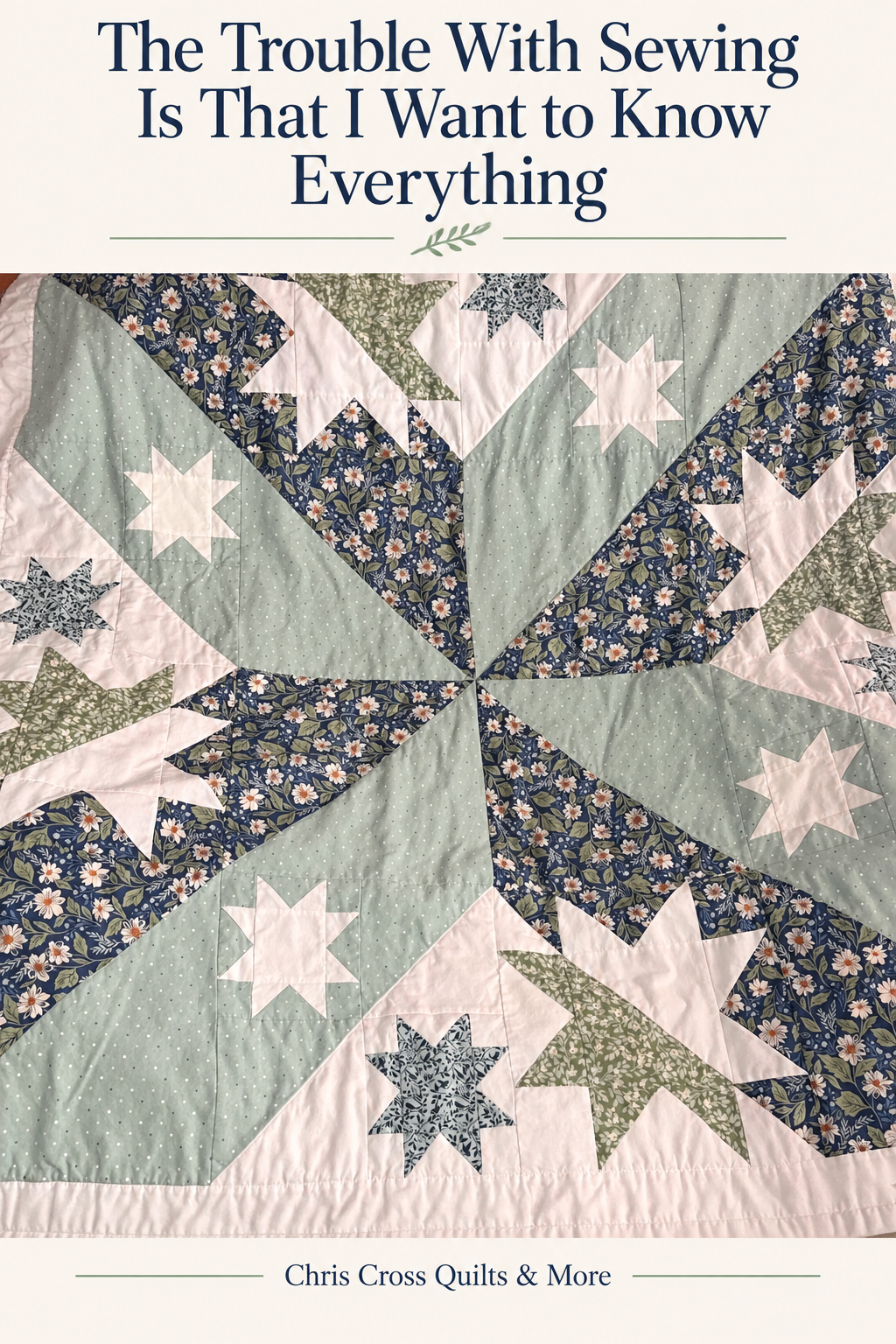
The Sewing chair #10
I never expected to get this wrapped up in sewing. Now I want to make quilts, clothes, bags and things for my home—and I’m a little jealous of everyone who makes it look easy. The surprise is how much I’ve learned along the way without noticing.
The Trouble With Sewing Is That I Want to Know Everything
I am jealous of people who know how to sew.
This is an awkward thing to admit when I also know how to sew. I have made quilts, worked with appliqué, tried English paper piecing and Manx blocks, and begun hand quilting. I understand a quarter-inch seam, have preferences about rulers and know which of my machines I want for a particular job. I am not standing in front of a sewing machine wondering where the thread goes.
But another quilter will look at a block and immediately see four ways to construct it. She knows which method wastes the least fabric and which will give her better points. I am still trying to determine how the block was assembled in the first place. Someone else matches striped binding so neatly that the join disappears. Another person identifies a fabric collection from a sliver of print in a photograph.
I admire them. I also feel a small, unreasonable flash of jealousy. I don’t want them to know less; I would just appreciate knowing what they know, preferably without making every mistake required to get there.
What makes this especially ridiculous is that I never expected to care about sewing at all. I certainly never imagined I would become this wrapped up in it. I thought I might learn to make a few things. I did not anticipate spending an evening reading about batting, developing opinions about seam allowances or looking at someone’s bag and trying to work out how they made the corners. At some point, “I’d like to try sewing” became “I need to understand everything that can be done with fabric and thread,” which was a fairly significant change in scope.
ONE QUESTION LEADS TO TWELVE MORE
Quilting alone could keep me busy for the rest of my life. There is piecing, appliqué, foundation paper piecing, English paper piecing, hand piecing, hand quilting, free-motion quilting and longarming. Each one comes with its own tools, techniques and people who have very convincing reasons for doing things differently from one another.
I can decide to learn more about hand quilting and immediately find myself comparing needles, thread weights, batting, marking methods and thimbles. I came in hoping to make smaller stitches. Apparently, I first need to choose a position on approximately six other matters.
Even sewing two squares together can become an education. We sew them, press them, cut them apart and sew the pieces back together in a different arrangement. Then someone explains a method that would have produced the same block more accurately with fewer steps. That explanation usually arrives shortly after I have finished mine.
And quilting is only part of what I want to learn.
I want to sew clothes that fit well. I want to alter a pattern without wondering whether one small change will somehow move the entire sleeve to the wrong side of my body. I want to understand fabric drape, ease, linings and why a garment that looked lovely in the pattern photograph looks quite different once a real person inhabits it.
I want to make bags with neat zippers, sturdy straps and enough structure to stand up without resembling a piece of luggage. Bag makers seem able to choose between interfacing, fleece, foam and various other materials with complete confidence. I would like to know how they do that before I commit several hours of work and a perfectly good piece of fabric to the wrong one.
Then there is home décor. Curtains, cushions and slipcovers sound approachable until measuring becomes involved. A quilt can be a little larger than planned and still be a quilt. A curtain that is four inches too short will spend every day informing you of that fact.
These are all forms of sewing, but competence in one does not automatically transfer to the others. Knowing how to make a quilt has not given me the ability to fit trousers or install a professional-looking bag zipper. I think the shared use of a sewing machine creates a false impression that they are all roughly the same activity. The machine knows better.
THE PART I TEND TO FORGET
The internet does not help with the jealousy. It puts a beautifully fitted jacket, a quilt with perfect points and a handmade bag with immaculate topstitching in front of me within five minutes. I see the finished work, not the years of practice behind it. I know, intellectually, that the person who made the jacket may have sewn twenty others. That does not prevent me from looking at mine and wondering why I have not mastered jacket fitting yet, despite having made exactly zero jackets.
At the same time, I have caught myself doing something that surprised me: explaining sewing to other people.
I can explain why a scant quarter-inch seam matters, why I might press one seam differently from another or why I reach for a particular ruler. I can look at a block with points that do not match and usually work out where things went astray. I have learned when a mistake needs fixing and when I have simply been staring at the project from four inches away for too long.
Some of what I once had to look up now comes easily. I have preferences based on what has worked for me, not just what the packaging promised. The knowledge arrived a little at a time, attached to projects, mistakes and seams I would rather not unpick again. Because there was no obvious moment when I became more skilled, I had not quite noticed how much I had learned.
I wonder if the quilters I envy feel the same way. They may be completely comfortable constructing the block I cannot figure out, then go home and stare suspiciously at a garment pattern. Someone new to quilting could probably look at my work and assume I have everything figured out, which would be flattering and wildly inaccurate.
I still feel jealous sometimes. I want the experience behind those beautifully made clothes, bags and quilts, and I am impatient about how long it takes to acquire it. But I am also beginning to recognize that I have already acquired quite a bit. I am not starting from scratch every time I sit down to sew, even when the project in front of me asks something I have never done before.
The interest that took me by surprise has grown into something much bigger than a list of projects I want to make. I want to understand how they work. That may mean I will always be aware of what I have not learned yet, but it also means there will always be something interesting waiting when I return to the sewing room.
Happy stitching! Chris
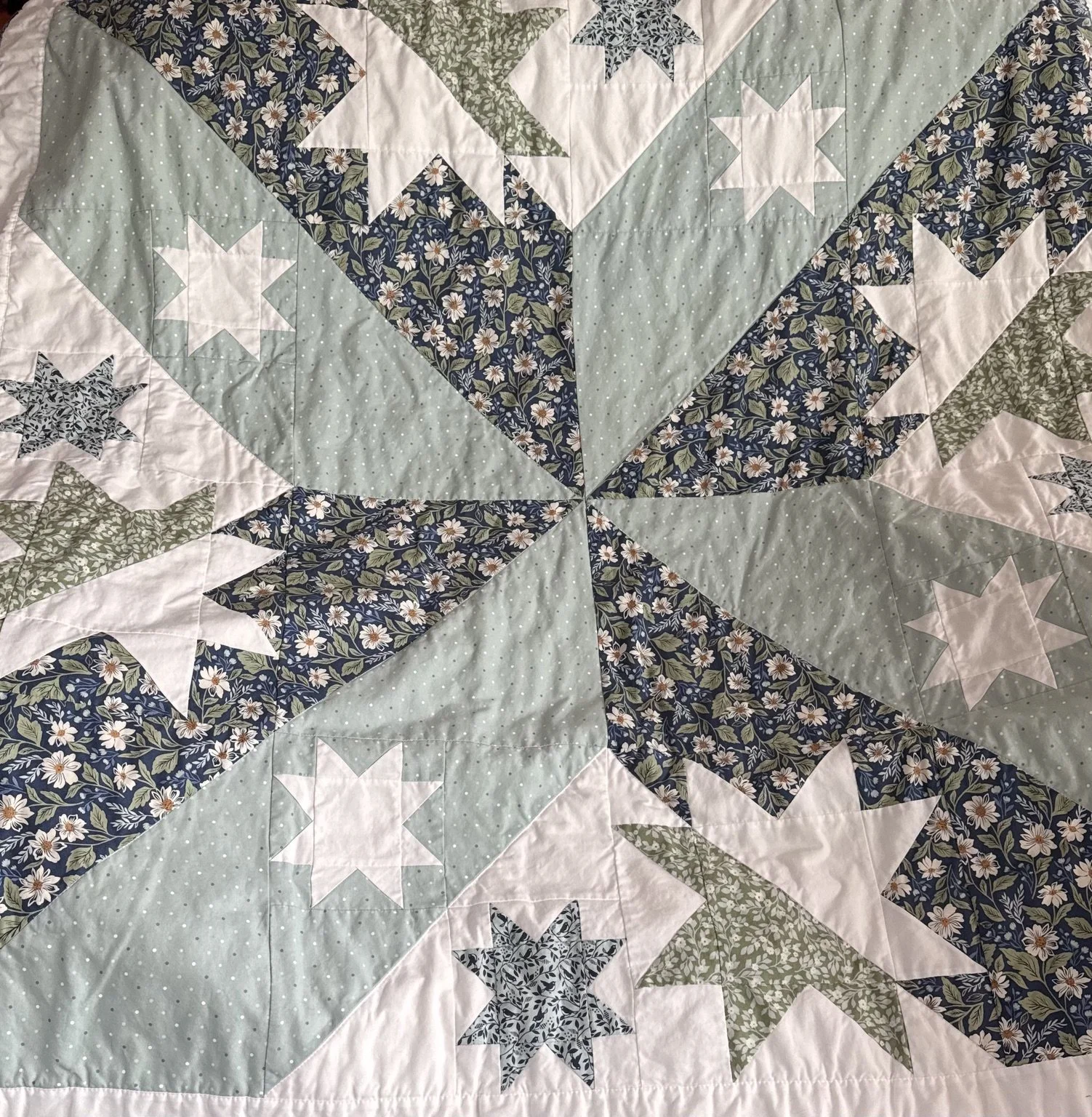
The sewing chair #9
I never expected to get this wrapped up in sewing. Now I want to make quilts, clothes, bags and things for my home—and I’m a little jealous of everyone who makes it look easy. The surprise is how much I’ve learned along the way without noticing.
The Trouble With Sewing Is That I Want to Know Everything
I am jealous of people who know how to sew.
This is an inconvenient admission from someone who also knows how to sew.
I can make a quilt. I understand a quarter-inch seam, know why pressing matters and have developed firm opinions about rulers, rotary cutters and which sewing machine should be used for which job. I have pieced blocks, worked with appliqué, experimented with English paper piecing and Manx blocks, and begun hand quilting.
None of this was something I expected. I never imagined I would become interested in sewing, much less this wrapped up in it. I thought I might learn to make a few things. I did not anticipate developing opinions about seam allowances, spending an evening reading about batting or looking at a bag and wondering how its corners were constructed.
Yet here I am, regularly watching another quilter do something that makes me wonder where I was on the day everyone else learned that.
Someone will casually match a striped binding perfectly at the seam. Another person will identify a fabric collection from three inches of floral print in the corner of a photograph. Someone else can look at a quilt block and immediately explain four ways to construct it, which method wastes the least fabric and why one of them will make the points behave better.
Meanwhile, I am studying the same block as though it may eventually confess its secrets under questioning.
The jealousy is not mean-spirited. I do not want these people to lose their knowledge. I would simply like a duplicate copy placed directly into my brain.
Unfortunately, sewing knowledge does not arrive that way.
THERE IS ALWAYS SOMETHING ELSE TO LEARN
Quilting alone is enormous.
There is traditional piecing, curved piecing, appliqué, foundation paper piecing, English paper piecing, hand piecing, hand quilting, free-motion quilting, ruler work and longarming. There is color theory, fabric history, quilt restoration and enough batting choices to make one suspect that cotton, wool, polyester and bamboo have formed separate committees.
Every subject opens into another subject. Learning about hand quilting leads to needles, thread weights, batting, marking tools, thimbles and the mystery of why one person can make twelve tiny, even stitches appear on a needle while I am negotiating with three.
Even sewing two squares together is not necessarily simple. We sew them together, press them in a particular direction, cut them apart, rearrange them and sew them back together. Then we discuss whether the finished block would have been more accurate if we had used a completely different method from the beginning.
But I do not only want to quilt.
I want to make clothes that fit. I want to understand garment construction well enough to alter a pattern without feeling that I am interfering with structural engineering. I want to insert a zipper beautifully, make a collar lie correctly and sew a sleeve into an armhole without either one becoming openly hostile.
I want to make bags with crisp structure and professional hardware. I want to know which stabilizer will give a tote some body without turning it into carry-on luggage made of drywall. I want neat zippered pockets, straps that do not twist and corners that look deliberate from every angle.
I want to make curtains, cushions, slipcovers, table linens and all the other things included in the cheerful phrase home décor sewing. That phrase makes it sound as though one simply selects a lovely fabric and spends an afternoon improving the house. It does not mention measuring windows, calculating pattern repeats, matching large prints or discovering that the floor, ceiling and window frame have never agreed on what constitutes a straight line.
Quilting, garment sewing, bag making and home décor may all involve fabric, thread and a sewing machine, but they are not small variations of the same skill. They are neighboring countries with related languages, separate customs and surprisingly specific border requirements.
Naturally, I want citizenship in all of them.
EXPERIENCED SEWISTS MAKE IT LOOK DECEPTIVELY REASONABLE
People who have spent years sewing can make difficult things look perfectly manageable.
They say, “I just drafted a facing,” or “I changed the pocket,” or “I added foam stabilizer,” with the same calm tone I use when announcing that I reheated my coffee.
Their hands know how fabric behaves before the fabric has an opportunity to misbehave. They clip, grade, understitch and turn, and a smooth, finished edge emerges without drama. They cut into expensive fabric without requiring a period of silence first. They seem to know exactly how much ease they need, which needle belongs in the machine and why the thread is causing trouble.
Some of them can hear that a sewing machine is not quite right.
I am deeply impressed by all of this. I am also a little irritated.
Not with them, exactly. I am irritated by the number of years and projects required to become the person who knows those things.
I would like the skill that comes from making twenty shirts, but I would prefer to acquire it somewhere around shirt number two. I want the judgment developed through several failed bags without having to produce the bags that teach it. I want to skip directly to confidently altering patterns while retaining the right to be surprised when the instructions suddenly introduce a gusset.
This is unreasonable, but it is sincere.
SOMEWHERE ALONG THE WAY, I LEARNED QUITE A LOT
The internet places the work of thousands of skilled people in front of us without necessarily showing the history behind it. We see the beautifully fitted jacket, not the years of sewing or the practice garments that came before it. We see the perfect quilt points, not the seam that was unpicked three times. We see the finished handbag standing upright with gleaming hardware, not the earlier version whose zipper wandered off course.
Even knowing that, comparison gets under my skin. Someone else’s strongest skill sits beside my current attempt, and for a moment the difference looks like talent rather than years of practice and accumulated mistakes.
The strange thing is that while sewing continually shows me what I do not know, it has also begun to reveal how much I have already learned.
I sometimes hear myself explaining why a scant quarter-inch seam matters, how pressing a seam in a different direction may affect the next step or why one ruler works better for a particular cut. I can look at a block whose points do not match and usually make a reasonable guess about what happened. I know when my accuracy is beginning to drift and when I am too tired to make the decision the project requires.
I have learned enough to have preferences based on experience instead of packaging.
Techniques that once seemed mysterious have become familiar. Tasks that required repeated trips back to the instructions now happen almost automatically. The knowledge accumulated so gradually that I did not notice how much of it I was keeping.
There was no particular project after which I suddenly became knowledgeable. There were simply quilts, blocks, experiments, mistakes and corrections, each leaving behind a little more understanding than I had before. Somewhere along the way, I became genuinely competent in more areas than I realized.
That recognition feels almost as strange as the jealousy.
I still see what other quilters and sewists know that I do not. But a person just beginning might look at something I have made and assume I possess the same mysterious confidence I see in others. She cannot see the seams I ripped out, the instructions I reread or the number of times I searched for an explanation of something everyone else appeared to understand.
She sees the finished quilt.
Perhaps that is what I am seeing when I look at everyone else.
WHAT I WANT TO LEARN NEXT
I have begun to notice that my jealousy often points toward something I genuinely want to learn.
If I feel a pang when I see a beautifully fitted handmade dress, it may be because garment sewing interests me. If I keep examining someone’s precise bag construction, perhaps I am ready to make more bags. If hand quilting stops me every time, I probably want more practice with the rhythm and control of those stitches.
It is easy to take someone else’s skill as evidence that I am behind. But sewing has no sensible finish line. A talented quilter can still be a beginner at fitting pants. A garment sewist can make a beautifully tailored coat and remain entirely uninterested in calculating half-square triangles. Nobody knows all of it.
I know far more than I once did, and there is still an astonishing amount I do not know. Both are true.
I still want to walk into a fabric store and understand exactly how each material will drape, stretch, press and behave. I want to fit trousers, construct beautiful bags, make useful things for my home and continue exploring every corner of quilting that catches my attention.
I will never learn all of it. Considering that I never expected sewing to interest me in the first place, I am not entirely sure how I ended up with a list this long.
I am, however, going to need another notebook.
~Chris

While Life Is Happening
A quilt may be created for someone else, but something also happens within the quilter while it is being made. Worry can soften, joy can grow, and this week’s clutter can become a little less noisy. The quilt may never reveal everything the maker carried, but it remains a quiet reminder that we were here, making something while life was happening.
Most quilts are made for a reason. A baby is coming. Someone is getting married. A bed needs covering. A friend needs comfort. A wall has been looking suspiciously empty. Yet even when a quilt is intended for someone else, the making of it also belongs to the quilter.
We do not stop feeling when we sit down to sew. We bring our worry, joy, anticipation, disappointment, gratitude, and this week’s clutter with us. Somewhere between choosing the fabric and sewing the final stitch, those emotions may be sorted, softened, strengthened, or simply given somewhere to rest.
Perhaps that is part of the reason repetitive work can feel so soothing. Our hands have something specific to do while our minds wander through whatever followed us into the sewing room. We measure, cut, arrange, stitch, press, and begin again. The work asks for enough attention to steady us without always demanding that we solve everything immediately.
Not that quilting is endlessly peaceful. Sometimes the points line up, the colors work exactly as we imagined, and we briefly believe we have mastered the entire craft. Then the next block comes out half an inch too small and restores the natural order.
Still, the rhythm of making gives us time. A worry that felt enormous at the beginning of the afternoon may not disappear, but it may feel less tangled by the time several blocks are finished. Disappointment may lose some of its sharpness. Excitement may become even more enjoyable as we imagine the person who will receive what we are making.
Joy has always belonged in the sewing room too.
A quilt may begin because a new baby is expected, a child is moving into a first home, or someone we love has reached a milestone worth celebrating. We choose colors while imagining a nursery, a bedroom, or the expression on someone’s face when the quilt is finally opened. The anticipation becomes part of the experience of making it.
Even a quilt made without a particular recipient can hold the pleasure of discovering something new. Two fabrics placed beside each other may work better than expected. A technique that once seemed impossible may suddenly make sense. A pile of scraps may become something far more interesting than the perfectly coordinated bundle we nearly convinced ourselves we needed.
The emotion is not literally trapped in the stitches, of course. A quilt cannot tell its future owner what we thought about while making it. It will not reveal the conversations happening in the next room, the audiobook playing in the background, the news we were waiting to receive, or why we stopped sewing one evening and did not return to it for several weeks.
But the maker may remember.
Years later, a particular fabric can bring back an entire season. We may remember where we lived, who was often in the house, what we were hoping for, and what had us worried. We may remember that life felt uncertain and joyful at the same time. A quilt can hold that strange mixture without requiring us to separate one feeling from another.
Everything I make right now will remind me of the things happening in my life during this season. There are difficult uncertainties, hopeful possibilities, family concerns, new opportunities, financial frustrations, completed projects, and plans still trying to find their way forward. Some days bring encouraging news. Others introduce a fresh matter I apparently needed to think about at three in the morning.
The quilts I am making are not necessarily about any of those things. No one will be able to study the fabric and identify what was happening in my family or what decision I was trying to make while sewing a particular seam. Yet I will know that these quilts were beside me while I lived through it.
That thought also changes how I look at quilts made long ago.
When we study an antique quilt, we naturally notice the fabrics, pattern, stitching, and workmanship. We may be able to estimate when and where it was made or identify the textile dyes available during that period. Occasionally, a name, date, or inscription gives us part of the story.
What we usually cannot recover is the inner life of the person who made it.
We do not know whether she was worried or content while she pieced a particular block. She may have been grieving, waiting for someone to return, preparing for a child, enjoying a peaceful season, or feeling delighted by the fabrics spread in front of her. She may have been sewing with friends, teaching a daughter, or stealing a little time for herself after everyone else’s needs had finally been addressed.
She may also have been tired, irritated, and finishing the quilt because cold weather was coming and people continued to expect blankets. Not every historical quilt needs a dramatic secret. Sometimes a quilt was made because a quilt was needed.
Whatever her circumstances, she was a whole person living a full and complicated life while her hands worked. The tools, fabrics, and demands on her time may have been very different from ours, but the emotions she carried were not beyond our understanding.
For hundreds of years, people have made quilts while falling in love, raising families, facing illness, celebrating births, mourning deaths, enduring uncertainty, and finding moments of happiness wherever they could. Their quilts moved through those lives with them. Some were used until they fell apart. Others survived long enough to reach people the maker could never have imagined.
That may be one of the most remarkable things about a quilt. The emotions involved in making it belong to one person, but the comfort it provides can continue far beyond her.
A quilt made in worry may eventually warm someone during a joyful season. A quilt made in celebration may comfort a person the maker never met. The future owner may know nothing about the hands that cut the pieces or guided the needle, yet still benefit from the care those hands left behind.
We often create quilts for other people, but the making also does something for us. It gives worry room to settle, allows joy to expand, and offers this week’s clutter a place to become a little less noisy. It does not resolve every problem or preserve every memory. It simply provides steady work for our hands while our hearts and minds catch up with our lives.
Long after the details of this season have faded, the quilt may remain.
It will not tell the whole story. But it will remind us that we were here, making something while life was happening.
~Chris
Quilt photo: I recently finished this quilt for my mother to use during cancer treatment. She is the reason I made it, but the hours I spent working on it also gave me somewhere to place my own worry, hope, and love. I could not control what was happening, but I could choose fabric, sew one seam after another, and make something that might bring her comfort. The quilt was always meant for her. The making of it helped me too.
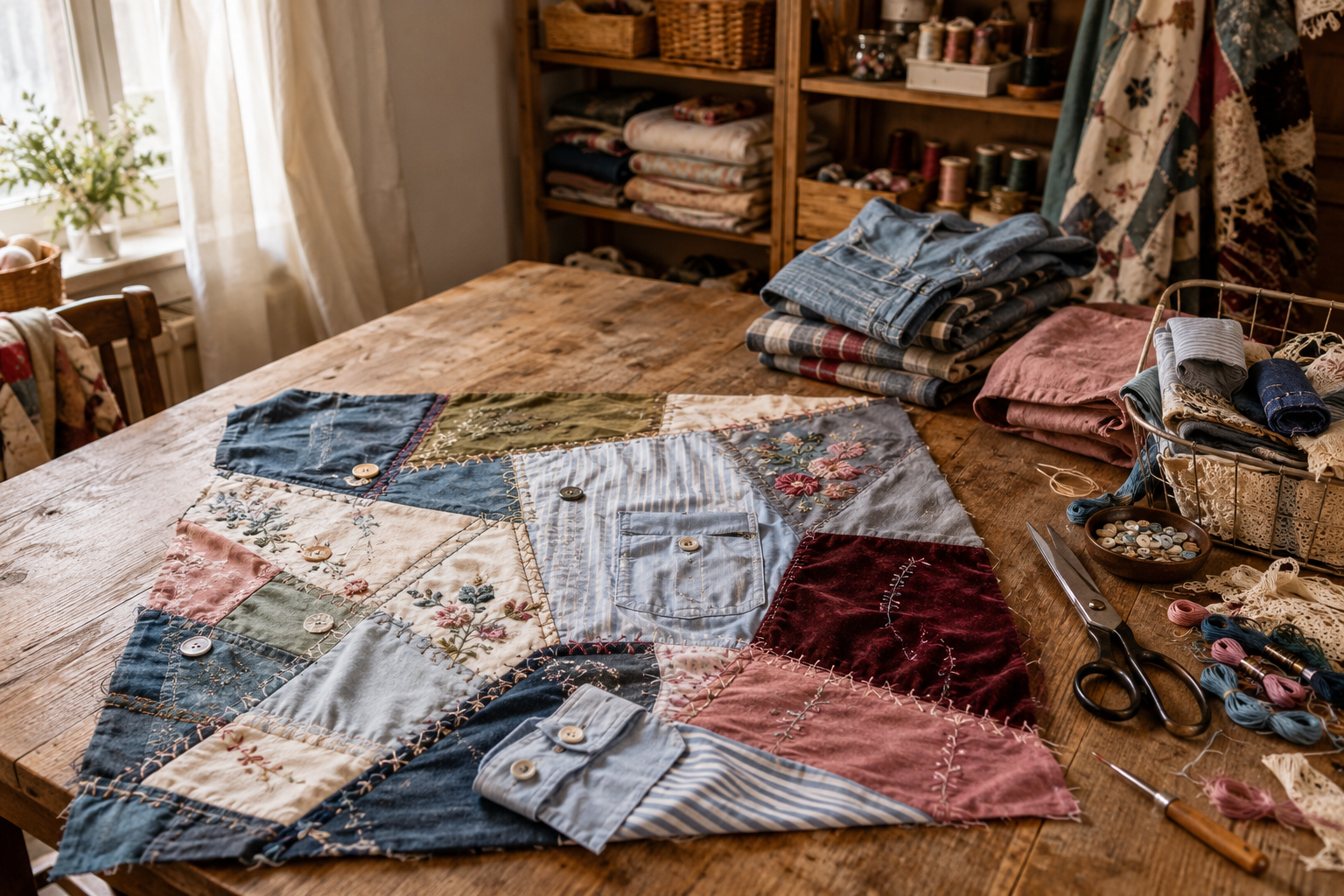
The Sewing Chair No. 7
The economy is encouraging me to buy less fabric and look more creatively at what I already own. By working from my stash, repurposing clothing, finishing existing projects, and beginning a crazy quilt, I’m returning to the resourcefulness—and artistry—that has always been part of quilting.
Making Do—and Seeing What Happens
The economy has been making itself known lately. Not in an abstract, economists-on-the-news sort of way, but in the much more personal form of grocery totals, household bills, and the astonishing amount of money that can disappear while buying nothing particularly exciting.
Fabric has not escaped this. Neither have batting, thread, patterns, rulers, or any of the other things that quietly follow a quilter home. I am not criticizing quilt shops or fabric companies. Good fabric costs money to produce, and I want those businesses to survive. I also know myself well enough to admit that I can walk into a quilt shop with no identified need and come out having supported the industry with remarkable enthusiasm.
But right now, I do not need more fabric.
That is not the same as saying I do not want more fabric. Let us remain reasonable.
The truth is that I already own enough fabric to keep me occupied for years. I have kits, unfinished blocks, works in progress, leftover pieces, precuts, yardage bought for forgotten purposes, and fabrics apparently selected by an earlier version of me whose plans were never properly documented. There are also old clothes waiting to be repurposed because I have saved them with the vague but persistent belief that they could become something else.
So I am stepping back from buying and looking instead at what I already have.
This began partly as a financial decision. I canceled the Sew Sampler box because reducing unnecessary spending makes sense right now, but money was not the only reason. How many notions does one quilter really need? At some point, another clever tool is not expanding my creative possibilities; it is simply becoming one more object I have to store, organize, and remember that I own.
My sewing room was beginning to look less like a place where an artist works and more like a hoarder’s hovel with a cutting table. I had plenty of supplies but less room to use them, which rather defeats the purpose. I do not need another box arriving each month to give me more things. I need to rediscover the things already here, finish some of the projects occupying the room, and create enough space to sew without first conducting an archaeological excavation.
I am working through the block-of-the-month programs already in progress. I will still need practical things from time to time—batting, backing, thread, or a specific supply required to finish something—but I do not need to keep accumulating projects and notions faster than I can use them.
As I began thinking about what this could look like, the decision became more than a sensible response to the economy. It started to become interesting.
What can I make with what is already here?
That question sits much closer to the history of quilting than our modern habit of choosing an entire coordinated fabric collection for one project. Quilters have often worked with what was available: worn clothing, leftover dress fabric, feed sacks, household textiles, pieces exchanged with friends, and scraps too useful to discard. They did not always begin with a perfectly arranged bundle containing twenty prints that had already agreed to cooperate.
Sometimes they had to create the harmony themselves.
I want to return to more of that kind of making—not because everything done in the past was automatically better, but because resourcefulness is a skill. I suspect some of us have allowed convenience to do more of the creative thinking than we realize.
This is where the old clothing comes in.
I have clothes that are no longer worn but still contain usable fabric. Some pieces carry memories. Others simply contain too much good material to justify throwing them away. I already know how to take garments apart efficiently, alter clothing, follow clothing patterns, and determine which fabrics need stabilizing. The technical part is familiar. The new challenge is deciding what these materials can become when I stop seeing them as clothing.
A shirt may offer more than yardage. Its pocket, cuff, placket, buttons, or worn edge might become part of the design rather than something to cut around and discard. Different fibers and fabric weights could lead toward quilts, bags, wearables, appliqué, or combinations I have not considered yet. I am not beginning with a need to learn how to handle the clothing. I am beginning with the more interesting question of how to use what I already know in a different and more creative way.
And then there is the crazy quilt.
A crazy quilt feels like the perfect place for this experiment because it does not require every fabric to pretend it came from the same family. It can hold cotton, clothing scraps, embroidery, saved trims, unusual textures, and whatever else proves willing to participate. It offers room to refine decorative stitching without requiring the stitches—or me—to achieve perfection before I begin. It can become part sewing project, part embroidery sampler, and part record of what was already in the house.
It may also become evidence that I should not be left unsupervised with buttons.
I do not yet know exactly what this crazy quilt will look like. I do not know whether it will become a full quilt, a wall hanging, a table runner, or one magnificently overworked block that teaches me enough to make the next one better. That uncertainty is part of the appeal.
I will learn how fabrics with different weights and textures behave beside one another in a quilt. The embroidery will give me a place to refine stitches I already know and pursue the perfection that has been keeping needleworkers occupied—and mildly dissatisfied—for centuries. I know perfection is not actually going to happen, but that has rarely prevented any of us from continuing to negotiate with it. I will also explore balance without a repeating block pattern to create it for me and decide when a section needs one more detail—and, perhaps more importantly, when it has quite enough going on already.
Perhaps the most important thing I will learn is how to rely more on my own creativity.
Coordinated fabric collections are beautiful, and I am certainly not opposed to them. They make it easier to see how colors and prints will work together, and sometimes that is precisely what I want. But they also arrive with much of the visual problem already solved. When I work from my stash, combine unrelated scraps, or cut usable fabric from an old garment, I have to make those connections myself.
I have to decide what belongs together, where contrast is needed, which unexpected combination is more interesting than the obvious one, and how to create unity among fabrics that were never designed to meet. A seam, pocket, worn edge, or limited amount of fabric may influence the design rather than disqualify the material. The limitation becomes part of the composition.
That brings quilting back to its artistry. It asks me to see possibilities rather than simply follow a supply list. The crazy quilt may be the clearest expression of that because there is no single correct arrangement and no coordinated collection waiting to keep me safely between the lines. Every choice—fabric, placement, embroidery, texture, color, restraint, and the occasional complete lack of restraint—becomes part of my own visual language.
Using what I already have may save money, but I suspect it will also make me a more inventive quilter. When the answer cannot always be “buy the perfect fabric,” I will have to look longer, think differently, and create the answer myself.
Working from the stash will teach me other lessons, too. Limited choices may force me to think harder about value, scale, contrast, and color. Finishing the projects already underway will show me what I genuinely enjoy and what I keep avoiding. Repurposing clothing may lead toward quilts, bags, repairs, or garment sewing. Some experiments will work. Others will produce highly educational objects that never need to be seen in public.
And I am genuinely looking forward to it.
What began as a sensible response to the economy is becoming a personal creative challenge. Working within limits may lead me toward combinations, techniques, and ideas I would never discover while shopping for the ideal fabric.
I am not pledging never to enter a quilt shop again. There will be supplies I need and fabrics worth bringing home. I simply want to become more intentional about what I buy—and discover how much creativity emerges when the answer is not always to buy something new.
Maybe doing things a little more like they used to be done will change how I see what I own. A scrap may become material rather than clutter. An old shirt may become color, texture, memory, or structure. An unfinished project may become an opportunity to solve a problem instead of proof that I started too many things.
There is an entire sewing room full of possibilities waiting for my attention. The challenge now is to see them differently.
Who wants to join me? What is waiting in your stash, closet, or unfinished-project pile—and what could you create from it?
~Chris
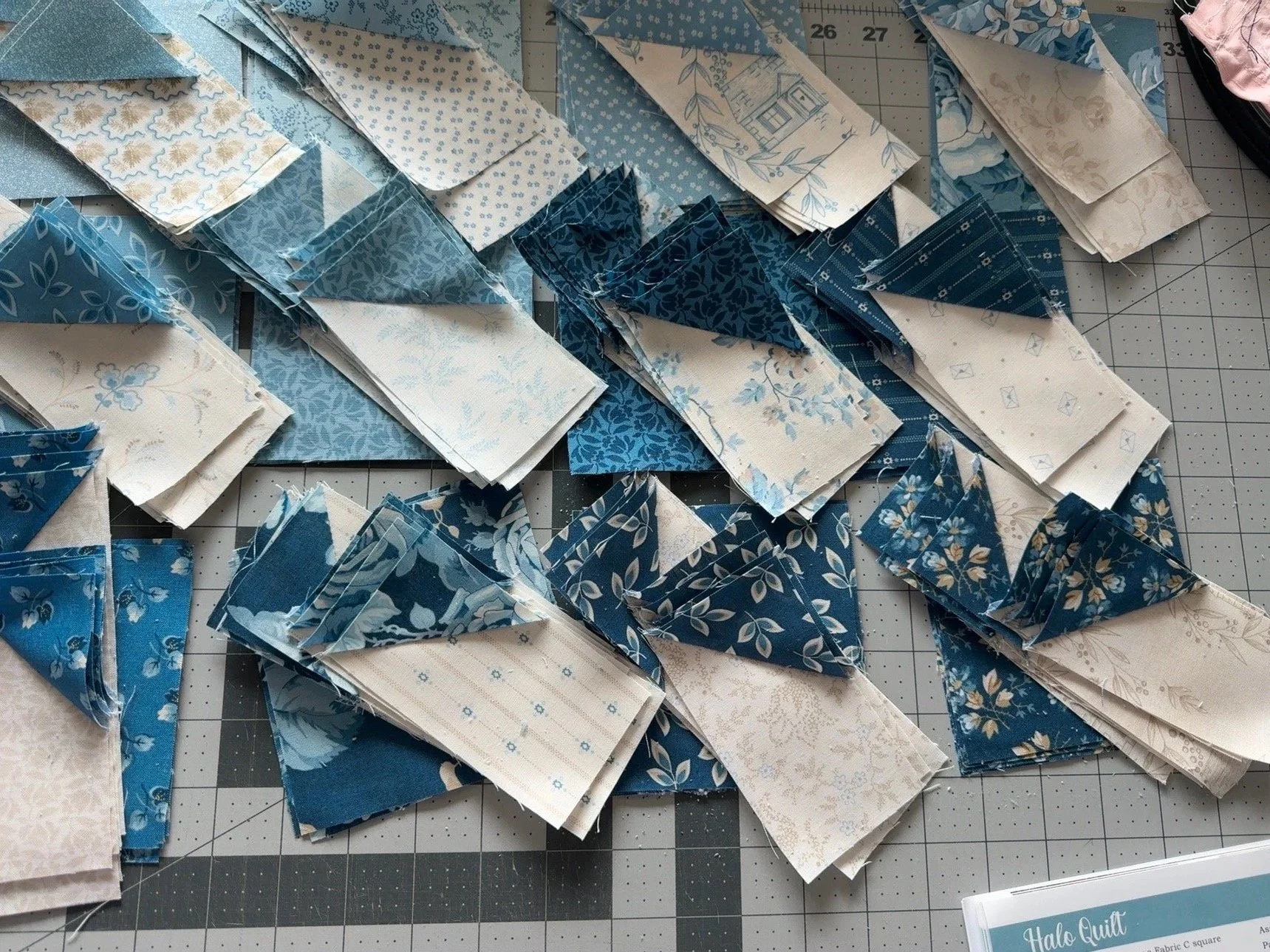
there is no efficient way to make a quilt
Quilting may be one of the least efficient ways imaginable to make a blanket. We cut perfectly good fabric apart, sew it back together, sometimes cut it apart again, and then spend hours quilting it. But perhaps efficiency was never the point. Sometimes the value of making something lies not only in what we finish, but in what those hours spent making it give us.
There Is No Efficient Way to Make a Quilt
There is something a little ridiculous about quilting when you really stop to think about it.
We buy perfectly good fabric. Beautiful fabric, in fact. Fabric that has already survived an impressive journey through growing, weaving, dyeing, printing, shipping, folding and finally landing on a shelf where we decide we absolutely need it. We bring it home, admire it for some period of time, and then take a rotary cutter to it.
We cut it into strips. We cut the strips into squares. Sometimes we cut the squares into triangles. If we are feeling particularly ambitious, we cut those pieces into even smaller pieces. Then we carefully sew some of those pieces together.
And sometimes, because quilting is apparently a perfectly reasonable pastime, we take the pieces we just carefully sewed together and cut them apart again.
Then we rearrange those new pieces and sew those back together.
Eventually, after enough cutting, sewing, cutting things we already sewed, rearranging and sewing yet again, we end up with one large piece of fabric.
Which is essentially what we started with.
This is apparently a hobby.
It is also spectacularly inefficient.
Most of the rest of my life is organized around trying to make things take less time. I order things online because driving around looking for them is annoying. I keep lists because I don't want to make three trips to the grocery store. I have machines that wash my clothes and dishes, a phone that can answer almost any question within seconds, and sewing machines capable of making thousands of perfectly respectable stitches in the time it would take me to make a few dozen by hand.
Naturally, I have recently decided to hand quilt.
I could put the quilt under the machine. I could send it to a longarmer. I could probably have the entire thing finished before I manage to get particularly far with my current hand-quilting efforts. Instead, I am sitting in my chair with a tiny needle, making stitches one at a time and occasionally stopping to inspect them as though they have personally agreed to become smaller if I stare at them hard enough.
They have not.
And yet I keep picking it up.
That has made me think about how strange making things has become in a world where we no longer have to make very many things at all. Quilts once had an obvious practical purpose. Beds needed covering. Fabric was valuable. Clothing and household textiles were used, reused and sometimes worked into other things. Sewing wasn't simply a pleasant way to spend an afternoon; for many households, it was part of the work required to keep people clothed and warm.
That isn't why I'm doing it.
I can buy a blanket. In fact, I can buy one for considerably less than I spend making a quilt, which is another detail we probably shouldn't examine too closely. I certainly don't need to spend months making one from hundreds of pieces of fabric when perfectly adequate blankets are available in nearly every department store in America.
So if the goal were simply to own something warm for the bed, quilting would be a terrible solution.
But the finished quilt isn't the entire point.
I think that's where efficiency becomes a funny way to measure a hobby. Efficiency makes sense when the objective is to get something over with. If I have to clean the kitchen, I would prefer to accomplish that without turning it into an all-day event. I don't particularly need to savor the experience of loading the dishwasher. There is no part of me wishing I could wash every fork individually by hand so I could feel more connected to the process.
Quilting is different because I don't actually want to eliminate the process.
I like choosing the fabric. I like cutting it. I like watching blocks accumulate and eventually begin to look like the quilt I imagined. I like the moment when something that looked questionable in pieces suddenly works once it is sewn together. I even like some of the repetitive parts, particularly when I don't have to think very hard about them. There are evenings when sitting at the machine sewing the same seam over and over is exactly what I want to be doing.
Lately, though, I've found myself choosing some of the parts of making that take the longest. I've been doing more embroidery, cross stitch, English paper piecing and Manx blocks, and now I've added hand quilting to the mix. I can sit in my recliner for a couple of hours and have remarkably little physical evidence of how I spent them. A few inches of quilting. Part of an embroidery motif. A handful of stitches that nobody but me is likely to examine closely.
But measuring those hours by what I finished misses most of what happened during them.
Handwork occupies my hands and just enough of my attention that everything else becomes quieter for a while. I'm concentrating, but not in the same way I concentrate on work or on a problem that needs solving. My attention has somewhere specific to go. There is fabric in my hands, a needle that needs to go in one place and come out in another, and a small bit of progress appearing underneath my fingers.
It doesn't require me to accomplish very much to be satisfying.
That may be why the inefficiency doesn't bother me. The time isn't merely being spent on the quilt. The quilting changes the way I experience the time itself. Two hours that might otherwise disappear into scrolling, mentally rearranging tomorrow's to-do list, thinking about things I cannot do anything about at ten o'clock at night, or simply wondering where the evening went become two hours in which I was thoroughly occupied by something I enjoy.
There is a different satisfaction in work that cannot be hurried very much. A hand-quilted line gets from one side of a block to the other exactly as fast as my hand can put stitches into it. There is no button that makes it go twice as fast. There is no particularly useful way to multitask it. My hands are occupied, my eyes are occupied, and enough of my attention is required that most of the other things rattling around in my head have to wait their turn.
I don't think slowness is automatically virtuous. I am quite fond of my sewing machines and have no intention of reenacting 1850 in my living room. I like modern conveniences. I like getting things done. I own rulers that make cutting faster, machines that sew faster and gadgets designed to eliminate practically every mildly inconvenient part of quiltmaking. If someone invents something tomorrow that makes trimming half-square triangles less tedious, I will happily investigate.
But I also like having something in my life that doesn't need to be optimized.
We hear so much about making better use of our time that it is easy to start treating time as though every minute should produce the maximum possible return. We combine errands. We listen to something while doing something else. We look for shortcuts. We buy tools that promise to save minutes. None of that is inherently bad. There are plenty of things I would happily spend fewer minutes doing.
But perhaps the question isn't always how much we can accomplish in an hour. Sometimes it matters what that hour is like while we're living it.
There are parts of life we make efficient precisely because we'd rather use our time somewhere else. I have no desire to make loading the dishwasher a richer, more immersive experience. I want the dishes clean so I can move on.
Quilting is different. I want the quilt at the end, certainly, but I also want the hours it takes to make it. I want the satisfaction of watching pieces become blocks and blocks become something recognizable. I want evenings in the recliner with fabric in my lap and a needle in my hand. I want what happens when my attention narrows for a while to fabric, thread and the next stitch.
Making all of that faster wouldn't necessarily make it better. At some point, making it more efficient would begin eliminating part of the reason I chose to do it in the first place.
Which makes my current hand-quilting project rather interesting. I can spend two hours working on it and accomplish only a few inches. By almost any ordinary measure of productivity, that's terrible. But those few inches aren't the only thing I got from those two hours.
Maybe that's why quilting doesn't really feel inefficient at all. There are parts of life we rush through because what we want is waiting on the other side. Then there are the things we willingly give our time to because of what happens during the hours we spend doing them.
I want the quilt.
But I also want the time I spend making it.
I Thought I Was Learning to Quilt
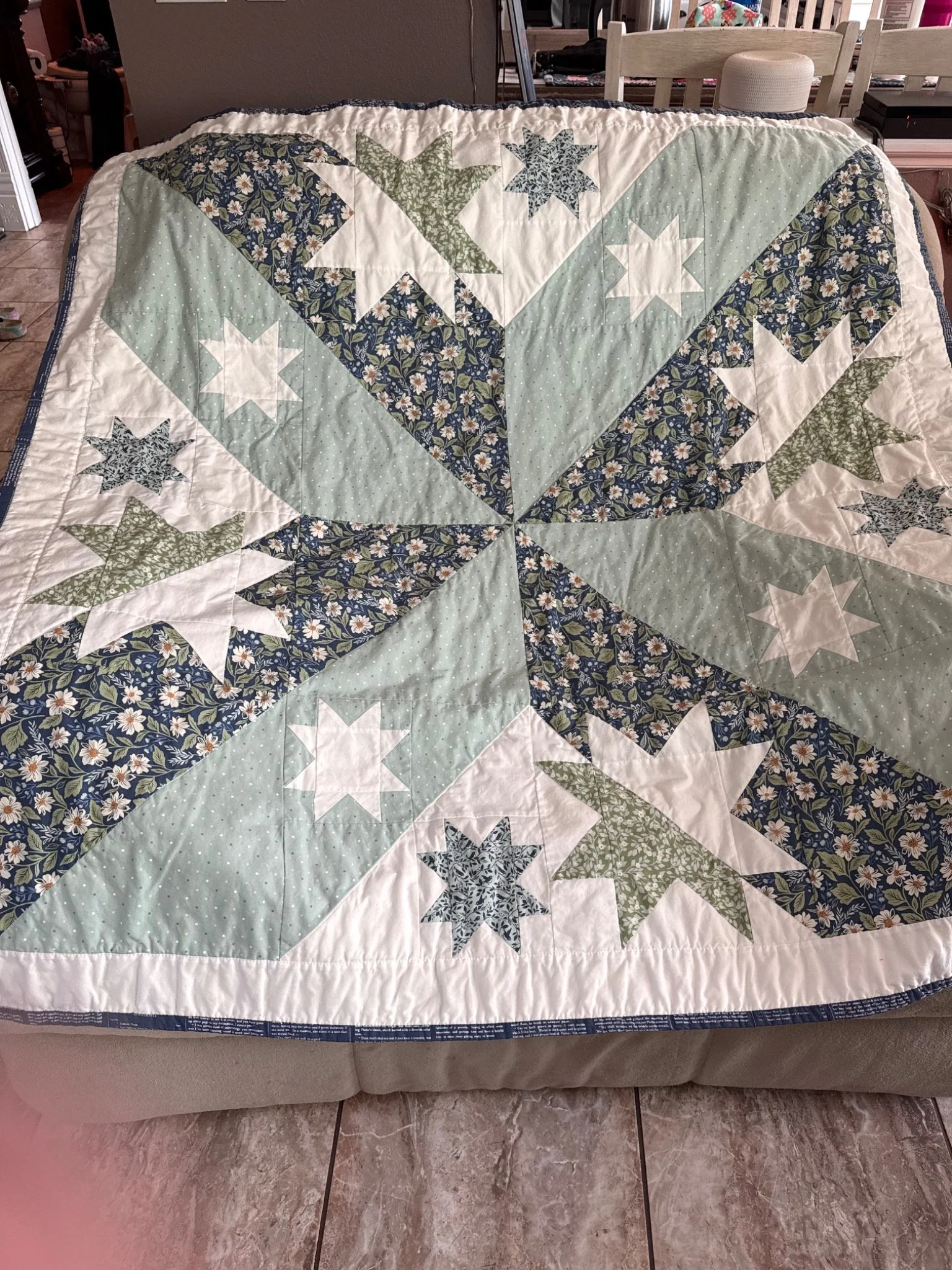
When I first started quilting, I thought I was learning how to make quilts. I never expected to find myself wandering through the worlds of textile science, color theory, geometry, history, hand quilting, and countless other rabbit holes along the way. The deeper I go, the more I realize quilting isn't a hobby you finish learning—it's a lifelong conversation. This week I'm reflecting on why that endless curiosity, and the quiet peace that comes with it, may be quilting's greatest gift.
When I made my first quilt, I thought I was learning one skill.
Cut some fabric. Sew a quarter-inch seam. Press. Repeat enough times and eventually, if all went well, there would be a quilt.
It turns out I wasn't simply learning how to make quilts.
I was opening the door to a world that has no apparent end.
Every time I think I've reached a point where I understand something, another door opens. Fabric alone could occupy a lifetime. Why does one cotton behave beautifully while another stretches and frays? What makes one batting loftier than another? Why do some quilts soften with age while others remain crisp? Before long, you're reading about fiber length, thread count, weave density, dyes, shrinkage, and textile manufacturing, wondering how something as ordinary as cotton became so fascinating.
Then there's color.
At first, it's simply choosing fabrics you like. Before long you're learning about value, hue, temperature, saturation, contrast, optical illusions, and why two perfectly beautiful fabrics can become complete strangers the moment you sew them together.
Just when you think you've wrapped your mind around that, geometry quietly taps you on the shoulder. Suddenly you're discovering why certain blocks fit together so elegantly, why precision matters, how angles create movement, and why a tiny fraction of an inch can ripple through an entire quilt.
Then history steps in.
Quilts aren't just blankets. They are family stories, engineering projects, works of art, historical documents, cultural traditions, practical necessities, and sometimes expressions of grief, celebration, or hope. Every pattern has a story, and every era has left its fingerprints in cloth. Before long, you aren't simply making quilts anymore. You're learning about the people who made them, the lives they lived, and the reasons certain traditions endured while others quietly faded away.
Lately I've been teaching myself hand quilting. Like most of my quilting adventures, it began with a dangerous amount of confidence. I watched the first couple of minutes of a video, ordered some 12-weight Aurifil thread, found a milliner's needle, and thought, Well… this can't be that hard.
I was right.
It isn't hard.
It simply opened another door.
Every answer seemed to lead to another question. Why this thread instead of that one? Why does one quilter prefer a hoop while another quilts entirely in her lap? Why does one quilter reach instinctively for a long milliner's needle while another wouldn't quilt with anything but a traditional between? Why do some swear by 12-weight thread while others wouldn't dream of using anything but finer cotton?
The more I explored, the more I realized quilting isn't a collection of rules waiting to be memorized. It's a conversation that has been unfolding for generations. Every quilt carries the fingerprints of the person who made it, not only in the fabrics they chose, but in the techniques they adopted, the traditions they inherited, and the small discoveries they made along the way. There is rarely a single right answer. More often there are thoughtful reasons behind many different approaches, and understanding those reasons has become every bit as enjoyable as learning the techniques themselves.
That realization has been surprisingly freeing.
I no longer feel as though I have to find the best method or the correct tool. Instead, I find myself listening to experienced quilters with genuine curiosity. One person's approach doesn't cancel out another's. Each has been shaped by years of practice, successes, frustrations, and discoveries. Learning why they make the choices they do has become just as fascinating as learning the techniques themselves.
There is also something quietly restorative about hand quilting itself.
Sitting in a chair with a needle, thread, and quilt stretched across my lap changes the rhythm of the day. The world becomes quieter. News headlines fade into the background. Emails can wait. My phone becomes considerably less interesting than the tiny stitch I'm trying to make just a little more even than the last one.
Hand quilting doesn't reward speed, and perhaps that's part of its appeal. It asks me to slow down and give my attention to one stitch at a time. Somewhere along the way, without ever intending to, my breathing settles, my thoughts become less hurried, and an hour slips by almost unnoticed.
It reminds me that not everything worthwhile needs to be efficient.
I think that's part of what keeps drawing me back to quilting.
There is always something more to learn, but there is never any pressure to learn it all. If I become fascinated by textile history, there are enough books to keep me occupied for years. If I decide to understand fabric manufacturing, color theory, appliqué, English paper piecing, embroidery, drafting quilt blocks, antique quilt restoration, or the engineering behind traditional quilt designs, there are people who have devoted entire lifetimes to each of those subjects.
Rather than feeling overwhelmed by that, I find it comforting.
There will always be another book to read, another technique to try, another quilt to admire, another maker whose experience offers something new to consider. There is no expectation that I master every corner of the craft. The joy comes from remaining curious.
Perhaps that's why quilting has held people's attention for centuries.
So much of life is measured by accomplishments. Finish the project. Meet the deadline. Check another item off the list. We become accustomed to believing that satisfaction comes from reaching the end.
Quilting offers something different.
It invites us to enjoy the middle.
It reminds us that making something with our hands is reason enough to spend an afternoon. It encourages us to notice small improvements instead of dramatic transformations. It teaches patience without ever announcing the lesson, and it quietly demonstrates that there are often many beautiful ways to arrive at the same destination.
When I made that first quilt, I thought I was learning a craft.
What I was really discovering was a lifelong companion.
A craft with enough history to fill libraries, enough techniques to occupy generations, enough creativity to ensure no two quilts are ever quite alike, and enough quiet moments to remind me that slowing down is sometimes the most productive thing I can do.
For me, that may be quilting's greatest gift.
Not that I'll ever know everything.
But that I'll never run out of beautiful things to learn.
~Chris
The Sewing Chair no.5
We spend so much of life trying to finish the next project, reach the next goal, and cross one more thing off the list. This week in The Sewing Chair, a construction-themed quilt becomes a reminder that growth, learning, and the life happening in the middle may matter just as much as the finished result.
Still Under Construction
Pull up a chair. Stay awhile.
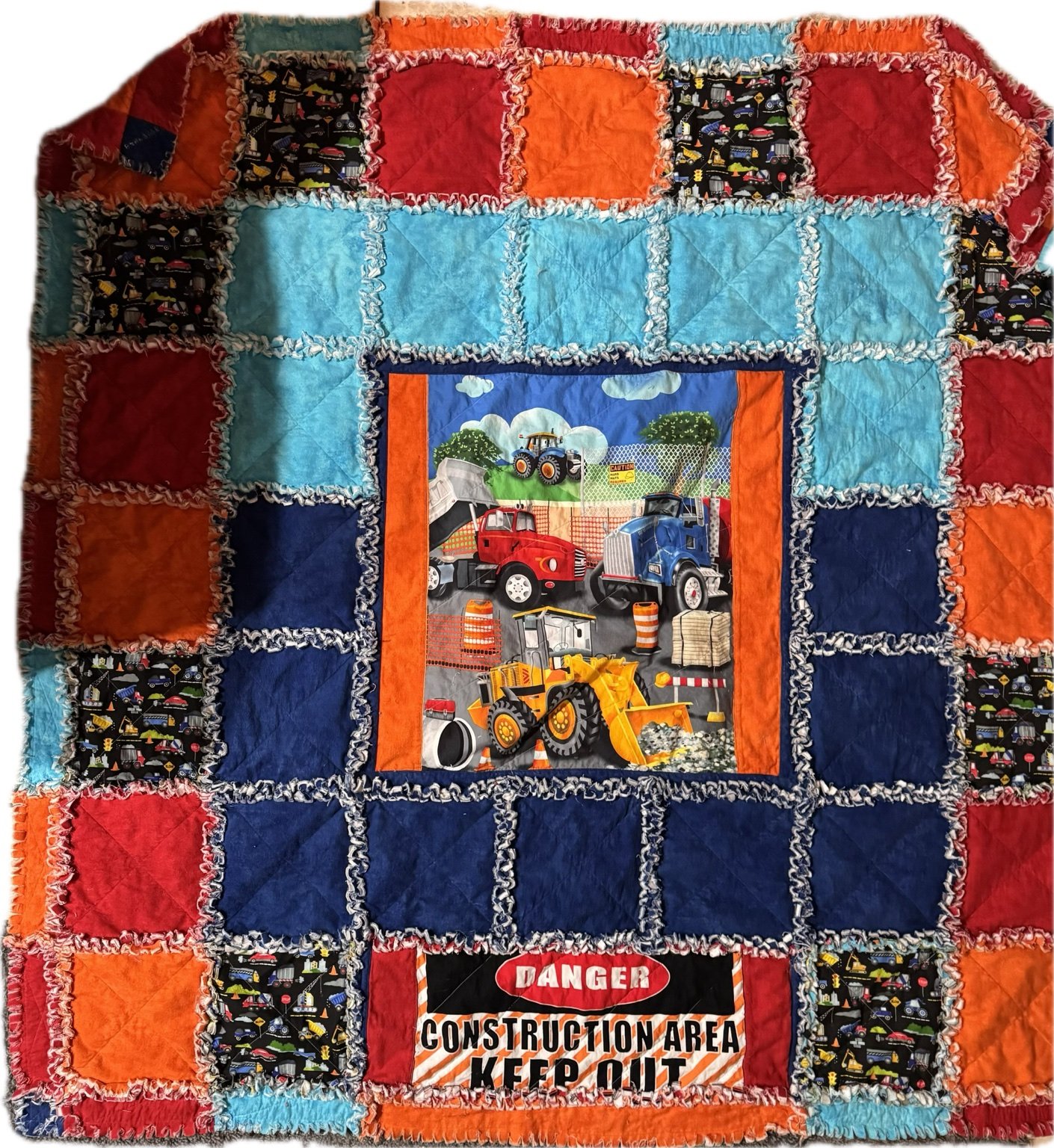
A few months ago, I made this construction-themed rag quilt for my grandson's birthday. It has bright orange fabric, trucks and tractors, ragged edges, and a panel near the bottom that reads, "Construction Area. Keep Out." At the time, I simply thought it fit the theme of the quilt. It made me smile, and I knew it would make him smile too.
This week, as I walked past it again, I realized that little sign might be describing more than a child's quilt. It could just as easily describe my sewing room.
There are several Block of the Month projects waiting for their next block. A sampler quilt is slowly becoming a collection of quilting techniques from around the world. There is a quilt I'd like to hand quilt, and beside my recliner sits a growing stack of Manx quilt blocks that I work on while watching television or listening to an audiobook. Beyond quilting, there are cross-stitch and crochet projects waiting patiently, and an entire house that keeps reminding me it would appreciate a fresh coat of paint.
Looking around, it would be easy to see nothing but unfinished work. I suspect most of us have done exactly that. We look at the list of things we haven't completed and somehow convince ourselves that the list is measuring us.
The more I thought about it, the more I realized that every finished quilt I own once looked exactly like the projects scattered around my sewing room today. Before it was folded on a shelf or draped across the back of a chair, it was simply another idea in progress. Fabric hadn't been cut yet. Blocks hadn't been sewn. There were mistakes to fix, decisions to make, and days when it sat untouched because life required my attention somewhere else.
That isn't failure.
It's how quilts are made.
Somewhere along the way, I think many of us begin treating our own lives differently than we treat our hobbies. We celebrate growth when we're learning a new quilting technique, but we become impatient with ourselves when life takes longer than we expected. We convince ourselves that happiness will arrive after the next accomplishment, the next promotion, the next project, the next vacation, the next debt is paid, or the next item is crossed off the list.
There is always another list.
The problem is that if we're always living for what comes after this project, we risk missing the life that's happening while we're still building it. Most of our days are not spent standing at the finish line. They're spent learning, adjusting, making mistakes, changing plans, and becoming a little different than we were yesterday. That's true whether we're making a quilt, raising a family, building a career, or simply trying to become a wiser version of ourselves.
When I look around my sewing room now, I don't see evidence that I can't finish things. A few months ago I finished this quilt for my grandson. This week I finished another quilt for my uncle. The projects that remain aren't abandoned; they're simply waiting for their turn. Some are intentionally long-term because I enjoy working on them slowly. Some will probably be finished sooner than others. None of them needs to become a race.
Perhaps life isn't meant to be a race either.
Maybe we place too much value on completion and not enough on construction. After all, the construction is where we learn the new technique, laugh at our mistakes, solve the little problems, and quietly discover that we know more today than we did when we began. Those moments rarely make the photograph at the end, but they are the part we actually lived.
I hope I always have a sewing room with something under construction. More importantly, I hope I remain a person who's still under construction. I hope there is always something new to learn, another skill to develop, another perspective to consider, and another reason to remain curious.
That little sign on my grandson's quilt made me smile when I stitched it into place.
Now it reminds me of something else.
Construction areas aren't places to avoid. They're places where something worthwhile is being built.
Thanks for stopping by The Sewing Chair.
I'll save you a seat for next Sunday.
~Chris
Sewing Chair no. 4
Working on my Jane Austen 250th anniversary appliqué quilt while listening to her novels had me thinking about handwritten letters, childhood pen pals, and the slower traditions that once helped us share our lives more thoughtfully.
Pull Up a Chair. Stay Awhile.
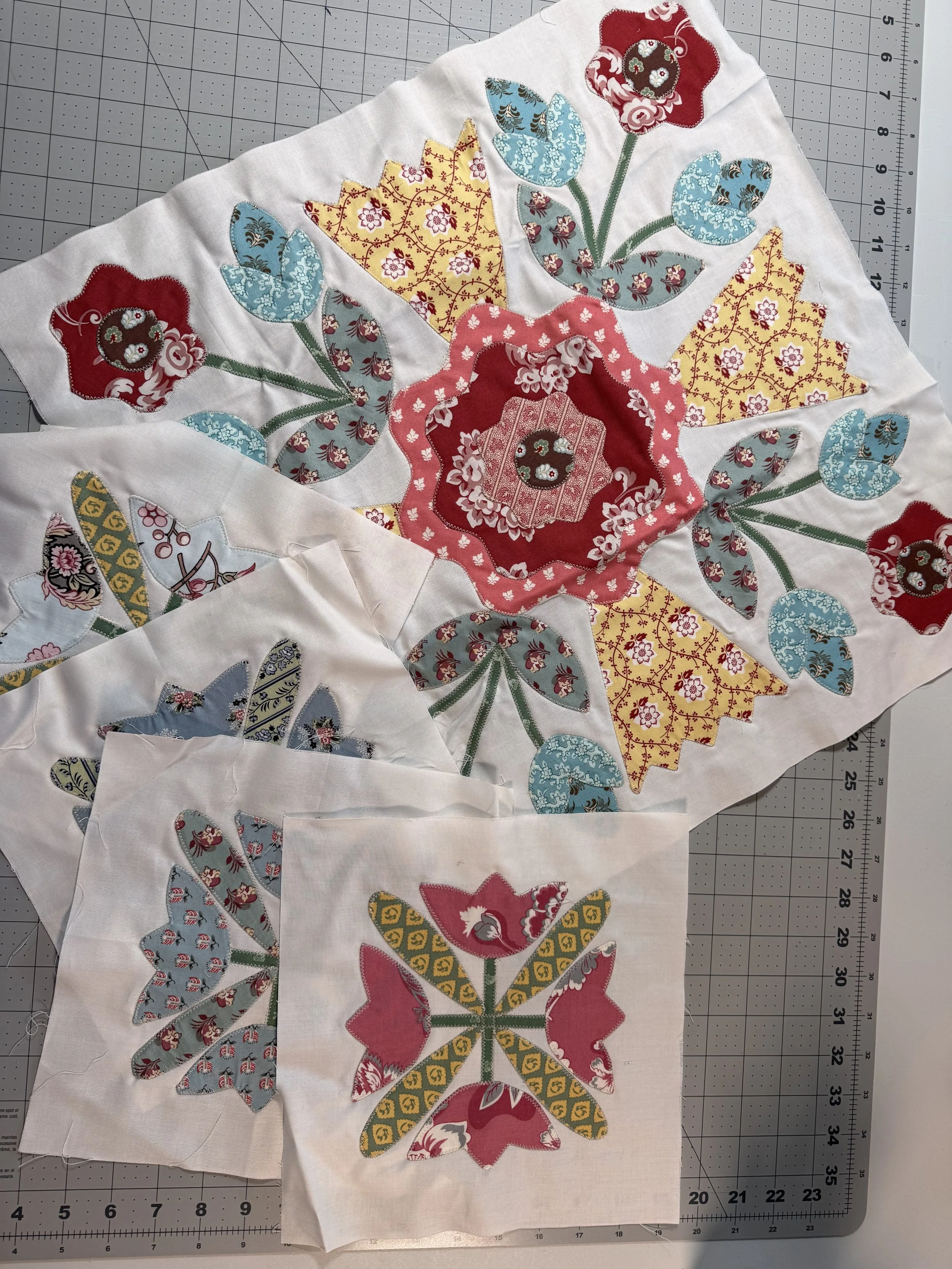
I've been spending my evenings working on a Jane Austen 250th anniversary appliqué quilt.
Appliqué isn't the kind of project that likes to be rushed. Every flower, every leaf, every carefully turned edge asks for a little patience. It's quiet work—the kind that keeps my hands occupied while my mind is free to wander wherever it pleases.
This week, it wandered to Jane Austen. That was probably inevitable. I was stitching a Jane Austen quilt while listening to Pride and Prejudice, so my brain really didn't have many other options.
One of the things I've always loved about Jane Austen's novels is the letters.
Long before email, text messages, or social media, people sat down with pen and paper and took the time to explain themselves. They didn't simply exchange information; they shared their lives. A letter might contain family news, disappointments, hopes for the future, neighborhood gossip, or nothing more remarkable than the events of an ordinary Tuesday.
Those ordinary details became part of the story.
It made me think about all the handwritten letters tucked away in old boxes, cedar chests, and family trunks. Historians reconstruct entire lives from them. Families discover grandparents they never truly knew. A faded envelope tied with ribbon can reveal who someone loved, what worried them, what made them laugh, or how they experienced the world around them.
A text message rarely has that kind of staying power.
Perhaps that's one reason this quilt and Jane Austen seem to belong together. Both come from a slower world—one where creating something meaningful required a little more time and a lot more intention.
As I stitched another flower into place, another memory surfaced.
When I was in grade school, I had a pen pal who lived in Hawaii. To a child growing up in North Dakota, Hawaii might as well have been on the other side of the world. What began as a classroom assignment soon became something I genuinely looked forward to. We wrote about school, our pets, the weather, and whatever seemed terribly important to two ten-year-olds.
Eventually the assignment ended, but for a while, the letters kept coming.
Then, as often happens, life moved on.
I don't remember her last name anymore, but I still remember the excitement of finding an envelope addressed just to me in the mailbox.
There was something wonderfully unhurried about the entire process.
You couldn't fire off a quick reaction or answer with an emoji. You had to gather your thoughts, choose your words, find a stamp, and trust that your letter would eventually arrive. By the time it reached the other person, you had already spent enough time reflecting that your experiences had become stories instead of headlines.
The more I thought about it, the more I realized that's one of the reasons I enjoy hand appliqué.
Like letter writing, it refuses to be rushed.
It asks you to sit down for a while. To stay with one thought instead of ten. To let your hands work while your mind settles. Each stitch builds quietly on the one before it until, almost without noticing, something beautiful begins to take shape.
Our world moves much faster than it did when Jane Austen was writing letters or when a fourth grader in North Dakota was eagerly checking the mailbox for an envelope from Hawaii. I wouldn't trade the ability to talk with my children and grandchildren in an instant.
But I do wonder if we've lost a little something in our race toward convenience.
Not paper and stamps, necessarily.
The habit of lingering with our thoughts.
The willingness to spend time creating something that cannot—and perhaps should not—be hurried.
Maybe that's why I keep returning to hand appliqué.
Every stitch is a quiet reminder that some things are still worth taking our time to do.
Thanks for stopping by The Sewing Chair today.
I'll save you a seat for next Sunday.
~Chris
Sewing chair no. 3
Sometimes gratitude arrives quietly, while trimming thread or pressing a seam. This Sewing Chair reflection is about ordinary dreams that slowly became everyday life—and the unexpected moments when we realize we're living in the life we once hoped for.
Pull up a chair. Stay awhile.
The Things We Once Wished For
Sometimes gratitude doesn't arrive with fireworks.
Sometimes it shows up while you're trimming thread.
I was sitting here today, surrounded by stacks of fabric, a cup of coffee that had long since gone cold, a couple of cats supervising absolutely nothing, and a project spread across the table when I finally looked around the room.
Not really looked.
Saw it.
The sewing machine I saved for.
The shelves filled with fabric collected one piece at a time.
The house that feels like home.
The family that has grown and changed and somehow become both louder and quieter all at once.
The life I've built without ever realizing I was building it.
And it struck me that so many of the things surrounding me today were once wishes.
There was a time when I hoped for a sewing room instead of a corner of the dining room table. A time when buying a few fat quarters felt like a luxury. A time when I wondered if life would ever settle down enough to have evenings like this—just stitching, thinking, and listening to the quiet hum of the machine.
One by one, those hopes quietly became ordinary.
Maybe that's the funny thing about answered prayers and long-term dreams.
They rarely announce their arrival.
They slip into everyday life until they become so familiar that we stop seeing them.
Then, on a random afternoon, while choosing thread or pressing a seam, something catches your attention and you realize you're living in the life you spent years hoping for.
Not a perfect life.
There are still worries.
Still bills.
Still people I love who struggle.
Still projects that refuse to cooperate and days when the seams don't quite line up.
But woven through all of it are dreams that came true so gradually I almost missed them.
Maybe that's another gift of making things by hand.
The steady rhythm slows us down just enough to notice what has already been made.
The quilt beneath our fingers.
The home around us.
The people who fill it.
The quiet moments we once imagined while hurrying through busier seasons.
If you're reading this from your own sewing chair—or a knitting chair, a favorite porch swing, a workshop, or the corner of a kitchen table—I hope you have a moment like that this week.
A moment when you look around and realize that some version of your younger self would be amazed by the life you're living today.
And if you're still waiting for that season to arrive, keep stitching.
Some quilts take a long time to come together.
Thank you for stopping by The Sewing Chair.
Until next time, pull up a chair whenever life feels a little too loud.
There will always be room for you here.
~Chris
The Sewing Chair no. 2
Small stitches, slow thoughts, and the quiet ache of loving our children long after they’re grown. This Sewing Chair reflection is about motherhood, mistakes, quilts, and the stories that get stitched into the things we make.
Pull up a chair, stay awhile
What Gets Stitched Into a Quilt
There are days when I sit down to sew because I have a project to finish.
And there are days when I sit down because my mind needs somewhere to put all the thoughts that refuse to be quiet.
Tonight, it’s appliqué.
Small stitches. Slow stitches. The kind that force you to pay attention because rushing only makes things harder.
As I work my way around another little piece of fabric, my mind keeps wandering to my kids.
No matter how old they get, I don’t think that part of motherhood ever changes.
When they’re little, we kiss scraped knees and tuck them into bed.
When they’re grown, we can’t fix nearly as much. We watch them make hard decisions, carry heavy burdens, question themselves, and learn lessons that can only be learned by living through them.
And our hearts still hurt every bit as much.
Maybe more.
I found myself remembering what life looked like when I was their age.
The mistakes.
The uncertainty.
The feeling that I should already know what I was doing.
The belief that asking for help somehow meant I had failed.
I spent a lot of years trying to figure things out on my own because I didn’t want to disappoint anyone. I didn’t want people to think I wasn’t strong enough or capable enough or smart enough.
Looking back now, I realize something I couldn’t see then.
The people who loved me weren’t waiting for me to prove myself.
They were waiting for me to let them in.
By trying so hard to protect everyone else from my struggles, I also protected them from the opportunity to walk beside me.
That’s a strange realization to have while holding a needle and thread.
But quilting has a way of slowing the thoughts enough that they finally line up.
Every stitch seems to carry a memory.
Some are joyful.
Some are painful.
Some make me laugh at the person I used to be.
Some still make my heart ache.
And every one of them becomes part of the finished piece.
That’s the funny thing about quilts.
You don't throw away an entire project because one block came out crooked or one seam wandered a little too far to the left.
Instead, you work with what you have.
You trim a little here, adjust a little there, add another fabric that brings everything into balance, and somehow the imperfections become part of the story the quilt was always meant to tell.
Life isn’t all bright florals and cheerful prints either.
It’s dark fabrics mixed with light ones.
It’s worn edges next to brand-new beginnings.
It’s seams that had to be ripped out and stitched again.
And somehow, all of it together creates something warmer and stronger than any single piece could have been on its own.
So tonight, these thoughts are being stitched into this quilt.
Someday I’ll pull it out, spread it across a bed or wrap it around my shoulders, and I’ll remember this evening.
I’ll remember worrying about my children.
I’ll remember being grateful for the people who stayed beside me when I finally learned to ask for help.
I'll remember that parenthood doesn't end when our children grow up—it simply asks something different of us.
And maybe that’s what quilts are really for.
Not just to keep us warm, but to quietly hold the stories, the worries, the celebrations, and the healing that happened while they were being made.
Thank you for stopping by The Sewing Chair.
Until next time, pull up a chair whenever life feels a little too loud.
There will always be room for you here.
~Chris
The Sewing Chair no. 1
The Sewing Chair is a Sunday invitation to slow down for a few minutes. Through quilting, creativity, and quiet reflection, we'll explore how making something with our hands can steady our minds and remind us to care for ourselves as faithfully as we care for everyone else. Pull up a chair—you're welcome here anytime.
An Invitation to Slow Down
6/21/26
Welcome to the very first Sunday reflection
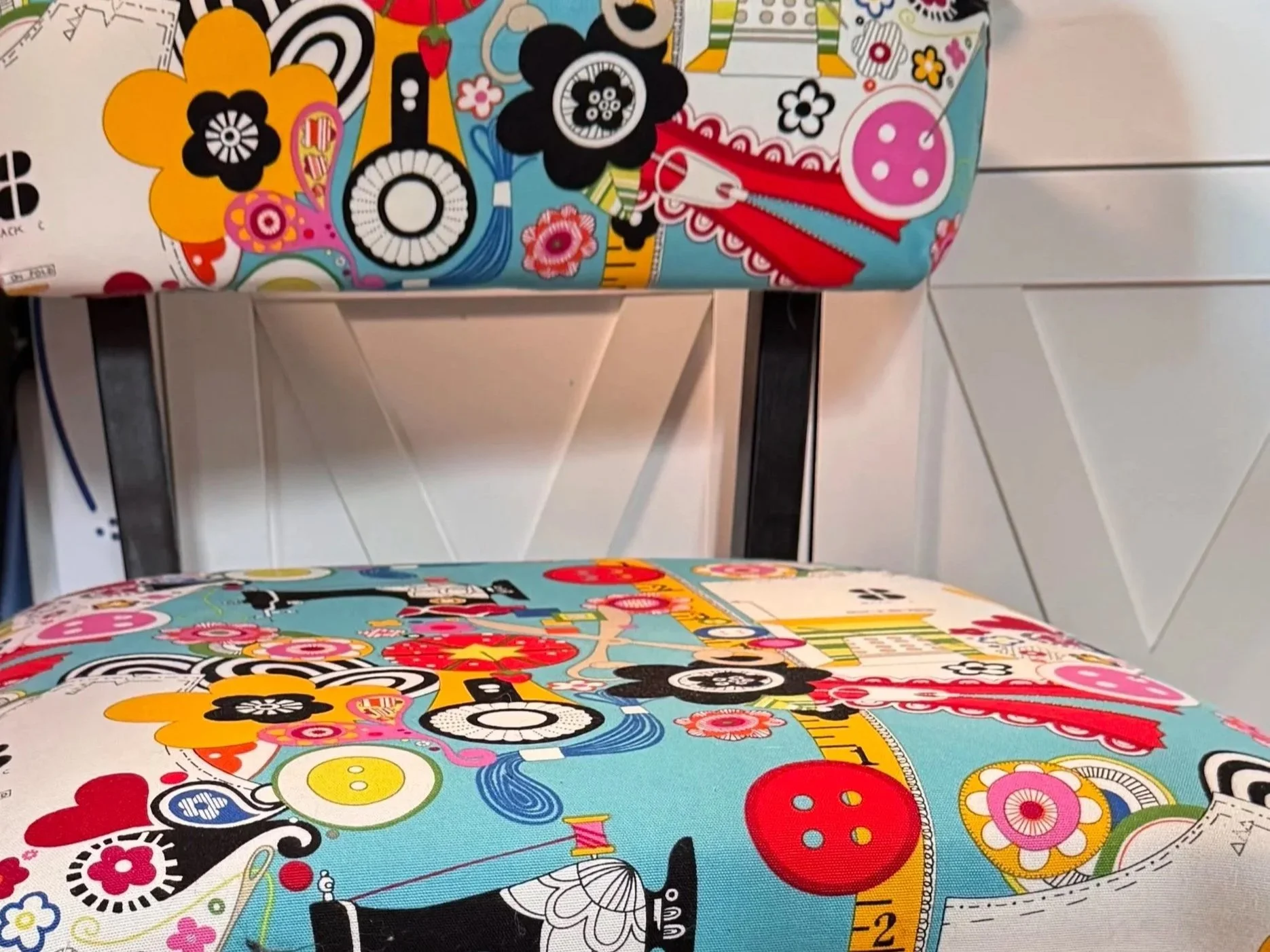
If you've spent any time around quilters, you know we can spend an absurd amount of time talking about sewing chairs.
We compare cushions, lumbar support, seat height, armrests, and whether the wheels glide smoothly across the floor. We look for something comfortable enough to sit in for hours and supportive enough to carry us through another quilt, another project, another idea.
We don't choose a sewing chair because it's the prettiest one in the room.
We choose it because it takes care of us while we create.
Somewhere between finishing a quilt top and shopping for an ergonomic chair, I realized that's exactly what I wanted this Sunday column to be.
A place to sit for a few minutes.
A place to rest.
A place to collect scattered thoughts before heading back into a busy week.
A place to remember that making something is never wasted time.
Chris Cross Quilts will always be about quilting. We'll talk fabric, color, tools, techniques, quilt history, mistakes, successes, and the occasional moment when we spend twenty minutes looking for the rotary cutter that's been in our hand the entire time.
But every Sunday, I'd like to pull up a sewing chair and have a different kind of conversation.
This idea arrived in the middle of an ordinary quilting session.
I was finishing a quilt top, chain piecing one seam after another, when I noticed something I had never really paid attention to before. The constant stream of thoughts that usually races through my mind had slowed down. The endless mental checklist became one simple question:
"What's the next stitch?"
Piece by piece, the noise became quieter.
By the time I stood up, the problems hadn't disappeared, the laundry still needed folding, emails still waited to be answered, and life hadn't magically become easier.
But it had become manageable.
I've come to realize that quilting isn't just something I make.
It's something that quietly remakes me.
I suspect the same thing happens whether your hands are holding a needle, knitting needles, embroidery floss, a paintbrush, a crochet hook, or a block of wood in a workshop. There is something about creating with our hands that gives our minds permission to slow down enough to catch up with our hearts.
In a world that constantly asks us to produce more, answer faster, scroll longer, and hurry everywhere, choosing to make something by hand feels almost rebellious.
So that's what The Sewing Chair is.
Not a tutorial.
Not a checklist.
Not another thing to accomplish.
Just a comfortable place to pause, breathe a little deeper, and remember that caring for other people starts with caring for ourselves first.
No perfect quilts required.
No experience necessary.
You're welcome here anytime.
Thanks for stopping by. I'd love to have you back next Sunday.