
Sewing Chair no. 4
Working on my Jane Austen 250th anniversary appliqué quilt while listening to her novels had me thinking about handwritten letters, childhood pen pals, and the slower traditions that once helped us share our lives more thoughtfully.
Pull Up a Chair. Stay Awhile.
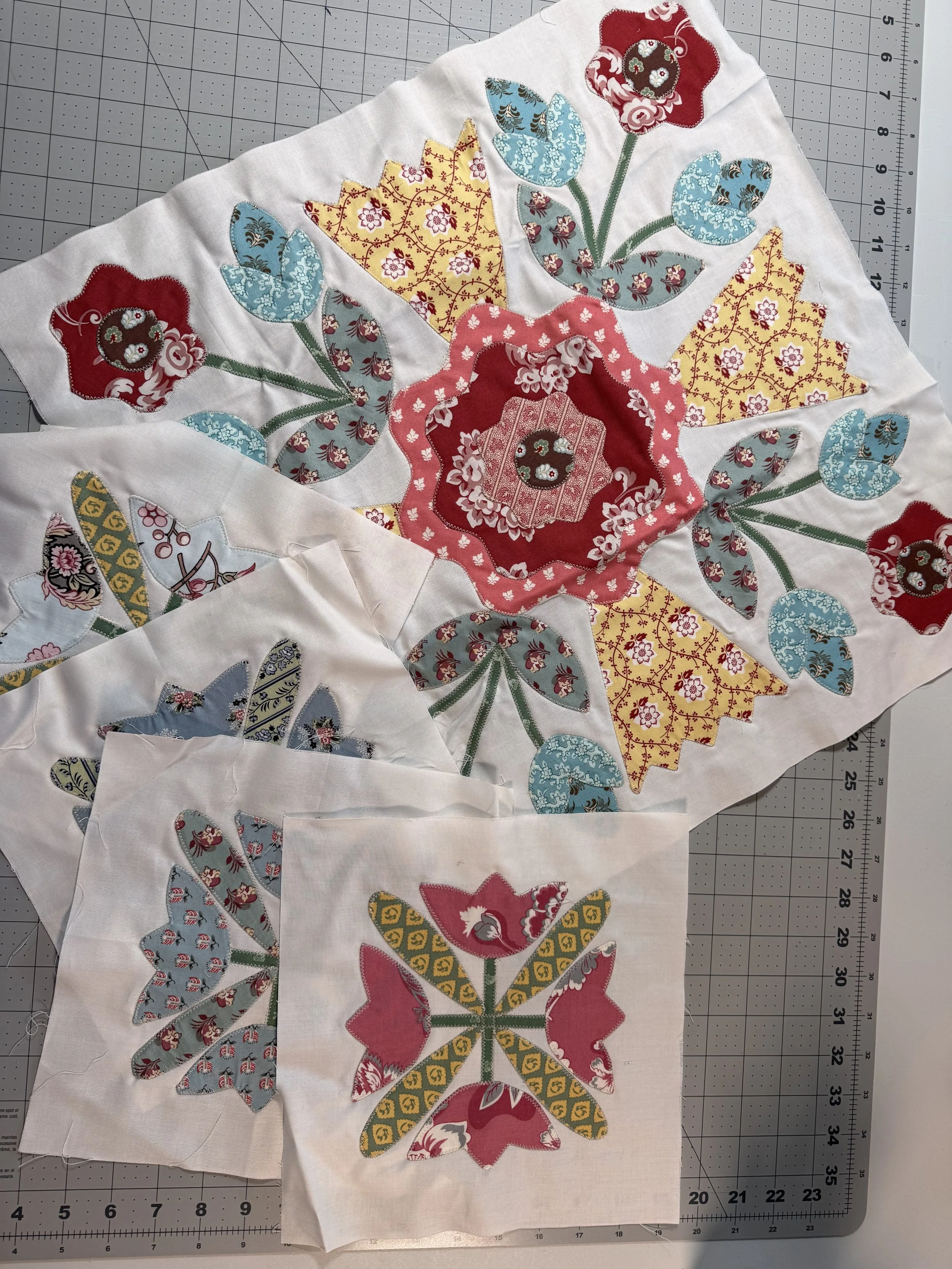
I've been spending my evenings working on a Jane Austen 250th anniversary appliqué quilt.
Appliqué isn't the kind of project that likes to be rushed. Every flower, every leaf, every carefully turned edge asks for a little patience. It's quiet work—the kind that keeps my hands occupied while my mind is free to wander wherever it pleases.
This week, it wandered to Jane Austen. That was probably inevitable. I was stitching a Jane Austen quilt while listening to Pride and Prejudice, so my brain really didn't have many other options.
One of the things I've always loved about Jane Austen's novels is the letters.
Long before email, text messages, or social media, people sat down with pen and paper and took the time to explain themselves. They didn't simply exchange information; they shared their lives. A letter might contain family news, disappointments, hopes for the future, neighborhood gossip, or nothing more remarkable than the events of an ordinary Tuesday.
Those ordinary details became part of the story.
It made me think about all the handwritten letters tucked away in old boxes, cedar chests, and family trunks. Historians reconstruct entire lives from them. Families discover grandparents they never truly knew. A faded envelope tied with ribbon can reveal who someone loved, what worried them, what made them laugh, or how they experienced the world around them.
A text message rarely has that kind of staying power.
Perhaps that's one reason this quilt and Jane Austen seem to belong together. Both come from a slower world—one where creating something meaningful required a little more time and a lot more intention.
As I stitched another flower into place, another memory surfaced.
When I was in grade school, I had a pen pal who lived in Hawaii. To a child growing up in North Dakota, Hawaii might as well have been on the other side of the world. What began as a classroom assignment soon became something I genuinely looked forward to. We wrote about school, our pets, the weather, and whatever seemed terribly important to two ten-year-olds.
Eventually the assignment ended, but for a while, the letters kept coming.
Then, as often happens, life moved on.
I don't remember her last name anymore, but I still remember the excitement of finding an envelope addressed just to me in the mailbox.
There was something wonderfully unhurried about the entire process.
You couldn't fire off a quick reaction or answer with an emoji. You had to gather your thoughts, choose your words, find a stamp, and trust that your letter would eventually arrive. By the time it reached the other person, you had already spent enough time reflecting that your experiences had become stories instead of headlines.
The more I thought about it, the more I realized that's one of the reasons I enjoy hand appliqué.
Like letter writing, it refuses to be rushed.
It asks you to sit down for a while. To stay with one thought instead of ten. To let your hands work while your mind settles. Each stitch builds quietly on the one before it until, almost without noticing, something beautiful begins to take shape.
Our world moves much faster than it did when Jane Austen was writing letters or when a fourth grader in North Dakota was eagerly checking the mailbox for an envelope from Hawaii. I wouldn't trade the ability to talk with my children and grandchildren in an instant.
But I do wonder if we've lost a little something in our race toward convenience.
Not paper and stamps, necessarily.
The habit of lingering with our thoughts.
The willingness to spend time creating something that cannot—and perhaps should not—be hurried.
Maybe that's why I keep returning to hand appliqué.
Every stitch is a quiet reminder that some things are still worth taking our time to do.
Thanks for stopping by The Sewing Chair today.
I'll save you a seat for next Sunday.
~Chris
Saturday Stitch Report #3
Christmas blocks in July, mystery quilts, foundation paper piecing, a quilt for my uncle, and even a little bag-making—this week's sewing room was full of progress. Join me for Saturday Stitch Report #3 as I share what I've been working on, what I'm learning, and what's coming next.
Christmas Trees, Mystery Blocks, Family Sewing, and One Very Full Project List
Affiliate Disclosure: This post may contain affiliate links. If you purchase through one of these links, I may earn a small commission at no additional cost to you.
Welcome back to the Saturday Stitch Report!
This was one of those weeks when I felt like I had been busy in the sewing room, but it took making an actual list to realize just how much had moved forward. No entire quilt was finished and dramatically displayed across the bed, but there were completed blocks, a new bag, some necessary repairs, and several projects lining up for their turn.
In other words, it was a very normal week in a sewing room.
Christmas Sewing in July
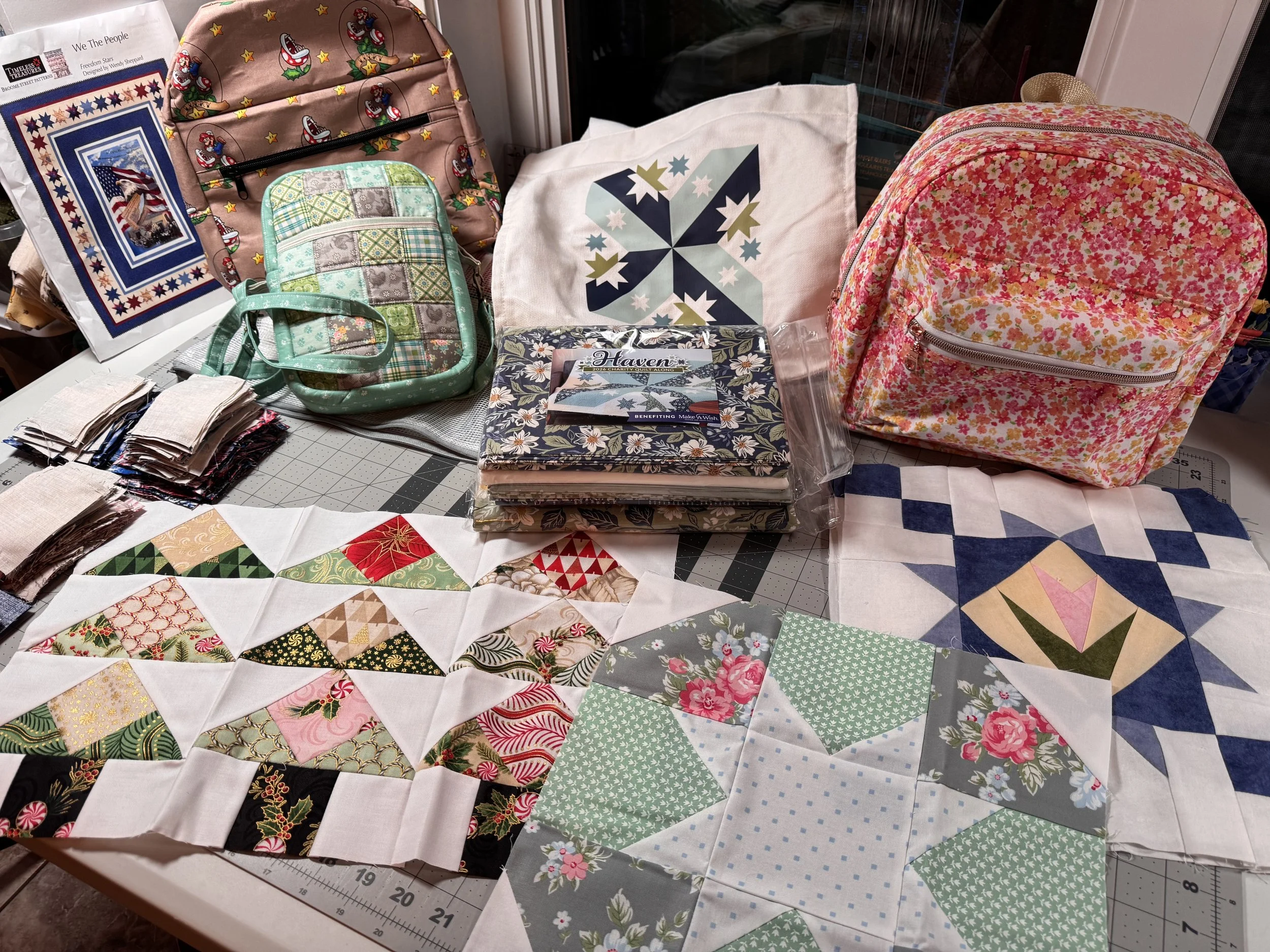
I completed Block 1 of the Jolly Tree Farm Free Sew Along with Fat Quarter Shop.
There is something slightly strange about sewing Christmas trees in July, but quilters stopped following normal seasonal rules a long time ago. We buy Christmas fabric in the spring, start holiday projects in midsummer, and still occasionally find ourselves binding them on December 23.
Block 2 is printed and ready to go, and I plan to work on both Blocks 2 and 3 this coming week. At least, that is the plan. Printed and sitting beside the sewing machine is not exactly the same as finished, but it is a respectable first step.
The Designer Mystery Begins
I also completed the first block in this year’s Designer Mystery Block of the Month from Fat Quarter Shop.
Mystery projects are always fun because each block gives you a small piece of the story without revealing the entire ending. You know the blocks will eventually become a quilt, but for now, each one gets to stand on its own while the larger design slowly comes together.
The next Designer Mystery block is already on the list for this week because apparently the reward for finishing one block is assigning yourself another.
Spring Dreams: Month Six
I completed the Month 6 blocks for Missouri Star Quilt Company’s Spring Dreams Block of the Month as well.
These blocks used foundation paper piecing, a technique I have done before and did not particularly enjoy. The actual sewing was not the problem. It was tearing all those tiny pieces of paper away from the stitches afterward that made me question whether precision was truly worth the irritation.
This time, I learned a fold-back method that allowed me to use the paper pattern as a guide without sewing through it. The paper was folded along the seam line, and I stitched beside the fold instead of through the paper.
No freezer paper, no paper sewn into the block, and no tiny paper confetti waiting to be removed at the end.
Apparently, I do not hate foundation paper piecing. I hate picking paper out of seams.
That is an important distinction.
A Quilt for My Uncle
I am also midway through a quilt kit that my aunt purchased and sent to my house for me to make for my uncle.
There is something especially meaningful about working on a quilt when you already know who will receive it. Every quilt takes time, but quilts made for family seem to carry a little more purpose with every seam.
This one will continue moving forward alongside the block-of-the-month projects, provided the other projects agree to share the cutting table.
A Little Useful Sewing
Not everything I worked on this week was part of a quilt.
I made a cute crossbody bag and also reinforced the straps on backpacks I had previously made for my grandchildren. I noticed a few areas that looked as though they might become future strap failures, and I decided it would be much better to fix them now than wait for a backpack full of school supplies, toys, or mysterious grandchild treasures to hit the floor.
Preventing a backpack emergency may not be glamorous sewing, but it still counts as a finish.
Haven Has Arrived
My materials for the Haven Charity Quilt Along from Fat Quarter Shop arrived, so I will finally be diving into that project too.
I have been waiting for this one to begin, and now that the fabric is here, it has officially moved from “upcoming project” to “another box in the sewing room asking when it gets a turn.”
That seems to be how most projects enter the rotation around here.
Learning to Hand Quilt
I am also preparing to sandwich a quilt and continue learning how to hand quilt.
I have admired hand quilting for years. The texture, the slower rhythm, and the character of the stitches all appeal to me. Of course, admiring someone else’s beautiful hand quilting and putting a needle into your own quilt are two very different experiences.
I am expecting uneven stitches, sore fingers, and at least a few moments of wondering why experienced hand quilters make it look so peaceful.
Still, every new skill begins somewhere. The goal is not perfection. The goal is to begin and keep going until the stitches start looking intentional.
What Is Coming Next
My sewing list for the coming week includes:
Blocks 2 and 3 of the Jolly Tree Farm Sew Along
The next Designer Mystery block
Month 7 of A Quilting Life’s Block of the Month
Beginning the Haven Charity Quilt Along
Continuing the quilt for my uncle
Sandwiching a quilt and practicing hand quilting
That is either a solid plan or proof that I remain wildly optimistic about how many sewing hours exist in a week.
We will find out by next Saturday.
Around the Blog
This week on Chris Cross Quilts & More, I shared a closer look at Baltimore Album quilts, including their history, elaborate appliqué, and the stories stitched into these beautiful quilts.
I also introduced the first edition of Chris’s Quilting Notebook, a new series where I will share helpful quilting resources, trusted recommendations, books, tools, patterns, and tutorials that are genuinely worth a quilter’s time.
The goal is not to recreate every wonderful quilting lesson that already exists. It is to help you find the good ones without wandering through the entire internet first.
Thanks for stopping by the sewing room and catching up with me this week.
May your seams behave, your blocks finish somewhere near the intended size, and your project list remain at least loosely connected to the number of hours available.
Happy quilting!
—Chris
Baltimore Album Quilts: Scrapbooks Stitched in Fabric
Baltimore Album quilts are some of the most admired quilts in American quilt history—and for good reason. These elaborate appliqué quilts were part artwork, part keepsake, and part fabric scrapbook, often filled with flowers, birds, baskets, ships, signatures, and memories. This week, we’re looking at the history behind Baltimore Album quilts, why they became so treasured, where you can see examples today, and why modern quilters still find inspiration in all that beautiful, slightly intimidating fancy work.
In last week’s quilt history post, we talked about medallion quilts and how those center-out designs created such a beautiful framework for storytelling, skill, and design. This week, we’re moving from the overall structure of the quilt to something a little more detailed, a little more personal, and filled with appliqué work impressive enough to intimidate even the most devoted appliqué enthusiast.
We’re talking about Baltimore Album quilts.
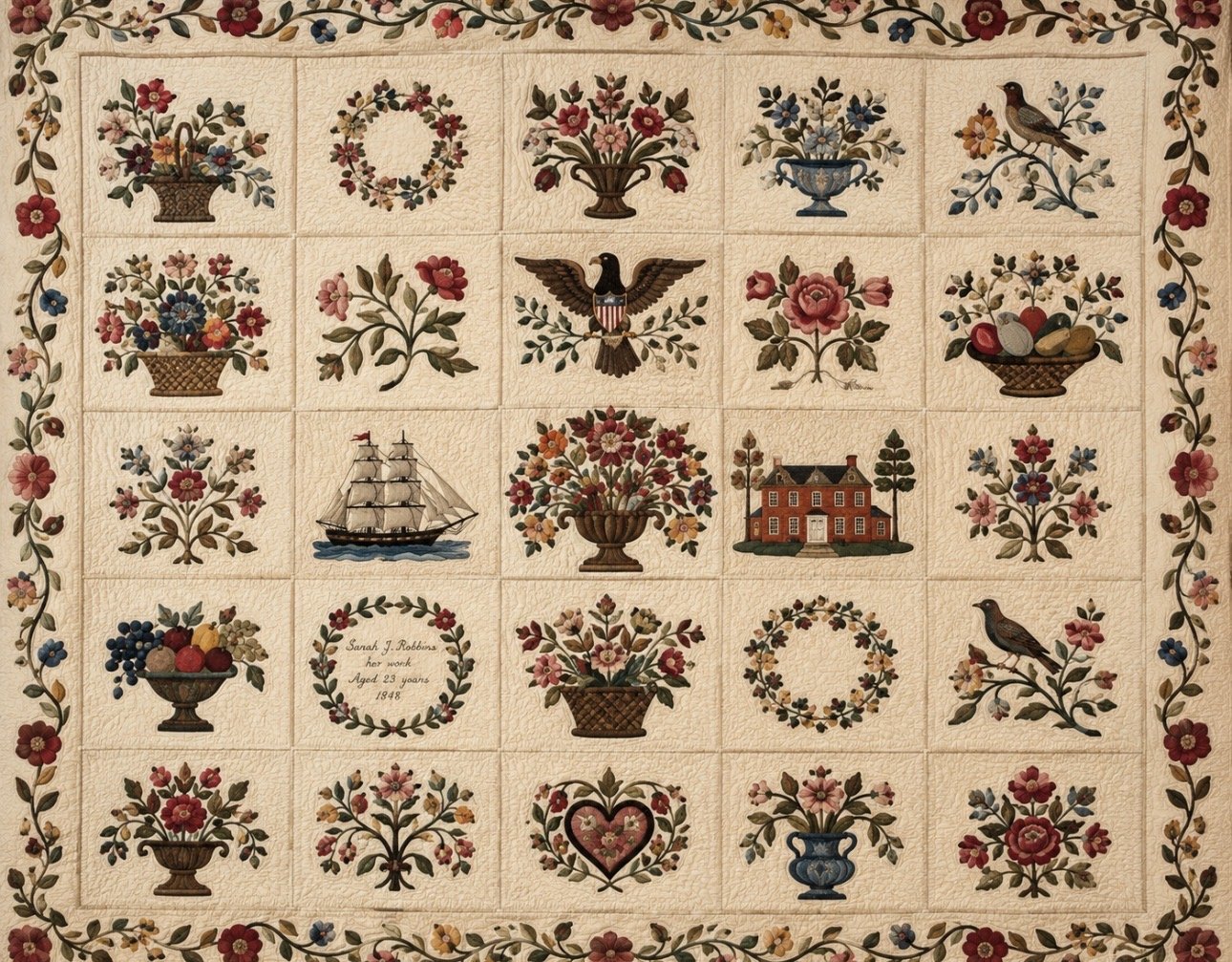
Baltimore Album quilts are some of the most admired quilts in American quilt history, and once you see one, it is easy to understand why. These were not plain utility quilts made quickly to keep a bed warm. They were elaborate, decorative, symbolic works of textile art. Many were filled with flowers, birds, baskets, buildings, ships, patriotic symbols, and beautifully stitched details that still make modern quilters stop and stare.
And possibly whisper, “Well, there goes my confidence.”
What Is a Baltimore Album Quilt?
Baltimore Album quilts first became popular in and around Baltimore, Maryland, during the 1840s. Baltimore was a growing port city with access to trade, printed cottons, and imported goods, which helped make more elaborate quiltmaking possible. These quilts were often made with carefully chosen fabrics rather than simple leftovers, and they reflected both the prosperity and the creative culture of the time.
Unlike a quilt made from one repeated block, Baltimore Album quilts were usually made of individual appliquéd blocks, with each block featuring its own design. One block might show a basket overflowing with flowers. Another might include a bird, a wreath, a ship, a building, or a patriotic emblem. Many were stitched on light or white backgrounds, allowing the colorful appliqué to stand out clearly.
The word “album” is important. In the 19th century, friendship albums and autograph albums were popular keepsakes. People collected signatures, poems, drawings, and messages from friends and loved ones. Baltimore Album quilts carried that same idea into fabric. Some were signed, some were dated, and some were made by groups of women, with each person contributing a block.
In that sense, these quilts were not only decorative. They were personal records. They held names, relationships, memories, and moments in time. They were part artwork, part community keepsake, and part family treasure.
Basically, scrapbooking with fabric, patience, and a whole lot of fancy work.
Why Baltimore?
Baltimore was especially suited to this style of quiltmaking. By the 1840s, it was a busy commercial city with access to beautiful fabrics and a growing middle class. That matters because Baltimore Album quilts required time, supplies, skill, and planning. These were not “throw something together before winter” quilts. These were “clear the table, thread the needle, and don’t make any big plans for a very long while” quilts.
The blocks were carefully designed and often very detailed. Appliqué shapes could include tiny leaves, layered flowers, curved stems, birds, fruit, urns, and other decorative motifs. Some quilts also included inked names, dates, or fine details added after the stitching was complete. That combination of appliqué, color, symbolism, and personal inscription is part of what makes these quilts so fascinating.
They were made to be useful, yes, but they were also clearly made to be seen. A Baltimore Album quilt was not just a bedcover. It was a statement of artistry, skill, affection, and community.
The Art Inside Each Block
One of the most striking things about Baltimore Album quilts is that each block can feel like its own small picture. A single quilt might include a basket of flowers, a wreath, an eagle, a ship, a heart, a fruit bowl, or a carefully arranged bouquet. When the blocks are placed together, the whole quilt begins to feel almost like a gallery wall made of fabric.
The appliqué work could be incredibly detailed. And we have to remember that these quilters were not working with fusible web, digital patterns, rotary cutters, or YouTube videos paused at exactly the right moment. They were working with fabric, needle, thread, skill, patience, and, fortunately for them, eyesight that had not yet been challenged by years of screens and late-night stitching.
Many of the motifs used in Baltimore Album quilts also carried meaning. Flowers could suggest beauty, affection, friendship, or remembrance. Eagles, flags, and other patriotic images reflected national pride. Ships made sense in a city shaped by trade and the harbor. Baskets, wreaths, and fruit were common decorative images, but they could also suggest abundance, home, celebration, or care.
Of course, quilt history always asks us to be a little careful. Not every symbol has one fixed meaning, and not every story attached to a quilt can be proven. Some meanings are well documented, while others come from broader decorative traditions or later interpretations. Still, even when we cannot know exactly what every maker intended, it is clear that these quilts were made with thought. They were not random. They were carefully planned, deeply decorative, and full of visual language.
Quilts as Friendship and Memory
One of the reasons I love learning about Baltimore Album quilts is that they remind us how social quilting has always been. Today, many of us sew alone in our homes, surrounded by fabric stacks, thread clippings, coffee cups, and whatever animal has appointed itself quality control manager. But historically, quilts often carried community with them.
Some Baltimore Album quilts were made by one very skilled maker. Others were group projects, with different women contributing blocks. Some were created as gifts for brides, ministers, friends, or people who were moving away. When blocks were signed or dated, they became more than pieces of appliqué. They became records of real people.
A signed quilt block is not just fabric. It is a name. It is a relationship. It is someone saying, “I was here, and I made this for you.”
That is part of why these quilts still feel so powerful. They are beautiful, certainly, but they are also intimate. They remind us that quilts have always had the ability to hold memory. They can preserve friendships, mark transitions, honor families, and tell stories long after the original makers are gone.
Why They Still Inspire Quilters Today
Baltimore Album quilts continue to inspire modern quilters because they bring together so many things we love about quilting: color, design, craftsmanship, history, symbolism, and complexity. Admittedly, there is enough complexity here to make a person wonder how anyone had the time, patience, or properly caffeinated courage to finish one.
For appliqué lovers, these quilts are especially meaningful. Modern Baltimore-style patterns still borrow from those historic motifs: flower baskets, wreaths, birds, hearts, urns, vines, and elaborate borders. Today’s quilter may use different fabrics, different tools, different techniques, and a much brighter lamp, but the connection is still there.
That is one of the wonderful things about quilting. We are not simply copying the past. We are continuing the conversation.
A quilter in the 1840s may have stitched a flower basket to honor friendship, faith, family, or beauty. A modern quilter might stitch one because she loves the shape, the challenge, the color possibilities, or the connection to history. The reasons may change, but the act of making still links us together.
The fabrics change. The tools change. The lighting improves, thankfully. But the desire to make something meaningful with our hands remains very much the same.
Where You Can See Baltimore Album Quilts
One of the best ways to appreciate Baltimore Album quilts is to look at actual examples, even if you are only able to view them online. Photos do not fully capture the texture, stitching, and scale, but they are still enough to make a modern quilter pause and wonder if she should either begin an appliqué masterpiece or quietly go bind something simple instead.
The Metropolitan Museum of Art has Baltimore Album quilts in its collection, including examples with signed blocks and detailed appliqué. Their online collection is a wonderful place to study the blocks, motifs, and arrangement up close.
The Maryland Center for History and Culture in Baltimore is especially important because of its connection to the place where these quilts became famous. It has an internationally known collection of Baltimore Album quilts and has featured exhibitions dedicated to them.
The International Quilt Museum in Lincoln, Nebraska, also has Baltimore Album quilt examples in its collection and is always worth exploring if you enjoy quilt history. Even when a specific quilt is not currently on display, museum collection pages and past features can still be valuable for research and inspiration.
You may also find Baltimore Album quilts or related album quilts in other museum textile collections, including decorative arts museums and historical societies. As with many fragile historic textiles, these quilts are not always on permanent display. Light, handling, and age all matter, so museums often rotate quilts in and out of exhibitions to help preserve them.
In other words, check before you travel. Historic quilts are wonderful, but they do not always keep convenient hours for those of us suddenly seized by the need to see 1840s appliqué in person.
Starting Small Is Allowed
If you ever decide to make a Baltimore Album-style quilt, I fully support you.
I also support starting with one block.
There is no rule that says you have to begin with an heirloom masterpiece large enough to humble every quilter in a five-state radius. A single appliquéd block can teach you a lot. It can help you appreciate the skill behind historic quilts, practice curves and shapes, and discover whether this style of appliqué brings you joy or makes you want to quietly place the project in time-out.
And honestly, both are useful things to learn.
Baltimore Album quilts ask us to slow down. They ask us to notice detail. They ask us to stitch with patience. They remind us that a quilt can be more than a pattern or a project. It can be a record, a gift, a memory, and a work of art.
Final Stitches
Baltimore Album quilts are admired not only because they are beautiful, but because they show what happens when fabric, friendship, history, and skilled hands come together. They are part scrapbook, part artwork, part historical document, and part very elegant quilting flex.
And maybe that is why they still capture our attention today. They remind us that quilts do not have to be complicated to matter, but when they are complicated, meaningful, and beautifully made, they can leave a legacy that lasts for generations and still fill us with awe.
Next week in quilt history, we’ll look at crazy quilts and how Victorian makers turned fabric scraps, embroidery, and embellishment into something wonderfully dramatic.
Because apparently quilters have always known how to make “a little extra” into an entire art form.
Why I Won't Teach You How to Make Half-Square Triangles (And Why That's Good News)
There are hundreds of half-square triangle tutorials online—but where should you start? In the first edition of Chris's Quilting Notebook, I share my favorite beginner resources, including a trusted tutorial, a quilting reference book, a versatile ruler, and a beginner-friendly pattern. Think of this as a notebook rather than a classroom—honest recommendations from one quilter to another.
Welcome to Chris's Quilting Notebook.
If you've spent any time searching for quilting advice online, you've probably noticed something. No matter what you're trying to learn, you'll find dozens—sometimes hundreds—of tutorials promising to show you the "best" way.
Half-square triangles are a perfect example.
There are videos that teach you to make them two at a time, four at a time, eight at a time, with specialty rulers, without specialty rulers, oversized and trimmed down, or cut to perfection right from the start.
After a while, it becomes less about learning how to make a half-square triangle and more about figuring out whose advice to trust.
That's where I hope Chris's Quilting Notebook will be a little different.
There are already wonderful quilters teaching half-square triangles, and many of them do it far better than I ever could. They've spent years refining their techniques, creating excellent videos, and helping thousands of quilters build their skills.
Rather than reinvent something that's already being taught so well, I'd rather spend my time finding those outstanding resources, learning from them myself, and sharing the ones I think are truly worth your time.
Think of this as a notebook rather than a classroom.
Every week you'll probably find me down some quilting rabbit hole. One week it might be half-square triangles. The next it could be batting, rulers, thread, fabric collections, quilting books, or a tool everyone seems to be talking about. Whatever I'm researching, I'll share my notes here—the good, the bad, and occasionally the things that make me wonder why anyone thought that was a good idea.
My goal is simple: to save you a little time, help you spend your quilting dollars wisely, and point you toward resources I genuinely believe are worth recommending.
This week's rabbit hole? Half-square triangles.
Why Half-Square Triangles Matter
Half-square triangles, often shortened to HSTs, are one of the most versatile building blocks in quilting. A simple square divided diagonally into two triangles can be arranged in countless ways to create stars, pinwheels, zigzags, diamonds, flying geese variations, and hundreds of classic quilt blocks.
Learning to make accurate half-square triangles opens the door to an enormous number of quilt patterns.
The funny thing is that making them isn't the difficult part.
Deciding how you want to make them is.
Some methods prioritize speed. Others focus on accuracy. Some require trimming every unit, while others are designed to eliminate as much trimming as possible. None of those approaches are necessarily right or wrong—they're simply different solutions for different quilting styles.
After spending time watching several popular tutorials and comparing methods, one thing became very clear.
Most experienced quilters eventually settle on the method that fits their style of quilting. What works beautifully for someone making dozens of charity quilts each year may not be the same approach preferred by someone creating one heirloom quilt at a time.
That's reassuring, because it means you don't have to find the one "correct" method.
You simply need to find the one that works best for you.
(Affiliate Disclosure: Some of the links in this article are affiliate links. This means that if you choose to make a purchase through one of these links, I may earn a small commission at no additional cost to you. I only recommend products, books, and resources that I personally use, genuinely like, or believe are worth sharing. Thank you for supporting Chris Cross Quilts & More!)
My Notebook Recommendations
Rather than overwhelm you with dozens of options, here are the resources I'd recommend to a friend who's ready to learn.
My favorite beginner-friendly tutorial
If you're completely new to half-square triangles, I'd start with Erica Arndt's tutorial. She walks through four different methods, explains why you might choose one over another, and demonstrates each one clearly.
One feature I especially appreciated was the chapter markers. Instead of scrubbing through a long video trying to find the section you want, you can jump directly to the method you're interested in. She also includes a printable HST cheat sheet that's worth downloading and keeping in your sewing room.
If you prefer learning from books
One of my favorite references is Quilter's Complete Guide.
This isn't the kind of book you read once and put back on the shelf. It's the kind you reach for again and again when you can't quite remember a technique, need to double-check measurements, or simply want to refresh your memory. Whether you're just starting out or you've been quilting for years, it's a resource I think belongs in every sewing room.
A ruler I think is worth considering
I own more quilting rulers than I'd probably like to admit, including several specialty rulers designed specifically for half-square triangles.
And yet...
More often than not, I reach for my Creative Grids 6½" × 24½" ruler because it's already sitting on my cutting mat. It's versatile, accurate, and handles far more than just half-square triangles. If you're trying to build a quilting toolbox without buying a specialty ruler for every task, this is one I'd recommend.
A beginner-friendly pattern to practice with
If you're looking for a project to put those new half-square triangle skills to work, I recommend the Stardust Charity Quilt Along from Fat Quarter Shop.
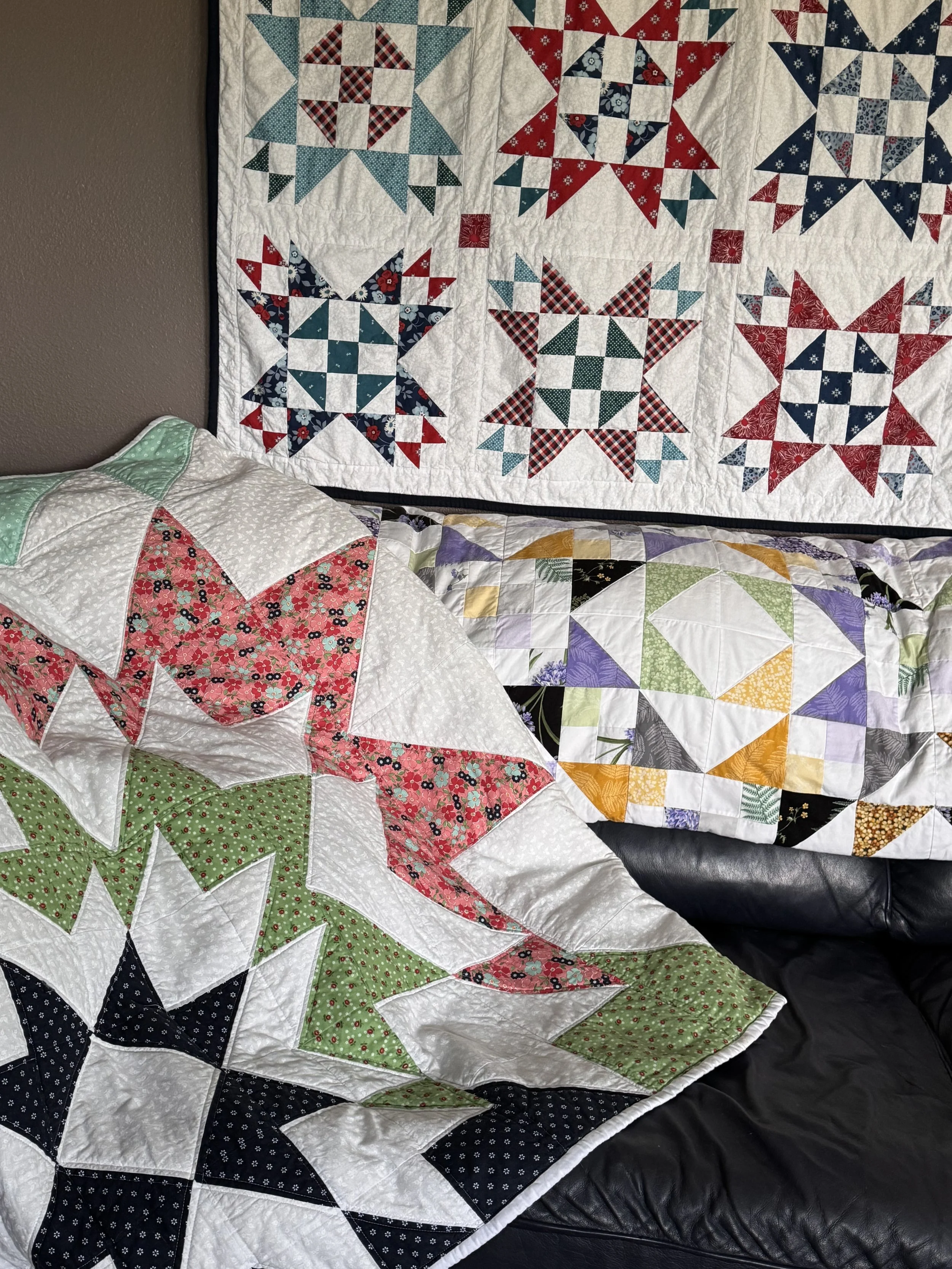
I've made this quilt myself (it's the one pictured in the lower left corner of the photo above), and it's a wonderful project for practicing HSTs without feeling repetitive. The instructions are clear, the design is beautiful, and the pattern is available as a free PDF.
One Last Note from My Notebook
If you come back each Tuesday expecting another step-by-step tutorial, you'll probably be surprised.
That's not really what this notebook is about.
It's about doing the research, asking the questions, comparing the options, and sharing what I learn along the way.
There are wonderful teachers in the quilting world, and I plan to keep learning from them right alongside you.
My hope is that Chris's Quilting Notebook becomes a place where you can save a little time, avoid a few unnecessary purchases, discover outstanding resources, and maybe find your next favorite quilting teacher.
After all, there are only so many hours in a day. If I can spend a few of mine digging through the options so you don't have to, I'd call that time well spent.
Until next Tuesday,
Chris
Thank you for supporting Chris Cross Quilts & More. Every purchase made through an affiliate link helps me continue creating free quilting resources, reviews, and inspiration for this community.
Sewing chair no. 3
Sometimes gratitude arrives quietly, while trimming thread or pressing a seam. This Sewing Chair reflection is about ordinary dreams that slowly became everyday life—and the unexpected moments when we realize we're living in the life we once hoped for.
Pull up a chair. Stay awhile.
The Things We Once Wished For
Sometimes gratitude doesn't arrive with fireworks.
Sometimes it shows up while you're trimming thread.
I was sitting here today, surrounded by stacks of fabric, a cup of coffee that had long since gone cold, a couple of cats supervising absolutely nothing, and a project spread across the table when I finally looked around the room.
Not really looked.
Saw it.
The sewing machine I saved for.
The shelves filled with fabric collected one piece at a time.
The house that feels like home.
The family that has grown and changed and somehow become both louder and quieter all at once.
The life I've built without ever realizing I was building it.
And it struck me that so many of the things surrounding me today were once wishes.
There was a time when I hoped for a sewing room instead of a corner of the dining room table. A time when buying a few fat quarters felt like a luxury. A time when I wondered if life would ever settle down enough to have evenings like this—just stitching, thinking, and listening to the quiet hum of the machine.
One by one, those hopes quietly became ordinary.
Maybe that's the funny thing about answered prayers and long-term dreams.
They rarely announce their arrival.
They slip into everyday life until they become so familiar that we stop seeing them.
Then, on a random afternoon, while choosing thread or pressing a seam, something catches your attention and you realize you're living in the life you spent years hoping for.
Not a perfect life.
There are still worries.
Still bills.
Still people I love who struggle.
Still projects that refuse to cooperate and days when the seams don't quite line up.
But woven through all of it are dreams that came true so gradually I almost missed them.
Maybe that's another gift of making things by hand.
The steady rhythm slows us down just enough to notice what has already been made.
The quilt beneath our fingers.
The home around us.
The people who fill it.
The quiet moments we once imagined while hurrying through busier seasons.
If you're reading this from your own sewing chair—or a knitting chair, a favorite porch swing, a workshop, or the corner of a kitchen table—I hope you have a moment like that this week.
A moment when you look around and realize that some version of your younger self would be amazed by the life you're living today.
And if you're still waiting for that season to arrive, keep stitching.
Some quilts take a long time to come together.
Thank you for stopping by The Sewing Chair.
Until next time, pull up a chair whenever life feels a little too loud.
There will always be room for you here.
~Chris
Why Quilters Started in the Middle
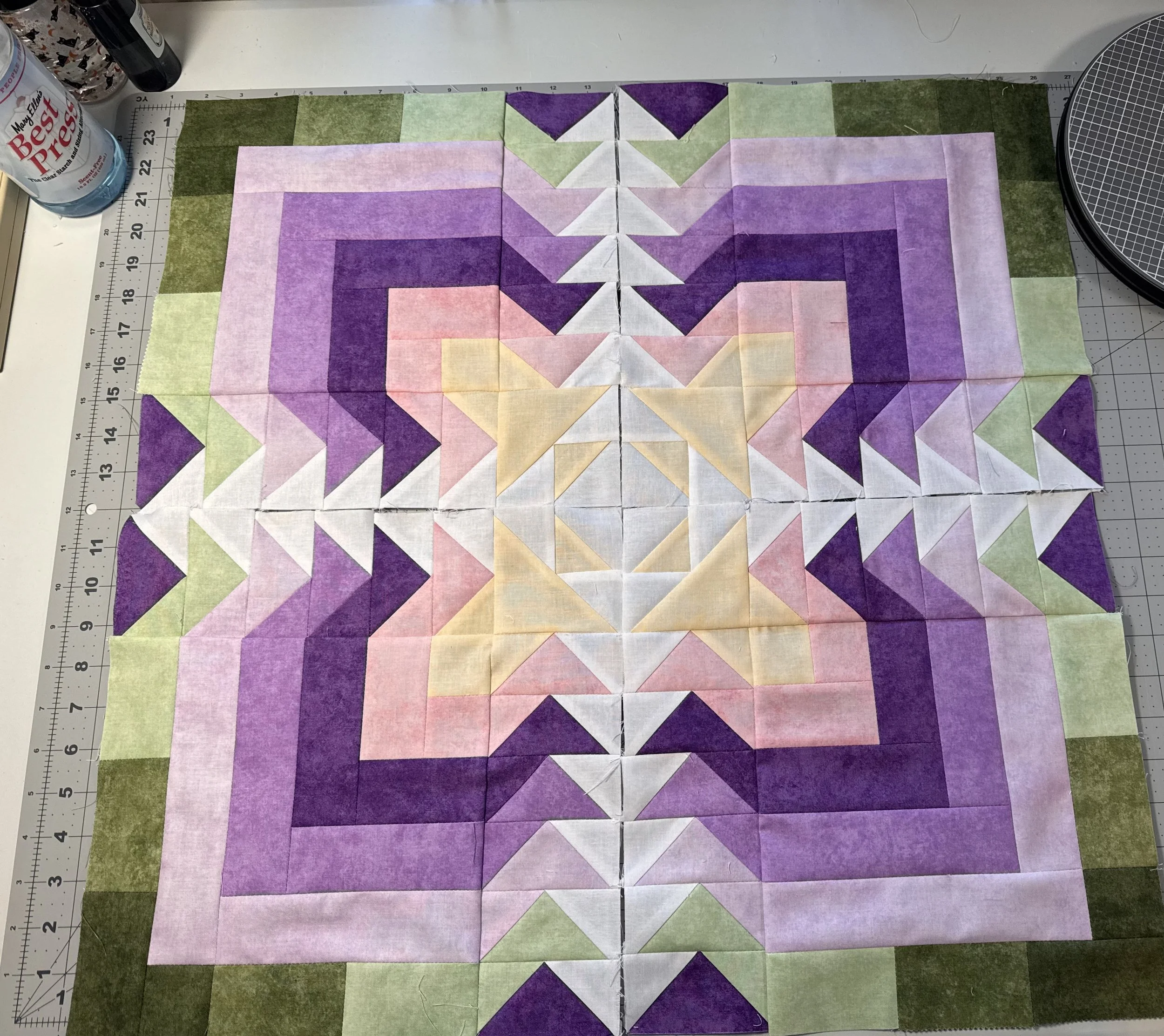
Medallion quilts begin in the middle and grow outward, border by border, creating a beautiful center-first design with deep roots in textile history. In this quilt history post, we’ll look at how medallion quilts developed, why they’re different from round robin quilts, and why this slow, thoughtful style still inspires quilters today.
Quilt History
The Story Behind Medallion Quilts
If you’ve ever looked at a medallion quilt and thought, “Well, that’s fancy,” you’re not alone.
Most quilts today are made block by block, row by row. We cut our pieces, make our blocks, stack them up, rearrange them seventeen times, take a picture with our phone, rearrange them again, and eventually convince ourselves we meant to do it that way.
A medallion quilt works a little differently.
Instead of beginning with rows of repeated blocks, a medallion quilt starts with one central design and grows outward. Border by border, round by round, the quilt expands from the middle until it reaches its finished size.
It’s a beautiful style with deep roots in textile history, and once you understand where it came from, it makes perfect sense.
Before Quilt Patterns Were Everywhere
Today, if we want to make a quilt, we have no shortage of help.
We have books, magazines, YouTube tutorials, PDF patterns, quilt-alongs, printable charts, Pinterest boards, and more opinions about pressing seams than any reasonable person should have to sort through.
Two hundred and fifty years ago?
Not so much.
Quiltmakers relied heavily on what they learned from family, neighbors, local communities, and their own experience. Printed quilt patterns as we know them today were not sitting around waiting to be downloaded, and nobody was pausing a video tutorial to figure out which way the triangle should face.
Much of the knowledge was passed along by hand, by eye, and by practice.
That meant quilts often grew from what the maker had available and what she found meaningful. Sometimes the center was carefully planned from the beginning. Other times it may have started with a treasured piece of fabric, a favorite motif, an appliquéd basket, a floral design, a wreath, or a central panel too beautiful to chop into little pieces.
And honestly, if you’ve ever bought a fabric and then decided it was “too pretty to cut,” congratulations. You may have more in common with historic quiltmakers than you realized.
A Quilt That Grew Like a Picture Frame
One of the easiest ways to understand a medallion quilt is to think of it like framing a picture.
You begin with the center.
Then you add a frame.
Then maybe another.
Then perhaps a border with piecing, appliqué, vines, stars, flying geese, or whatever design the quilt seems to be asking for next.
Medallion quilts can include all kinds of borders: simple strips, pieced units, floral appliqué, geometric designs, or fabric arranged to show off special prints. In the late eighteenth and early nineteenth centuries, chintz fabrics and appliqué designs became especially fashionable in England, France, and America, and some quilts used large printed motifs or appliqué as dramatic centerpieces.
Each border became another chapter in the quilt.
And just like chapters in a book, some flow smoothly while others feel like the maker may have paused, looked at her fabric pile, and said, “Well. This is what we have now.”
I respect that.
Wait...Isn’t That a Round Robin Quilt?
This is where things can get a little confusing.
At first glance, medallion quilts and round robin quilts can look very similar because both grow outward from a central block.
The difference is usually who adds each round.
A traditional medallion quilt was often planned and made by one quiltmaker, or perhaps within one household, with the design growing from the center outward.
A round robin quilt is a group project. One quilter starts with a center block, then passes it to another quilter who adds a border. Then it moves to the next person, who adds another border, and so on until the quilt eventually returns to the original maker. The American Quilter’s Society describes a round robin as a group project where each member adds a border to a central block, creating a medallion-style quilt.
So, if a medallion quilt is a solo performance, a round robin is more like a quilting potluck.
Everyone brings something to the table.
Sometimes it all works beautifully.
Sometimes Aunt Linda brings lime Jell-O with shredded carrots.
Either way, it’s memorable.
Modern round robins are especially popular in quilt guilds and small quilting groups, and they can be a wonderful way to see how different makers interpret the same starting point. Each border carries the personality of a different quilter: her color choices, her skill level, her favorite blocks, and possibly her strong feelings about half-square triangles.
While round robin quilts often use a medallion-style layout, they are not quite the same thing historically. Medallion quilts have roots reaching back centuries, while round robins are more closely tied to modern quilting groups, guilds, swaps, and collaborative projects.
Every Quilt Was Different
One of my favorite things about studying antique medallion quilts is realizing there really wasn’t one single “correct” way to make one.
Some are perfectly balanced.
Some are wildly ambitious.
Some are elegant and restrained.
Some look like the maker was determined to use every idea she had ever loved in one quilt, and honestly, who among us has not been there?
Borders could vary in width. Patterns could change. Colors could shift. Fabrics could run out. A quilt might begin with a refined center and end with a border that says, “We are finishing this today, and nobody is going to stop me.”
That individuality is part of what makes medallion quilts so fascinating.
They remind us that quiltmaking has always been part skill, part creativity, part resourcefulness, and part negotiation with whatever fabric is actually sitting in front of you.
Why I Love Them
As I’ve been working on my own Jane Austen 250th Anniversary appliqué quilt, I’ve found myself appreciating medallion quilts even more. (Quilting 250 Years Ago)
There’s something peaceful about focusing on one section at a time.
Instead of racing toward the finish line, the quilt slowly grows outward. The center gets your full attention. Then the next border. Then the next.
Each round feels like its own small accomplishment.
It reminds me that quilting wasn’t always about finishing quickly. It wasn’t about checking off a project so we could move to the next thing as fast as possible.
Sometimes it was about working slowly.
Using what was available.
Making something beautiful one decision at a time.
And perhaps occasionally staring at a border and wondering what on earth possessed you to choose that many tiny pieces.
History may not record those moments, but I feel confident they happened.
A Style That Never Really Disappeared
Although quilting styles have changed dramatically over the centuries, medallion quilts have never truly disappeared.
Modern designers still use the same center-out idea in traditional quilts, appliqué quilts, English paper piecing designs, sampler quilts, mystery quilts, and collaborative round robin projects.
The fabrics may change.
The tools may change.
The rotary cutter may occasionally threaten a finger.
But the basic idea remains the same: begin with something meaningful, then build around it.
There is something wonderfully steady about that.
Looking Closely
The next time you see a medallion quilt at a quilt show, in a museum collection, or in a book, don’t just admire the whole finished piece.
Start in the center.
Then let your eyes travel outward, border by border.
You’re following the same path the maker did.
One round at a time.
One decision at a time.
One “well, I hope this works” moment at a time.
It’s a quiet reminder that beautiful things don’t always have to begin at the edge.
Sometimes they begin right in the middle.
Did You Know?
Many eighteenth- and nineteenth-century medallion quilts featured a strong central design surrounded by multiple borders. Some used piecing, some used appliqué, and some highlighted printed chintz fabrics that were highly prized in their time. While every quilt was different, the center-first design became one of the defining features of the medallion style and continues to inspire quilters today.
Coming Next Week
Next week in quilt history, we’ll explore Baltimore Album quilts—those breathtaking appliqué masterpieces filled with flowers, baskets, birds, buildings, and symbols that turned quilts into works of art.
~Chris
The Quilting Tools I Reach for Almost Every Project
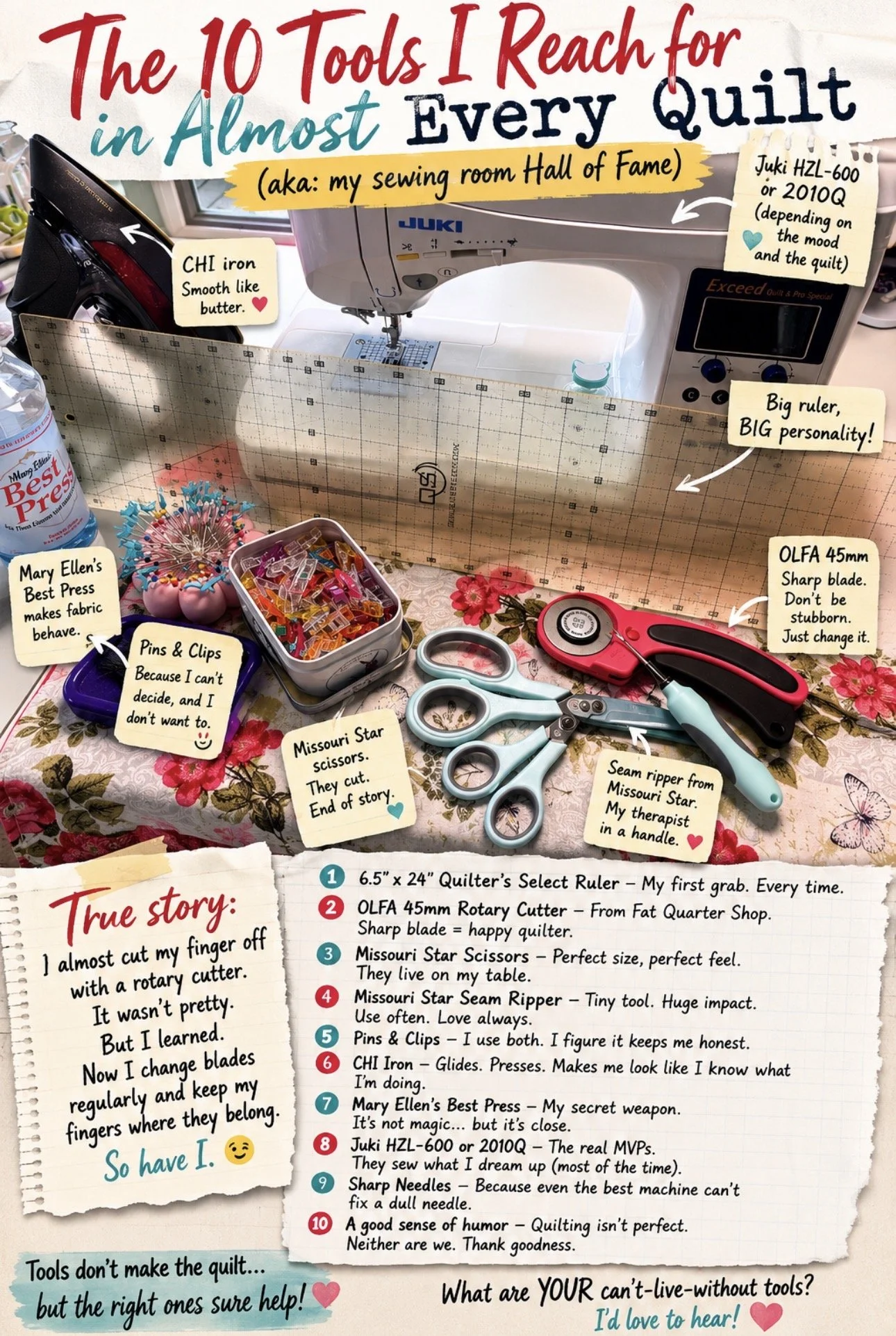
Every quilter has favorite tools they reach for again and again. From my Quilter's Select ruler and OLFA rotary cutter to my trusted Juki machines and Missouri Star scissors, these are the quilting essentials that have earned a permanent place on my sewing table—and the story of why I now have a very healthy respect for rotary cutters.
Disclosure: This post may contain affiliate links. If you purchase through these links, I may earn a small commission at no additional cost to you. I only recommend products I genuinely use and love in my own sewing room. Some products mentioned, including my favorite Missouri Star scissors and seam ripper, are not affiliate links—they're simply tools I've come to rely on over the years.
My Sewing Room Favorites (and Why They've Earned a Permanent Spot on My Table)
If you've ever peeked into another quilter's sewing room, you know we all have that collection.
The drawer full of gadgets we were absolutely convinced would change our quilting lives.
The ruler we bought because it looked like it could calculate the trajectory of a NASA launch.
The specialty tool we've used exactly once.
And then...
There are the tools that never leave the table.
The ones that get picked up project after project because they simply work.
These aren't necessarily the fanciest tools or the newest gadgets. They're the ones that have earned my trust after countless quilts, countless seams, and yes... a few choice words uttered when something wasn't cooperating.
So if you wandered into my sewing room today, these are the tools you'd find within arm's reach.
1. Quilter's Select 6" × 24" Ruler
If I could only keep one ruler, this would probably be it.
The size works for everything from trimming yardage to cutting binding and squaring larger pieces. The markings are easy to read, the grip keeps it from skating across the fabric nearly as much as other rulers I've used, and all the angle markings make life easier when I need them.
It's simply the first ruler I grab.
My rotary cutter probably gets more exercise than I do.
A sharp rotary blade makes quilting easier, more accurate, and a whole lot less frustrating.
Now...
Let's talk about why I change my blades regularly.
Years ago, I nearly took the tip of my thumb off with a rotary cutter.
It wasn't one of my finer quilting moments.
Let's just say the blade was much closer to my thumb than it was to the fabric, and there was considerably more blood than anyone wants in a sewing room.
I survived.
My thumb survived.
My pride took a little longer.
These days I respect that little wheel of doom a whole lot more, keep fresh blades on hand, and pay much better attention to where my fingers are.
If you've never had a rotary cutter close call...
I'm genuinely happy for you.
If you have...
Welcome to the club nobody wanted to join.
3. Missouri Star Scissors
I own more scissors than I care to admit.
Seriously.
They're in drawers.
Project bags.
Next to the sewing machine.
Probably one hiding in the kitchen that wandered off years ago.
But these?
These are the ones I reach for every single time.
The size feels right in my hand, they're comfortable to use, and they cut beautifully. Thread, quilting cotton, batting...they just work.
When I'm sewing, I don't go looking for scissors.
I go looking for these scissors.
4. Missouri Star Seam Ripper
Nobody likes admitting how much they use a seam ripper.
But if you're quilting, you're using one.
Frequently.
Mine has become less of a tool and more of a coworker.
I don't enjoy introducing it to every quilt, but it's nice knowing it's always willing to help me correct my "creative design decisions."
People sometimes ask whether clips or pins are better.
My answer?
Yes.
I use both.
Clips are wonderful for binding, thicker seams, and anywhere pins would be awkward.
Pins still shine when piecing, matching points, or working with smaller pieces.
There's room in my sewing room for both.
I know some quilters swear by homemade starch.
Others prefer spray starch.
I'm firmly on Team Best Press.
It helps seams lie flatter, gives fabric a little extra body, and makes blocks behave just a little better.
Does it perform miracles?
No.
But it comes awfully close on some days.
7. My CHI Iron
A good iron is every bit as important as a good sewing machine.
Actually...
Some days I think I spend almost as much time standing at the ironing board as I do behind the sewing machine.
My CHI heats quickly, presses beautifully, and has been incredibly dependable.
8. My Juki Machines
I switch back and forth between two machines depending on the project.
My Juki HZL-F600 handles most of my everyday sewing.
When I need straight-stitch precision or I'm working on larger quilting projects, I often pull out my Juki TL-2010Q.
Both have earned permanent spots in my sewing room.
If one is in the shop...
I'm counting the days until it comes home.
The Honest Truth
Could I quilt without some of these?
Sure.
Would I want to?
Absolutely not.
Over the years I've learned something important:
You don't need every new gadget that comes along.
You need the tools that fit the way you sew.
Sometimes that's the expensive ruler.
Sometimes it's a pair of scissors that feels perfect in your hand.
Sometimes it's a seam ripper you've become far more acquainted with than you'd like to admit.
Your sewing room doesn't have to look like anyone else's.
It just has to work for you.
And if it occasionally contains a pile of fabric, a sleeping cat, a dog convinced every quilt belongs to them, and enough thread on the floor to knit another project...
Well...
You're probably doing just fine.
What's on Your "Can't Quilt Without It" List?
If you could only keep five quilting tools, what would they be?
I'd love to hear what has earned permanent real estate in your sewing room.
~Chris
Fat Quarters, Jelly Rolls, Layer Cakes and Other Quilting Terms That Sound Like a Bakery Menu
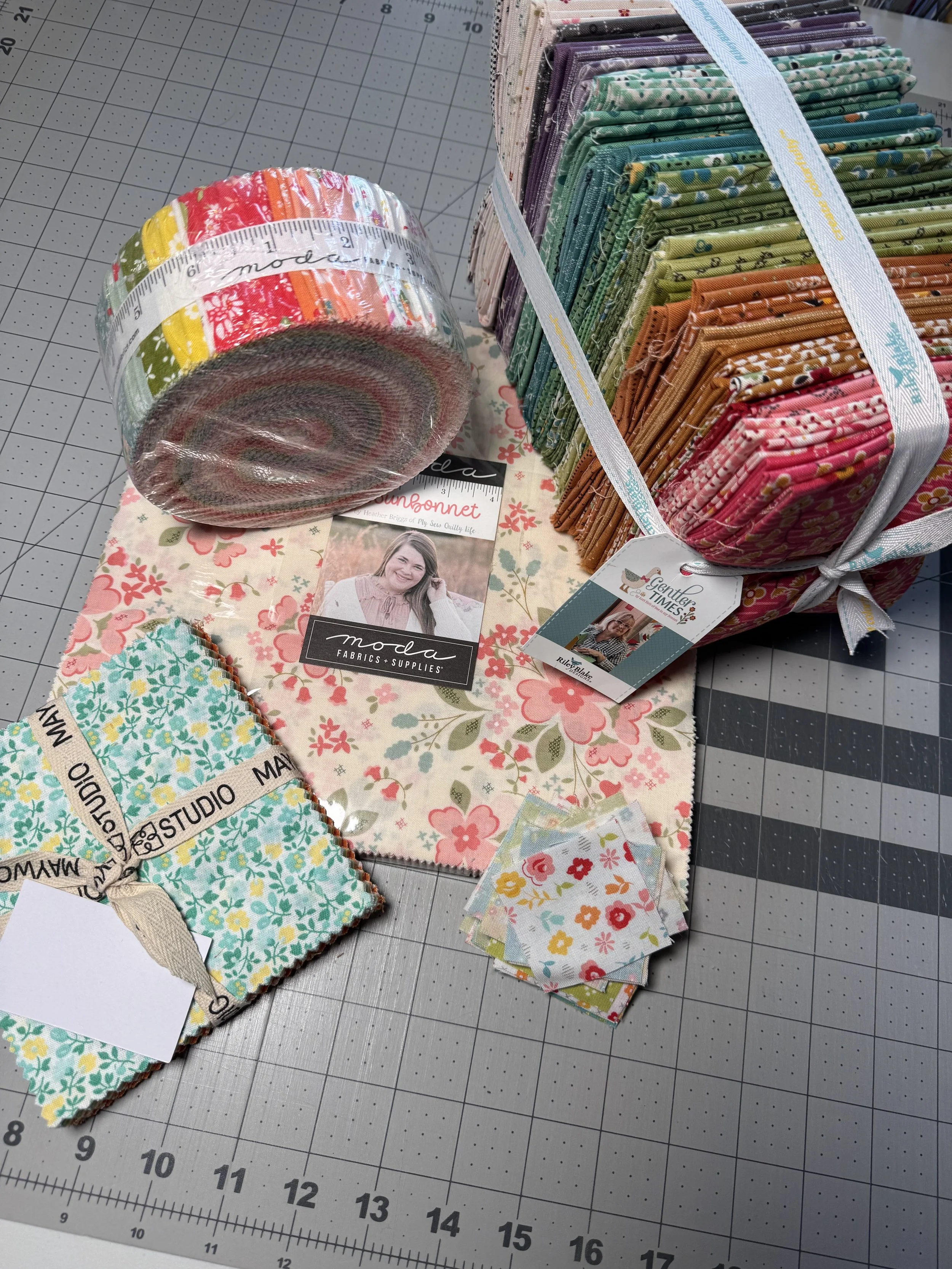
Confused by quilting terms like fat quarters, jelly rolls, layer cakes, charm packs, and honey buns? Learn what quilting precuts are, how fabric collections work, and how to choose the right precut bundle for your next quilting project. A beginner-friendly guide to understanding quilting fabric bundles and panels.
One of the more confusing parts of learning to quilt is discovering that quilters apparently do their fabric shopping at a bakery.
Layer cakes.
Jelly rolls.
Honey buns.
Fat quarters.
Fat eighths.
For the longest time, I assumed somebody in the quilting industry got hungry during a marketing meeting and things just escalated from there.
As it turns out, these terms actually make sense once you understand what they are and why they exist.
So let's decode some quilting language.
First, What Is a Fabric Collection?
Before we talk about precuts, we need to talk about fabric collections, sometimes called fabric lines.
A fabric collection is a group of coordinating fabrics designed to work together.
Think of it as a family.
The designer creates multiple prints using the same color palette and theme.
You might have:
Large floral prints
Small floral prints
Geometric prints
Dots
Stripes
Tone-on-tone prints
Background fabrics
All designed to coordinate beautifully.
When you see a collection displayed in a quilt shop, that's why everything seems to match so effortlessly.
Someone already did the color planning for you.
Many collections also include:
Light fabrics
Medium-value fabrics
Dark fabrics
This balance helps quilters create contrast and visual interest in a quilt.
What Is a Fabric "Print"?
A print simply refers to an individual fabric design within the collection.
For example, a collection will often contain anywhere from 8-20 different prints, with most full-sized collections coming in with around 10-15 unique designs made into two or three different colorways.
This becomes important when we start talking about precuts.
Because many precuts contain one piece from every print in the collection.
What Is a Fat Quarter?
A fat quarter is probably the most common precut in quilting.
A regular quarter-yard of fabric is cut like this:
9" × 44"
While technically a quarter yard, it's long and skinny.
A fat quarter is cut differently:
Approximately 18" × 22"
Same amount of fabric.
Different shape.
Why does this matter?
Because an 18" × 22" piece is far more useful for quilting.
You can cut larger blocks, applique shapes, bag pieces, borders, and countless other project components from a fat quarter.
This is why quilters often buy fat quarters when they love a fabric but don't necessarily need a full yard.
Or two yards.
Or five yards.
Not that anyone would do that.
What Is a Fat Eighth?
A fat eighth is exactly what it sounds like.
It's half of a fat quarter.
Approximately:
9" × 22"
Many fabric collections are now available as fat eighth bundles.
These are wonderful when:
You want a lot of variety
You're making scrappy quilts
You don't need large pieces
You have limited storage space
Although if you're a quilter, "limited storage space" eventually becomes a relative term.
What Is a Layer Cake?
A layer cake consists of pre-cut squares.
Most commonly:
10" × 10"
A typical layer cake contains one or more squares from each print in a fabric collection.
Often around 42 squares.
The beauty of a layer cake is convenience.
No cutting.
No measuring.
No wondering if your square is actually square.
You simply open the package and start sewing.
Many quilt patterns are specifically designed around layer cakes.
What Is a Jelly Roll?
A jelly roll contains pre-cut strips (40-42).
Most commonly:
2½" × Width of Fabric
(Width of fabric is usually about 42-44 inches.)
Like layer cakes, jelly rolls often include one or more strips from every print in a collection.
Jelly rolls are popular because strips are incredibly versatile.
You can use them for:
Strip quilts
Log cabin blocks
Borders
Binding
Rail fence quilts
Bargello quilts
They're also a wonderful way to enjoy an entire collection without purchasing yards of every print.
What Is a Honey Bun?
A honey bun is essentially a narrower jelly roll.
The strips are:
1½" wide
Instead of 2½" wide.
has 40-42 stips per roll.
Honey buns are perfect for:
Small piecing
Borders
Table runners
Decorative projects
Mini quilts
They're less common than jelly rolls but incredibly useful for certain projects.
Other Common Precuts
You may also encounter:
Charm Packs
Contain 42 pre-cut squares that are:
5" × 5"
Like most precuts, charm packs typically contain one square from each print in a fabric collection.
Charm packs are incredibly popular because they're affordable, easy to store, and work beautifully for many quilt patterns.
They're often a beginner's first introduction to precuts because they offer a lot of variety without requiring a large investment.
Charm packs are commonly used for:
Baby quilts
Lap quilts
Table runners
Tote bags
Scrappy projects
Quilt blocks that feature many different fabrics
If you've ever admired a quilt that seems to contain dozens of coordinating fabrics, there's a good chance a charm pack was involved somewhere along the way.
Mini Charm Packs
Contain 42 tiny squares that measure 2½" × 2½"
They're essentially the quilting equivalent of snack-sized candy.
Small. Cute. Difficult to stop collecting.
Mini charms are wonderful for:
Doll quilts
Mug rugs
Small wall hangings
Decorative accents
Tiny patchwork projects
They can also be combined to create larger blocks and more complex designs.
Just know that the smaller the pieces become, the more important accuracy becomes.Some quilters absolutely love tiny piecing.Others discover very quickly that their happiness lives somewhere north of a 5-inch square.Both positions are completely reasonable.
Dessert Rolls
Typically twenty (20) 5" strips
Not as common but occasionally available.
Because apparently we hadn't exhausted the bakery theme yet.
Let's Talk About Panels
Many fabric collections also include a panel.
A panel is a large printed piece of fabric designed as a focal point.
Instead of repeating prints across the fabric, the panel contains specific images or scenes.
Examples include:
Christmas scenes
Farm animals
Children's themes
Wildlife
Patriotic designs
Vintage trucks
Seasonal artwork
Some panels contain a single large image.
Others contain multiple smaller blocks that can be cut apart.
Panels are fantastic for:
Baby quilts
Children's quilts
Wall hangings
Quick gifts
Table toppers
Pillows
Tote bags
They're also wonderful when you need a project finished before next Christmas rather than the Christmas three years from now.
Why Quilters Love Precuts
The biggest advantage is simple:
The work is already done.
The manufacturer has:
Coordinated the colors
Cut the pieces
Packaged the collection
This allows quilters to focus on designing and sewing.
Precuts are particularly helpful for beginners because they remove much of the stress involved in selecting coordinating fabrics.
You can purchase an entire collection in one bundle and know everything will work together.
My Advice for Beginners
If you're standing in a quilt shop looking completely overwhelmed, start with a precut bundle.
Pick a collection that makes you smile.
Don't overthink it.
A layer cake, jelly roll, charm pack, or fat quarter bundle is a wonderful way to learn color, fabric coordination, and quilt construction.
Before long, you'll find yourself saying things like:
"I only went in for one fat quarter."
And every experienced quilter within earshot will immediately know that's not how the story ended.
In future posts we'll dive deeper into how to choose fabrics that work well together, how to understand color value in quilts, and why some quilts seem to glow while others fall a little flat.
Spoiler alert: it's usually not the fabric's fault.
~Chris
Quick Reference Guide
Precut Size
Fat Eighth 9" × 22"
Fat Quarter 18" × 22"
Mini Charm 2½" × 2½"
Charm Pack 5" × 5"
Layer Cake 10" × 10"
Jelly Roll 2½" × Width of Fabric
Honey Bun1½" × Width of Fabric
~Chris
The Sewing Chair no. 2
Small stitches, slow thoughts, and the quiet ache of loving our children long after they’re grown. This Sewing Chair reflection is about motherhood, mistakes, quilts, and the stories that get stitched into the things we make.
Pull up a chair, stay awhile
What Gets Stitched Into a Quilt
There are days when I sit down to sew because I have a project to finish.
And there are days when I sit down because my mind needs somewhere to put all the thoughts that refuse to be quiet.
Tonight, it’s appliqué.
Small stitches. Slow stitches. The kind that force you to pay attention because rushing only makes things harder.
As I work my way around another little piece of fabric, my mind keeps wandering to my kids.
No matter how old they get, I don’t think that part of motherhood ever changes.
When they’re little, we kiss scraped knees and tuck them into bed.
When they’re grown, we can’t fix nearly as much. We watch them make hard decisions, carry heavy burdens, question themselves, and learn lessons that can only be learned by living through them.
And our hearts still hurt every bit as much.
Maybe more.
I found myself remembering what life looked like when I was their age.
The mistakes.
The uncertainty.
The feeling that I should already know what I was doing.
The belief that asking for help somehow meant I had failed.
I spent a lot of years trying to figure things out on my own because I didn’t want to disappoint anyone. I didn’t want people to think I wasn’t strong enough or capable enough or smart enough.
Looking back now, I realize something I couldn’t see then.
The people who loved me weren’t waiting for me to prove myself.
They were waiting for me to let them in.
By trying so hard to protect everyone else from my struggles, I also protected them from the opportunity to walk beside me.
That’s a strange realization to have while holding a needle and thread.
But quilting has a way of slowing the thoughts enough that they finally line up.
Every stitch seems to carry a memory.
Some are joyful.
Some are painful.
Some make me laugh at the person I used to be.
Some still make my heart ache.
And every one of them becomes part of the finished piece.
That’s the funny thing about quilts.
You don't throw away an entire project because one block came out crooked or one seam wandered a little too far to the left.
Instead, you work with what you have.
You trim a little here, adjust a little there, add another fabric that brings everything into balance, and somehow the imperfections become part of the story the quilt was always meant to tell.
Life isn’t all bright florals and cheerful prints either.
It’s dark fabrics mixed with light ones.
It’s worn edges next to brand-new beginnings.
It’s seams that had to be ripped out and stitched again.
And somehow, all of it together creates something warmer and stronger than any single piece could have been on its own.
So tonight, these thoughts are being stitched into this quilt.
Someday I’ll pull it out, spread it across a bed or wrap it around my shoulders, and I’ll remember this evening.
I’ll remember worrying about my children.
I’ll remember being grateful for the people who stayed beside me when I finally learned to ask for help.
I'll remember that parenthood doesn't end when our children grow up—it simply asks something different of us.
And maybe that’s what quilts are really for.
Not just to keep us warm, but to quietly hold the stories, the worries, the celebrations, and the healing that happened while they were being made.
Thank you for stopping by The Sewing Chair.
Until next time, pull up a chair whenever life feels a little too loud.
There will always be room for you here.
~Chris
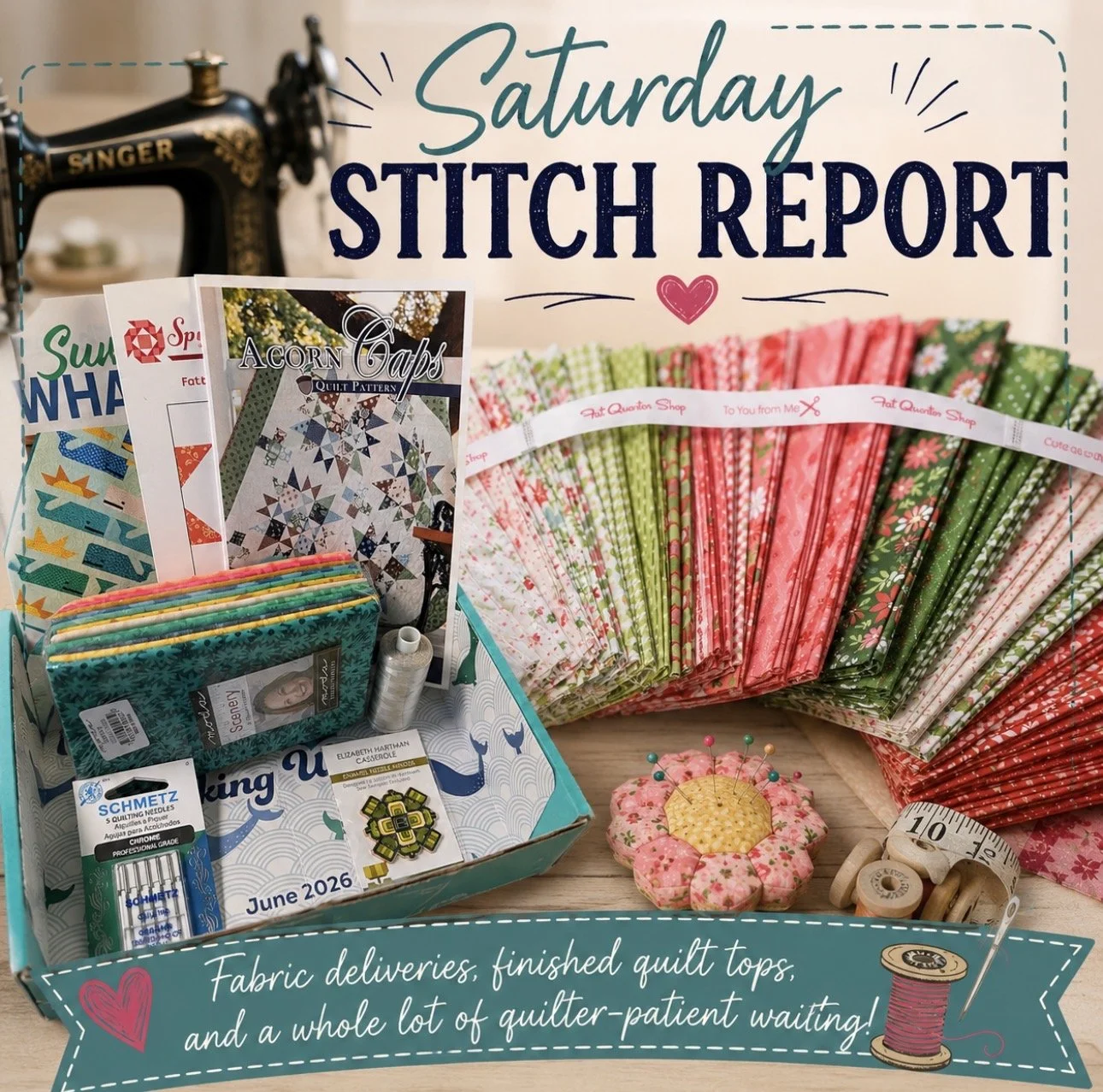
The Saturday stitch report #2
This week at Chris Cross Quilts: the Starlight quilt top is finished, Poinsettia & Pear fabric has arrived, the June Sew Sampler box is here, and the Haven Charity Quilt Along is waiting on fabric before we begin.
This post may contain affiliate links, which means I may earn a small commission at no extra cost to you. Thank you for supporting Chris Cross Quilts.
Fabric deliveries, finished quilt tops, and batting-related moral convictions
Welcome back to the Saturday Stitch Report, where the fabric keeps arriving, the projects keep multiplying, and I keep pretending this was all part of a reasonable plan.
It was a good sewing week here, which means there was progress, new fabric, a little waiting, and at least one quilting decision based entirely on principle.
On the Sewing Table
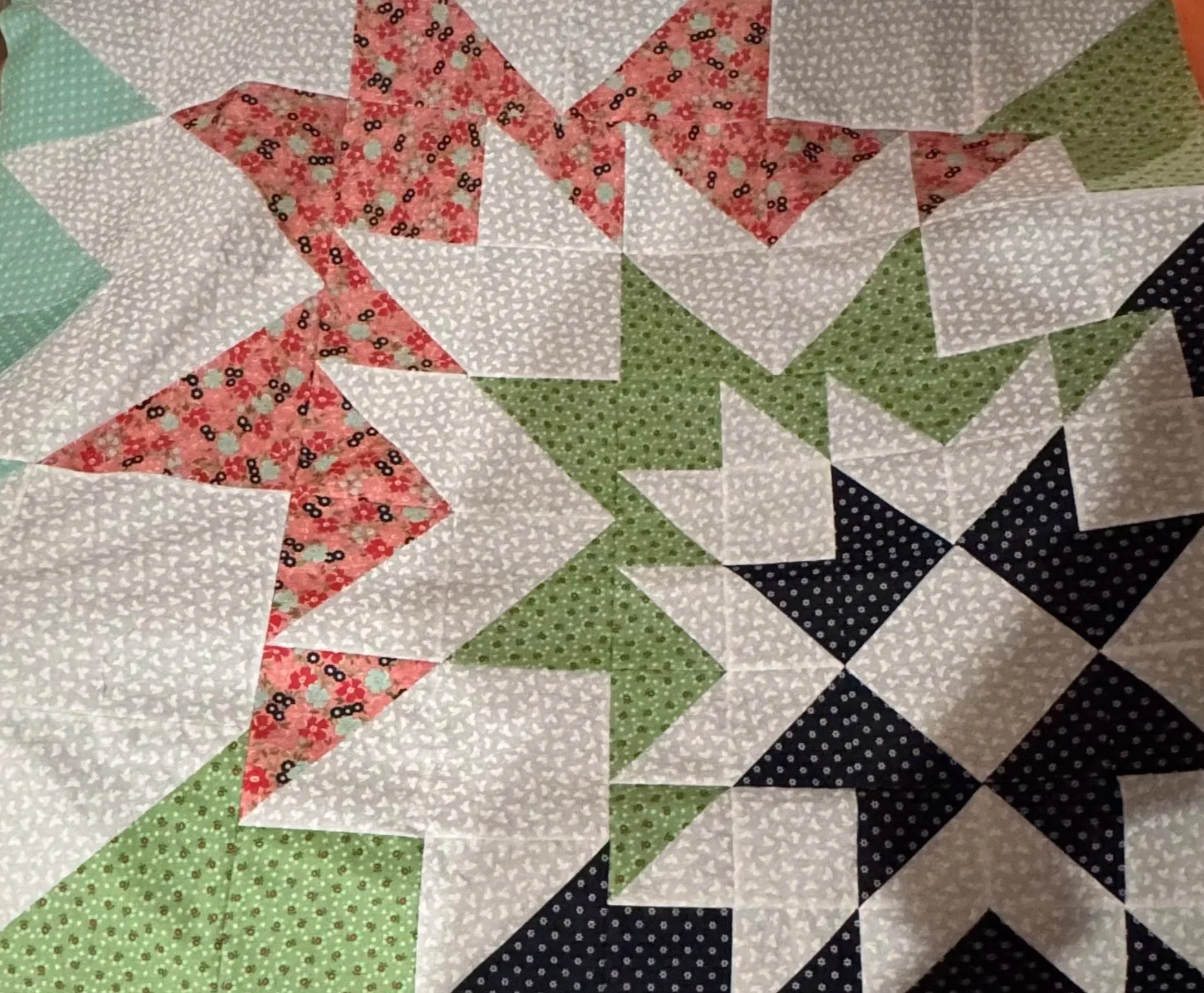
Big news: I finished the top of the Starlight quilt.
Finished quilt tops always feel like a victory lap, even though every quilter knows this is the moment when the quilt quietly says, “That was cute. Now sandwich me, quilt me, bind me, and act like we’re almost done.”
So yes, the top is complete.
Is it sandwiched and quilted?
No.
Because this one is more of a twin size, and I had to order batting. Technically, I do have queen size batting here, but I cannot bring myself to cut into a queen size batting for a twin size quilt.
Could I?
Probably.
Will I?
Absolutely not.
There are rules in life, and apparently this is one of mine.
So Starlight is waiting patiently for batting, which is a very dignified stage of quilt-making and not at all the same thing as being stalled.
Mail Call
This week also brought some happy mail.
The Poinsettia & Pear collection arrived at my house, and it is every bit as lovely as expected. There is just something about a new fabric collection showing up that makes all previous plans feel negotiable.
I am trying to behave.
That sentence may not hold up in court.
The June Sew Sampler box also arrived, which means I now have fresh inspiration, new project temptation, and another reason to reorganize things instead of doing the responsible thing and finishing what I already started.
Sew Sampler boxes are dangerous that way. They arrive looking innocent, but inside the box is always the quiet suggestion that maybe I do have time for one more project.
Waiting on Haven
I am also waiting for the Haven Charity Quilt Along with Fat Quarter Shop.
The start date has been pushed back because the fabric has apparently gotten hung up somewhere in the process, so we are all waiting together.
Honestly, that is very on-brand for quilting.
Even the fabric has errands.
I am looking forward to this one, though. Charity quilts always feel a little different. There is something meaningful about stitching with a purpose beyond the sewing room, and I am excited to be part of it once everything is ready to go.
Until then, I’ll wait patiently.
Or at least quilter-patiently, which means checking updates while starting three unrelated things.
Sewing Room Reality Check
This week’s sewing room truth: finishing a quilt top does not reduce the number of projects in the room.
It should.
Emotionally, it feels like it should.
But somehow finishing one stage of one quilt only reveals twelve other things waiting their turn.
There is the top waiting for batting.
The fabric waiting to become something.
The quilt along waiting to start.
The Sew Sampler box quietly blinking at me from the corner.
And somewhere in there, I am still supposed to know where I put my scissors.
What’s Inspiring Me
I am still thinking a lot about slow stitching, handwork, and the way quilts move through stages.
Some weeks are cutting weeks.
Some weeks are piecing weeks.
Some weeks are waiting-for-batting weeks, which are obviously a legitimate category and should be respected.
The Starlight quilt top is a nice reminder that progress counts even when the whole quilt is not finished. A completed top is still a big step. It still took time, fabric, decisions, seam ripping, probably some muttering, and at least one moment of wondering whether the pattern or my brain was the problem.
That counts.
Coming Up
This next week, I’ll be watching for the batting delivery so Starlight can move into the sandwiching and quilting stage.
I’ll also be keeping an eye on updates for the Haven Charity Quilt Along, admiring the Poinsettia & Pear fabric, and pretending I am not already mentally assigning it to a project.
No promises.
Fabric this pretty does not like to sit quietly.
Until Next Saturday
That’s this week’s Stitch Report: one finished quilt top, one batting order, one beautiful fabric delivery, one Sew Sampler box, and one delayed quilt along waiting in the wings.
If you’re stitching this weekend, I hope your seams behave, your rotary blade is sharp, and your batting supply matches your quilt size better than mine did.
Happy stitching,
~Chris
Quilt Shop Fabric vs. Big Box Store Fabric: Is There Really a Difference?
Is quilt shop fabric really better than big box store fabric? Learn the differences in thread count, weave quality, fabric hand, colorfastness, durability, and quilting performance. Discover how fabric quality affects cutting, piecing, pressing, and the longevity of your quilts.
One of the most common questions I hear from new quilters goes something like this:
“Why would I spend $14 a yard on fabric from a quilt shop when I can buy fabric at a big box store for half that?”
It’s a fair question.
After all, the bolt says 100% cotton.
The bolt over there also says 100% cotton.
The colors look nice.
The prints are pretty.
What’s the difference?
The answer is both simple and frustrating:
Sometimes there isn’t much difference.
Sometimes there is a tremendous difference.
And unfortunately, you usually don’t know until you’ve handled enough fabric to develop what can only be described as “quilter fingers.”
Eventually you’ll pick up a fabric and immediately think, “Oh, that’s nice.”
You won’t know exactly why.
You’ll just know.
Let’s talk about why.
First, Let’s Clear Up a Common Misconception
Not all fabric sold at big box stores is poor quality.
And not all fabric sold in quilt shops is magical unicorn fabric woven by quilting angels.
There are excellent fabrics available in many places.
There are also fabrics I’d personally leave on the shelf in many places.
The real question isn’t where the fabric is sold.
The real question is how the fabric was manufactured.
Understanding Thread Count
One of the first differences you’ll hear experienced quilters mention is thread count.
Thread count refers to the number of threads woven into a square inch of fabric.
Generally speaking, quilting cottons from premium manufacturers have a tighter weave than many lower-priced cottons.
What does that mean in practical terms?
The fabric often:
Feels smoother
Holds its shape better
Frays less
Distorts less during cutting and sewing
Wears better over time
A tightly woven fabric is less likely to stretch out of shape when you’re handling blocks repeatedly.
And trust me, quilt blocks get handled a lot.
Especially when you’re laying them out, rearranging them, deciding you liked the original layout better, and then putting everything back where it started.
What Is Fabric “Hand”?
This is one of those quilting terms that confuses beginners.
When quilters talk about a fabric’s hand, they’re referring to how it feels.
Soft.
Crisp.
Smooth.
Silky.
Dense.
Flexible.
It’s essentially the personality of the fabric.
A high-quality quilting cotton often has a smooth, substantial feel without being stiff.
Some lower-quality fabrics may feel rougher, thinner, or loosely woven.
Neither is automatically wrong.
But different fabric hands can affect how a quilt behaves.
Why Weave Matters
If you hold some fabrics up to the light, you can actually see the difference in weave density.
A looser weave often means:
More fraying
More stretching
More distortion
Less durability
A tighter weave generally means:
Cleaner cutting
More stable piecing
Better longevity
In quilting, stability matters.
We spend a lot of time trying to make pieces fit together accurately.
Fabric that stays consistent makes that process easier.
Let’s Talk About Bias
Sooner or later every quilter encounters the mysterious phenomenon known as the bias.
The bias refers to the diagonal direction of woven fabric.
This direction naturally stretches more than the straight grain.
If you’ve ever cut a triangle and wondered why it suddenly seems determined to change shape, you’ve met the bias.
Some fabrics handle bias edges better than others.
Higher quality quilting cottons tend to recover better and distort less during handling.
That becomes increasingly important as your projects become more complex.
Colorfastness: The Thing Nobody Thinks About Until It’s Too Late
Colorfastness refers to how well a fabric retains its color during washing and use.
Most modern quilting fabrics perform quite well, but premium manufacturers generally invest heavily in dye quality and testing.
Why does this matter?
Imagine spending weeks making a beautiful red-and-white quilt.
Now imagine washing it and discovering the red fabric has decided to share itself with the white fabric.
That is not the kind of community quilting encourages.
Good colorfastness helps prevent those unpleasant surprises.
Print Quality Matters Too
This is something beginners often overlook.
Take a close look at a printed fabric.
Premium fabrics frequently have:
Sharper details
Cleaner lines
Better color saturation
More consistent printing
The difference may seem subtle on the bolt.
It becomes much more noticeable once the fabric is cut into dozens of pieces and spread throughout a quilt.
The Quilter’s Trifecta: Cutting, Piecing, and Pressing
A quilt spends most of its life in three phases:
Cutting
Accurate cutting creates accurate blocks.
Poor-quality fabric can shift, stretch, or distort during cutting.
Good fabric generally behaves better under a rotary cutter.
Piecing
Piecing is the process of sewing smaller fabric pieces together to create blocks.
This is where accurate seam allowances become critical.
Most quilting patterns assume a ¼-inch seam allowance.
If your fabric stretches excessively or distorts while sewing, maintaining accuracy becomes more difficult.
Pressing
Pressing isn’t the same thing as ironing.
Ironing uses a back-and-forth motion.
Pressing uses an up-and-down motion to avoid stretching fabric.
Cotton quilting fabrics generally respond beautifully to pressing, helping seams lie flat and blocks remain square.
A square block today saves a lot of frustration tomorrow.
But Is It Worth Paying More?
Sometimes yes.
Sometimes no.
If you’re making a quick seasonal decoration that may only come out for a few weeks each year, less expensive fabric may work perfectly well.
If you’re creating a quilt intended to become an heirloom, be heavily used, or survive years of washing, I personally lean toward higher-quality quilting cottons.
Not because they’re fancy.
Because they’re dependable.
After investing dozens—or sometimes hundreds—of hours into a quilt, I like knowing the materials are likely to age as gracefully as possible.
My Personal Rule
I buy fabric based on the project.
Not every quilt requires premium fabric.
Not every project requires bargain fabric.
But if I’m spending significant time making something for my family, my home, or someone I love, I generally reach for quality quilting cotton.
The fabric cuts better.
The piecing goes more smoothly.
The pressing behaves.
And years later, when that quilt is draped over a couch, packed for a camping trip, or claimed by a grandchild, I want it to still look good.
At the end of the day, both quilt shop fabric and big box fabric can have a place in quilting.
The more you sew, the more you’ll begin to notice the differences.
And one day you’ll walk into a quilt shop, pick up a bolt, rub it between your fingers, and immediately know exactly what I’m talking about.
That’s when you’ll realize you’ve officially become a quilter.
~Chris
Quilting 250 Years Ago…
Step into Jane Austen’s England and discover what quilting and patchwork looked like 250 years ago. From precious fabric scraps and printed cotton chintz to medallion coverlets, English paper piecing, and hand-stitched seams, this history post explores how women created beautiful textile work long before rotary cutters, sewing machines, or fabric group texts existed.
History Thursdays | Chris Cross Quilts
A Peek Into Jane Austen’s Sewing Basket
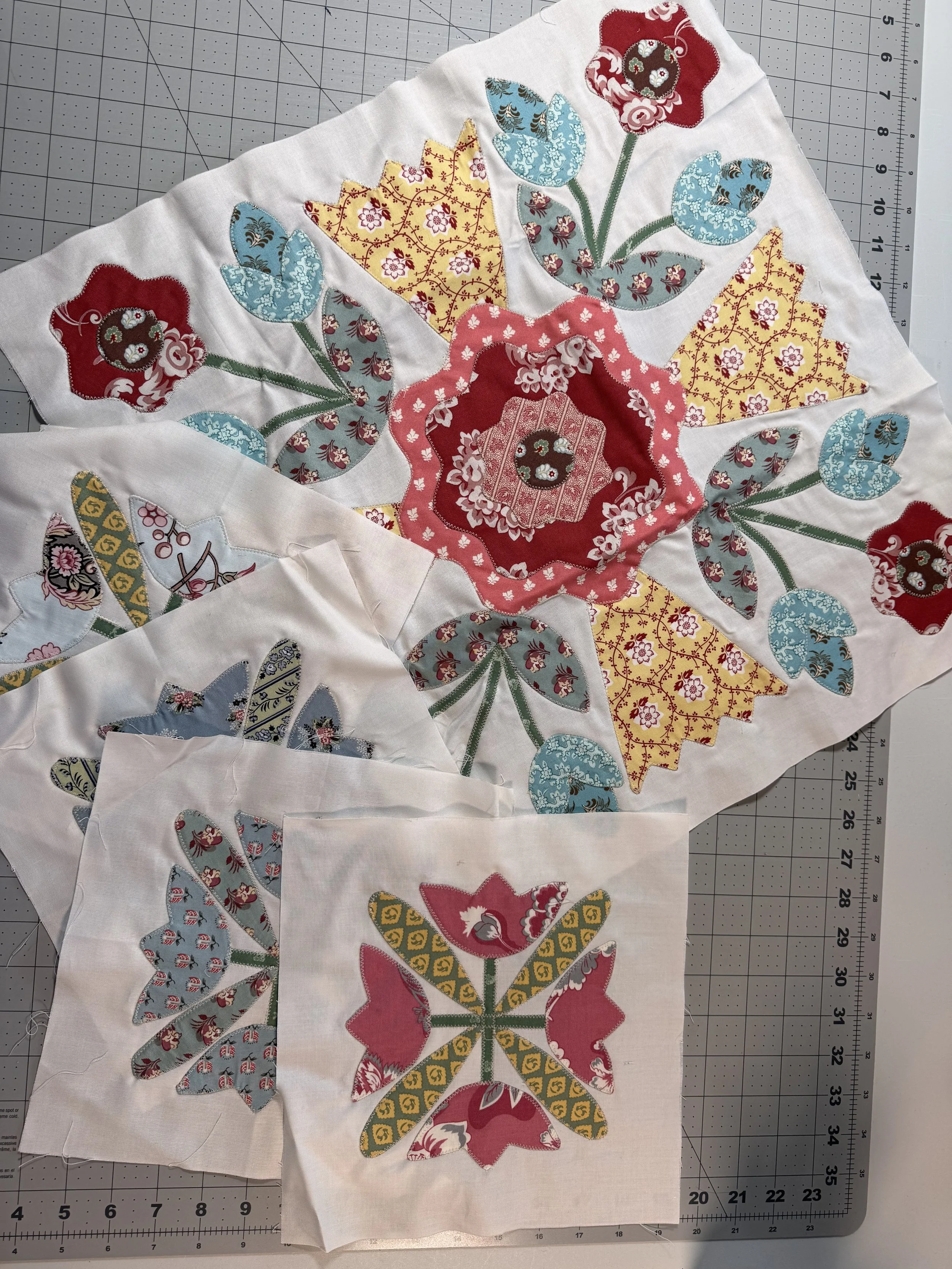
When I started working on my Jane Austen 250th anniversary appliqué quilt, I found myself wondering what quilting actually looked like in Jane Austen’s England.
Not the romantic version in my head, where everyone is peacefully stitching by candlelight in a perfectly tidy room, wearing a lovely dress, with no thread stuck to their sleeves, while someone else plays the pianoforte and another sings beautifully, because apparently nobody in my imagined Regency sitting room is off-key.
The real version.
The women of Jane Austen’s world were not surrounded by rotary cutters, acrylic rulers, sewing machines, precut bundles, or a suspiciously large fabric stash that they absolutely intend to organize someday.
Their sewing was slower. More deliberate. And much more connected to the value of fabric itself.
And the first thing I learned is that we have to be a little careful with our words.
Today, we tend to use the word “quilt” for all sorts of things: pieced quilts, appliqué quilts, bedcovers, wall hangings, table runners, and possibly that project hiding in the closet that we are not emotionally ready to discuss.
Historically, though, patchwork and quilting were not exactly the same thing.
Patchwork means pieces of fabric sewn together.
Quilting means layers of fabric stitched together, usually with some kind of filling or wadding between them.
A piece could be patchwork without being quilted. A piece could be quilted without being patchwork. And sometimes, of course, the two came together beautifully.
Which brings us to Jane Austen.
Jane Austen’s Famous Coverlet
One of the most fascinating surviving pieces connected to Jane Austen is the patchwork coverlet kept at Jane Austen’s House in Chawton.
It is often casually called the Jane Austen quilt, but technically it is a coverlet rather than a quilt because it does not have internal wadding. It has a patchwork top and a cotton backing, but not the middle layer we usually expect in a quilt today.
So, yes, I know. We are already being forced into terminology before we even get to the pretty fabric.
The coverlet was made around 1810 by Jane Austen, her sister Cassandra, and their mother. It has a central medallion-style design, hundreds of small diamonds, and more than sixty different fabrics.
And yes, it was stitched by hand.
The small pieces were made using what we now call English paper piecing, where fabric is wrapped around paper shapes and stitched together by hand.
So while Jane Austen may not have been making quilts in exactly the way we define them now, she absolutely lived in a world where women stitched, pieced, planned, saved scraps, and created beautiful textile work with their hands.
And honestly, that may be even better.
Fabric Was Precious
Two hundred and fifty years ago, fabric was expensive.
Every inch represented labor: growing, spinning, weaving, dyeing, printing, transporting, selling, sewing, mending, and remaking.
Clothing was not disposable. Garments were altered, handed down, remade, and reused. A dress might become another dress. A worn garment might become children’s clothing. Smaller remnants might find their way into household sewing.
That little pile of scraps we all keep “just in case”?
They had one too.
But their “just in case” had a lot less hobby-storage guilt and a lot more practical necessity.
Chintz and the Love of Printed Cotton
One of the most beautiful parts of this period is the use of printed cottons, especially chintz.
Chintz was inspired by the colorful painted and printed cottons of India. These fabrics were admired for their vivid colors, floral designs, vines, birds, and botanical motifs. In Britain, printed cottons became fashionable and desirable, especially as textile production and trade changed.
Some surviving quilts and coverlets from the late 1700s and early 1800s feature large floral medallions, appliqué motifs, and carefully arranged printed fabrics.
Rather than looking like the block-based quilts many of us make today, these pieces often feel more like textile gardens.
Flowers.
Vines.
Diamonds.
Borders.
Symmetry.
A whole lot of patience.
Which is why my Jane Austen appliqué block suddenly feels like it has ancestors.
Patchwork Was Not Always Blocks
When modern quilters hear “patchwork,” we often think of blocks.
Nine-patches.
Stars.
Flying geese.
Log cabins.
All the familiar quilt-shop friends.
But in Jane Austen’s era, patchwork could look very different. Surviving pieces often used diamonds, hexagons, triangles, and other small geometric shapes. Some were arranged around a central medallion. Some used borders made of hundreds or even thousands of tiny pieces.
The Austen family coverlet, for example, includes a border made with tiny diamonds. It is carefully planned and symmetrical, not random scraps tossed together in a hurry.
That matters.
Because sometimes we talk about old patchwork as if it was only about using up leftovers. And yes, economy mattered. Fabric was valuable. Scraps were saved.
But these pieces were also designed.
Women were making artistic decisions about balance, color, repetition, contrast, and layout long before any of us had a design wall, a fabric pull, or the ability to send six pictures to a friend and ask, “Which one looks less weird?”
No Rotary Cutters Here
Imagine making patchwork without:
rotary cutters
acrylic rulers
cutting mats
sewing machines
electric irons
spray starch
LED lights
downloadable PDF patterns
YouTube tutorials
group texts asking, “Does this fabric work?”
Every shape had to be marked and cut by hand.
Every seam was sewn by hand.
Every decision took time.
Progress was not measured by how many blocks could be finished in a weekend. A bedcover might take months or years, especially when it was worked around the ordinary demands of home, family, visitors, illness, weather, and whatever else life brought through the front door.
Which makes me feel slightly less dramatic when one appliqué block takes me forever.
Slightly.
Sewing as Part of Daily Life
In Jane Austen’s world, needlework was part of a woman’s daily life. It was practical, decorative, social, and expected.
Women mended, altered, embroidered, pieced, and stitched. They worked near windows for good light. They stitched in sitting rooms, in family circles, and during quiet hours.
The sewing itself gave their hands something to do while conversation moved around them.
That part feels familiar, doesn’t it?
Today we have guild meetings, retreats, sew-alongs, Facebook groups, podcasts, audiobooks, and fabric photos sent with the urgent caption, “Be honest. Is this ugly?”
The tools have changed.
The reason we gather around them really hasn’t.
From My Sewing Room
Working on this Jane Austen 250th anniversary appliqué quilt while listening to her novels has made the distance between her world and ours feel surprisingly small.
I have better tools.
Better lighting.
A sewing machine.
A rotary cutter.
Access to more fabric than any one person reasonably needs, although let’s not sit with that thought for too long. I still have collections I want to buy.
But the rhythm of it still feels familiar.
A chair pulled up to a project.
Fabric spread across a table.
Hands busy enough to let the mind wander.
A story playing in the background.
A small piece of beauty slowly taking shape.
Maybe that is why quilting and patchwork continue to hold us.
Not simply because people needed bedcovers.
But because people have always needed a way to make ordinary life feel a little more meaningful, one stitch at a time.
~Chris
Next week in quilt history, we’ll take a closer look at medallion quilts and why that center-out design became such a beautiful part of textile history.
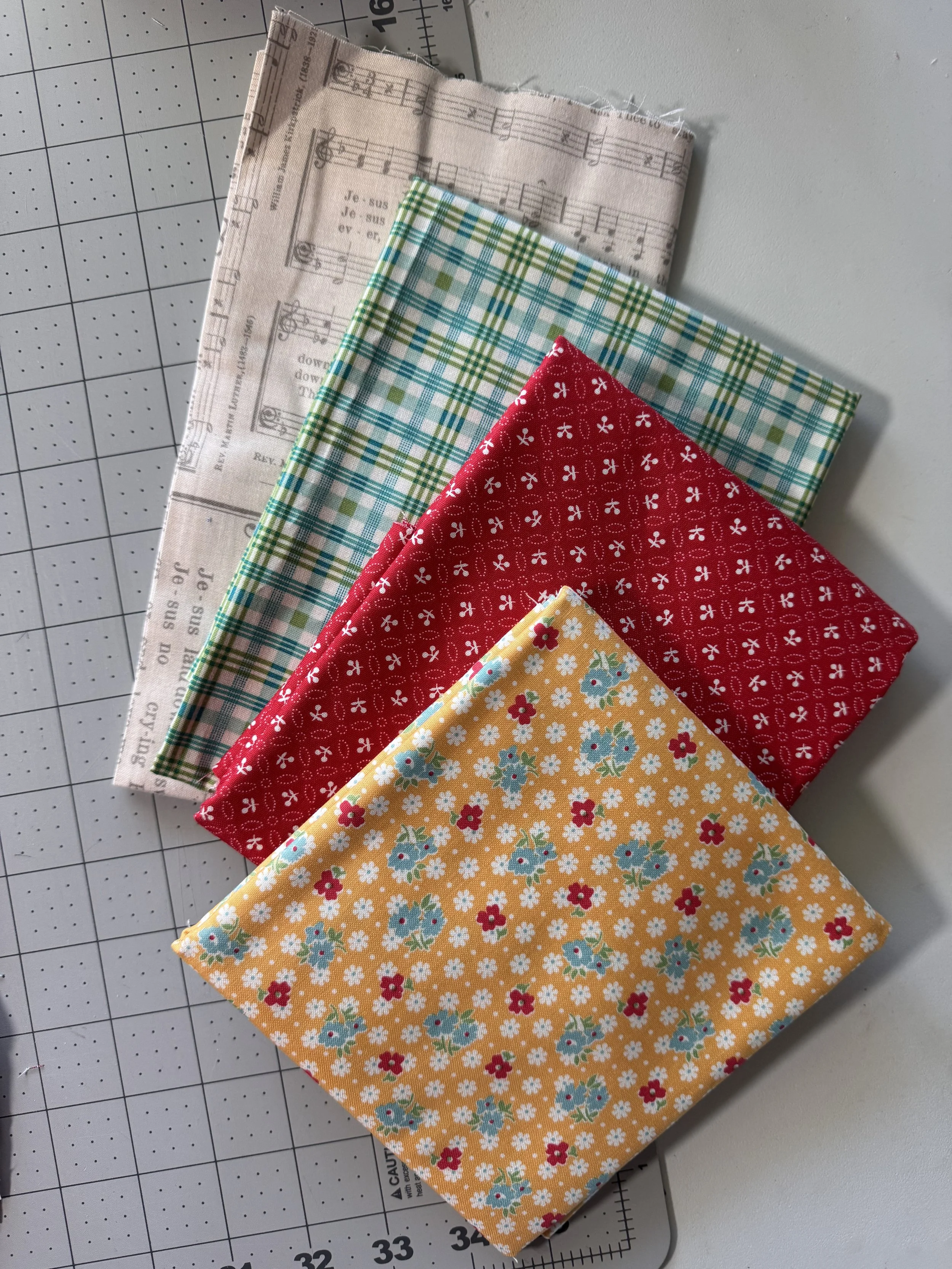
Why I Prefer 100% Cotton for Quilting
One of the most common questions new quilters ask is why everyone seems so attached to 100% cotton fabric. After all, fabric is fabric...right? Not exactly. From cutting and pressing to durability and long-term wear, the fabric you choose can have a huge impact on your quilting experience. Let's take a closer look at why quilting cotton has earned its place as the gold standard for generations of quilters.
One of the questions I hear fairly often from new quilters is, “Why does everyone insist on using 100% cotton fabric?”
It's a fair question.
If you've ever walked through a fabric store, you've probably noticed there are a lot of options. Cotton, polyester, rayon, linen, flannel, minky, knits, canvas—the choices seem endless. Many of them are beautiful, and most of them can be sewn into something useful.
So why are quilters so attached to cotton?
The short answer is because it works.
The longer answer is because quilting asks fabric to do some very specific things, and cotton tends to do those things exceptionally well. (Fabric Matters More Than You Think, More Thoughts on Fabric)
When we're quilting, we're often cutting dozens—or hundreds—of pieces that need to fit together accurately. A quilt block might contain pieces cut to a fraction of an inch, and by the time you sew an entire quilt together, those small measurements matter.
Cotton is stable. It doesn't stretch much, it cuts cleanly, and it generally stays where you put it. That's important when you're trying to match seams and keep blocks square.
It also presses beautifully.
If you've spent any time around quilters, you've probably learned that pressing is practically a hobby of its own. A well-pressed seam can make the difference between a block that lies flat and one that stubbornly refuses to cooperate. Cotton responds well to heat and steam, making it easier to achieve accurate results.
Another reason I prefer cotton is durability.
Many quilts are intended to be used, loved, washed, dragged around the house, packed on camping trips, and occasionally claimed by pets who have contributed absolutely nothing to the project. Good quality cotton holds up remarkably well under those conditions.
In fact, one of the things I love most about cotton quilts is that they tend to get softer over time. A new quilt is wonderful, but a quilt that's been washed and used for years has a comfort all its own.
Now, that doesn't mean other fabrics don't have a place in quilting.
Flannel makes wonderfully cozy quilts.
Linen adds beautiful texture.
Minky creates incredibly soft quilt backs.
Denim quilts can last forever.
I've used all of them at one time or another.
The trick is understanding that each fabric behaves differently. Some stretch more. Some shrink more. Some fray more. Some require additional handling and preparation before they play nicely with traditional quilting techniques.
For beginners especially, I think cotton removes a lot of unnecessary frustration. When you're learning rotary cutting, seam allowances, pressing, piecing, and quilting, it's nice to have a fabric that's working with you rather than teaching additional lessons.
Not all cotton is the same, either.
One thing I didn't understand when I first started sewing was the difference between quilting cotton from a quilt shop and lower-quality cotton from a bargain bin. Both may say "100% cotton" on the bolt, but they often feel very different in your hands.
Higher-quality quilting cotton typically has a tighter weave, holds its shape better, and tends to wear more gracefully over time. It's one of those things that becomes easier to recognize the more fabric you handle.
And if you're wondering whether experienced quilters can actually tell the difference by touch, the answer is usually yes. It's a slightly odd superpower, but many of us develop it eventually.
Of course, fabric selection isn't only about fiber content. Color, scale, texture, and print all play a role in creating a quilt that works visually.
A fabric can be gorgeous sitting on the bolt and completely disappear once it's cut into small pieces.
Another fabric might look fairly ordinary by itself but become the perfect supporting fabric in a quilt design.
That's part of what makes quilting so interesting. Fabric selection is both practical and creative. You're thinking about how the fabric will sew, how it will wear, and how it will contribute to the overall look of the finished project.
So while I wouldn't say 100% cotton is the only fabric you should ever quilt with, it remains my first choice for most projects.
It's reliable.
It's durable.
It presses beautifully.
It wears well.
And after spending a lot of hours making a quilt, I appreciate materials that help the process along instead of making it more complicated.
The fabric is only one part of a quilt, but choosing the right fabric can make the entire project more enjoyable—from the first cut to the last stitch.
~Chris
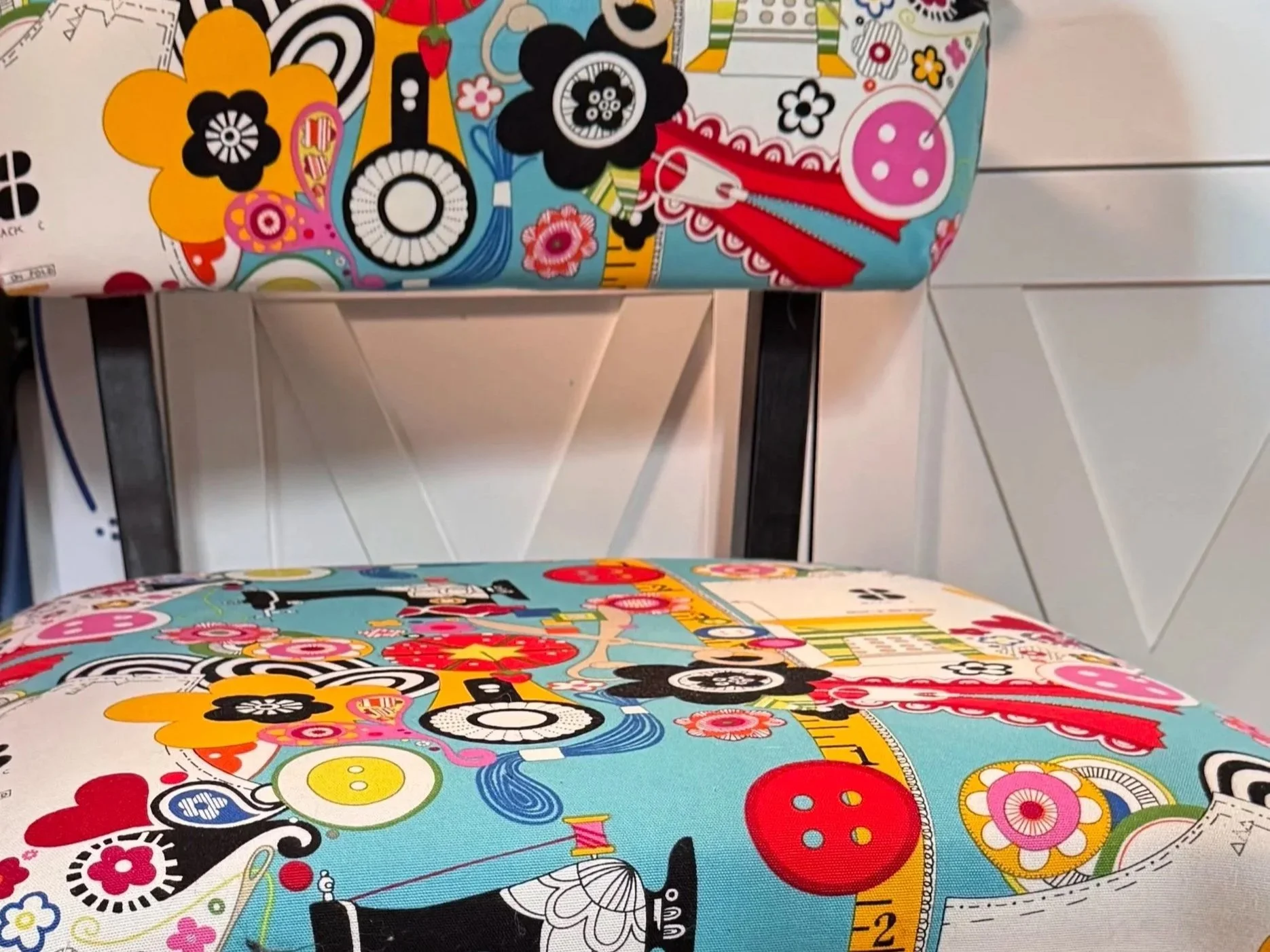
The Sewing Chair no. 1
The Sewing Chair is a Sunday invitation to slow down for a few minutes. Through quilting, creativity, and quiet reflection, we'll explore how making something with our hands can steady our minds and remind us to care for ourselves as faithfully as we care for everyone else. Pull up a chair—you're welcome here anytime.
An Invitation to Slow Down
6/21/26
Welcome to the very first Sunday reflection
If you've spent any time around quilters, you know we can spend an absurd amount of time talking about sewing chairs.
We compare cushions, lumbar support, seat height, armrests, and whether the wheels glide smoothly across the floor. We look for something comfortable enough to sit in for hours and supportive enough to carry us through another quilt, another project, another idea.
We don't choose a sewing chair because it's the prettiest one in the room.
We choose it because it takes care of us while we create.
Somewhere between finishing a quilt top and shopping for an ergonomic chair, I realized that's exactly what I wanted this Sunday column to be.
A place to sit for a few minutes.
A place to rest.
A place to collect scattered thoughts before heading back into a busy week.
A place to remember that making something is never wasted time.
Chris Cross Quilts will always be about quilting. We'll talk fabric, color, tools, techniques, quilt history, mistakes, successes, and the occasional moment when we spend twenty minutes looking for the rotary cutter that's been in our hand the entire time.
But every Sunday, I'd like to pull up a sewing chair and have a different kind of conversation.
This idea arrived in the middle of an ordinary quilting session.
I was finishing a quilt top, chain piecing one seam after another, when I noticed something I had never really paid attention to before. The constant stream of thoughts that usually races through my mind had slowed down. The endless mental checklist became one simple question:
"What's the next stitch?"
Piece by piece, the noise became quieter.
By the time I stood up, the problems hadn't disappeared, the laundry still needed folding, emails still waited to be answered, and life hadn't magically become easier.
But it had become manageable.
I've come to realize that quilting isn't just something I make.
It's something that quietly remakes me.
I suspect the same thing happens whether your hands are holding a needle, knitting needles, embroidery floss, a paintbrush, a crochet hook, or a block of wood in a workshop. There is something about creating with our hands that gives our minds permission to slow down enough to catch up with our hearts.
In a world that constantly asks us to produce more, answer faster, scroll longer, and hurry everywhere, choosing to make something by hand feels almost rebellious.
So that's what The Sewing Chair is.
Not a tutorial.
Not a checklist.
Not another thing to accomplish.
Just a comfortable place to pause, breathe a little deeper, and remember that caring for other people starts with caring for ourselves first.
No perfect quilts required.
No experience necessary.
You're welcome here anytime.
Thanks for stopping by. I'd love to have you back next Sunday.
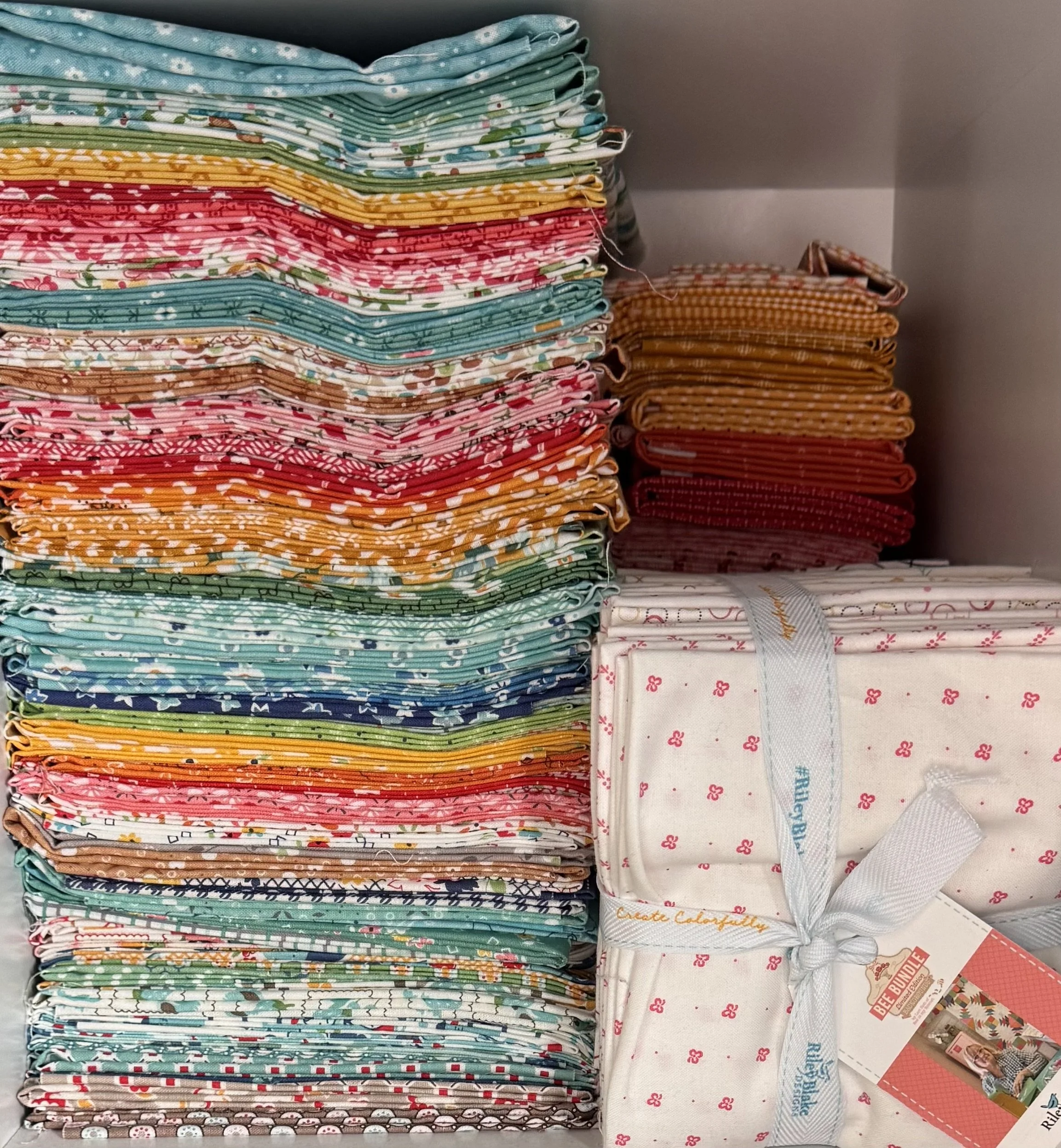
more thoughts on fabric
I used to think fabric was the easy part. Then I started sewing. Here's what I've learned about fabric, why quilters care so much about it, and how the right choice can make a project far more enjoyable.
Because “fabric is fabric” is one of the biggest myths in sewing
If you've spent any time around quilters or sewists, you've probably heard someone say, "Fabric is fabric."
Those people are wrong.
Not necessarily bad people. Just wrong.
Choosing fabric for a project is a little like choosing ingredients for a recipe. Sure, technically you can substitute things, but don't be surprised when things get weird.
The same thing happens with fabric.
One of the biggest surprises for new sewists is discovering that the fabric you choose often matters more than the pattern. Different fabrics can look, feel, and behave like completely different projects.
That's why understanding fabric is one of the most valuable sewing skills you can develop. (10 things I wish I knew) (Fabric Matters more than you think)
Quilting Cotton: The Reliable Friend
If quilting had an official mascot, it would probably be quilting cotton. (Why I Prefer 100% Cotton)
There's a reason quilters are obsessed with it.
Quality quilting cotton is stable, predictable, easy to cut, easy to sew, and available in enough colors and prints to make your fabric stash multiply faster than anyone thinks possible.
When you're learning, quilting cotton is incredibly forgiving. It presses well, holds its shape, and generally behaves the way you expect it to behave.
That's important because your sewing machine will eventually provide enough surprises on its own.
Not All Cotton Is Created Equal
One thing that surprised me when I started sewing was learning that cotton isn't just cotton.
The quilting cotton you find at a quilt shop is often very different from bargain fabric found elsewhere.
Higher-quality quilting cotton typically has a tighter weave, better color retention, less stretching, and better durability.
Can you make a quilt from less expensive fabric?
Absolutely.
Will it necessarily age the same way, wash the same way, or hold up the same way?
Not always.
This doesn't mean you need the most expensive fabric available for every project. It simply means that fabric quality matters more than many beginners realize.
Drape Changes Everything
One of the most important characteristics of fabric is drape.
Drape refers to how fabric hangs and moves.
Quilting cotton has structure. It tends to hold its shape.
Rayon is soft and fluid.
Linen has body but softens over time.
Denim is sturdy and substantial.
Fleece is cozy and thick.
The same pattern sewn in different fabrics can look like entirely different projects.
That's why patterns often recommend specific fabric types. The designer isn't being difficult. They're trying to help you avoid disappointment.
Stretch Can Be Your Friend or Your Enemy
Woven fabrics and knit fabrics behave very differently.
Most quilting cottons are woven and have very little stretch.
Knit fabrics stretch significantly and require different techniques, needles, and expectations.
Ask a woven-fabric sewist to sew knits for the first time and they may suddenly question all of their life choices.
Ask me how I know.
Actually, don't. Some memories are best left buried.
The point is that stretch affects fit, construction, and durability. Understanding it makes sewing much easier.
Fabric Affects More Than Appearance
Many beginners focus primarily on color and print.
I did too.
The problem is that beautiful fabric isn't always the right fabric.
A fabric may look gorgeous on the bolt but be completely wrong for the project you have in mind.
Before buying fabric, consider:
How will it be used?
How often will it be washed?
Does it need structure or softness?
Does it need durability?
Will it be worn, carried, cuddled, or displayed?
The answers matter.
The Best Way to Learn
The truth is that no article can replace experience.
Touch fabric.
Compare fabrics.
Sew with different fabrics.
Pay attention to what you like and what frustrates you.
Over time you'll begin recognizing fabrics by feel, understanding what works for specific projects, and making better choices before the first cut is ever made.
That knowledge saves time, money, and occasionally prevents projects from becoming permanent residents of the unfinished-project pile.
Final Thoughts
Fabric isn't just the thing you cut into pieces before sewing.
It's one of the most important design decisions you'll make.
The right fabric can make a project feel effortless.
The wrong fabric can make even a simple project frustrating.
So the next time you're standing in a fabric store debating between two options, remember:
The pattern matters.
Your tools matter.
Your skills matter.
But fabric matters more than most people think.
What fabric surprised you the most when you started sewing or quilting? I'd love to hear about it in the comments.
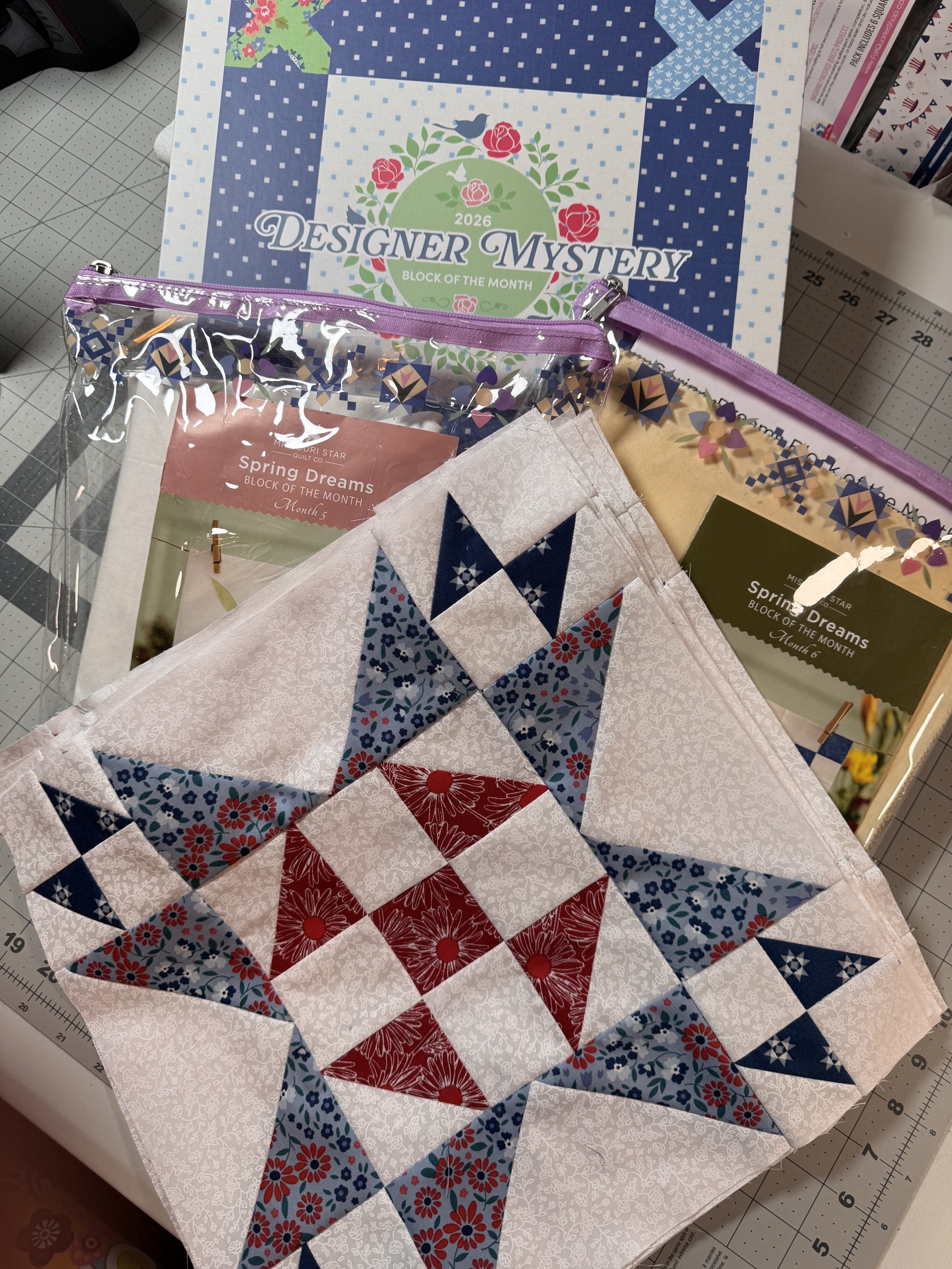
The Saturday Stitch Report #1
Welcome to the very first Saturday Stitch Report! This week I'm sharing what’s currently under my needle, the fabric collections I’m eagerly awaiting, upcoming sew-alongs, and an update on the newest (and furriest) members of the household as they settle into their roles as potential Sewing Room Supervisors. Grab a cup of coffee and join me for a little quilting conversation.
Disclosure: This post contains affiliate links. If you purchase through these links, I may earn a small commission at no additional cost to you. I only recommend products, services and supplies I personally use, love, or believe will be valuable to my readers.
New Projects, New Fabric, and Two New Supervisors
Welcome to the very first Saturday Stitch Report!
I'm not entirely sure whether this is a newsletter, a sewing diary, a weekly status report, or simply proof that I spend far too much time thinking about fabric.
Perhaps it's all of the above.
What I'm Working On
This week I've been working on a project from my December Sew Sampler box from Fat Quarter Shop. It has been nice to pull out something that has been patiently waiting its turn and finally give it some attention.
Like many quilters, I occasionally suffer from what I call "project optimism." This is the belief that I can start new things at a rate significantly faster than I can finish old things.
The evidence suggests otherwise.
Still, progress is progress, and stitches were made this week.
What's Arriving in the Sewing Room
Fat Quarter shops Limited Edition Liberty box greeted me on my porch earlier this week, well worth it as always, and the monthly Sew Sampler subscription box will be arriving soon! If you’ve ever been curious about the program, or looking for an easy way to avoid choosing your next project, you can learn more about this subscription here.
I also have a few fabric collections on my wish list that I'm eagerly awaiting.
At the top of that list are:
Poinsettia & Pear by Sherri & Chelsi for Moda
Little Ladies by Tami Jones for Andover Fabrics
I'm especially excited about Little Ladies because it's Tami's very first fabric collection. There is something special about watching a designer's debut collection make its way into the quilting world.
What's Next
Over the next few weeks, I'm hoping to complete:
The May and June blocks for the Missouri Star Spring Dreams block of the month.
The first block for Fat Quarter Shop's 2026 Designer Mystery Block of the Month
I'm also looking forward to participating in Fat Quarter Shop's Jolly Tree Farm sew along when those weekly patterns are released at the end of June. This is a free seasonal quilt along done for various holidays and I LOVE them.
There is absolutely no possibility that I have overcommitted myself.
Please do not check my project baskets for confirmation.
This Week's Lesson
This week's reminder is simple:
Progress counts.
Not every sewing session results in a finished quilt. Sometimes progress looks like organizing fabric, trimming blocks, pressing seams, or making a plan for what comes next.
A quilt is built one seam at a time, and sometimes one seam is enough.
Around the Blog
This week on Chris Cross Quilts:
10 Things I Wish Someone Had Told Me Before I Started Sewing
coming soon:
Why I Prefer 100% Cotton
Quilt Shop Fabric vs. Big Box Store Fabric
If you're new here, welcome! Grab a cup of coffee, look around, and stay awhile.
The Adjustment Period
The newest members of the household are still settling into their new surroundings. As expected, the first few days have included a little uncertainty, some growling, a few hisses, and extensive inspections of every available hiding place.
Both felines are gradually becoming more comfortable, though each is handling the move differently. One has decided that exploring is an acceptable pastime as long as nobody makes any sudden movements. The other is taking a more cautious approach and appears to be conducting a thorough risk assessment before fully committing to family life.
For now, they have not yet assumed their official roles as Sewing Room Supervisors. Their current duties seem to consist primarily of observing household activities, evaluating the dogs from a safe distance, claiming their territory and determining whether the humans are sufficiently trained.
The adjustment period is going about as expected. There have been encouraging moments, a few dramatic moments, and several reminders that cats rarely read the instruction manuals humans write for them. Each day brings a little more confidence, a little more curiosity, and a little less concern about the strange new place they've landed.
I suspect it won't be long before they discover the true purpose of a quilting studio: sitting directly on the project you're working on, stealing the warmest chair in the room, and contributing cat hair to every quilt as a signature design element, this may not go over well with me…. we shall see.
If all continues to go well, they may become regular contributors to future Stitch Reports. For now, they're still in orientation.
Until Next Saturday...
Thank you for spending a little time in my sewing room this week.
May your seams stay straight, your bobbin stay full, and your favorite rotary cutter be exactly where you left it.
(Unlike my scissors, which continue to disappear under mysterious circumstances.)
Until next Saturday,
~Chris
Nobody Warned Me Quilting Eventually Comes With Cats
When I started quilting, I expected fabric, rotary cutters, rulers, and unfinished projects.
What I did not expect was cats.
After spending nearly six decades convinced I didn't like cats (and being allergic to them), I somehow ended up with two feline supervisors, cat trees, specialty cat food, and enough HEPA filtration to support a small nation.
I've become convinced that nobody tells you the whole truth when you start quilting: eventually, cats seem to become part of the hobby.
This is the story of how a lifelong dog person accidentally became owned by two cats, and why I now believe quilting and cats are mysteriously connected.
When I started quilting, I expected fabric.
Lots and lots of fabric.
I expected rotary cutters.
I expected rulers.
I expected unfinished projects.
I expected to spend far more money on cotton than any reasonable person should.
I expected fabric collections to arrive faster than completed quilts.
All of that happened.
What I did not expect was cats.
I did not expect cat trees.
I did not expect specialty cat food.
I did not expect heavy-duty HEPA air purifiers capable of filtering the atmosphere of a small country.
Nobody tells you this when you start quilting.
They tell you about fabric addiction.
Nobody mentions that quilting may eventually require feline furniture and an upgraded air filtration system.
Somewhere along the way, quilting became significantly more expensive than advertised.
For 57 years, I successfully avoided cat ownership.
Not only because I'm allergic to cats.
I was also fully convinced I didn't like them.
At all.
Dogs made sense to me.
Dogs are straightforward.
Dogs are thrilled you're alive.
Dogs act like you've returned from a heroic military deployment every time you come back from checking the mailbox.
Cats, on the other hand, seemed suspicious.
Judgmental.
Like tiny furry middle managers constantly evaluating my performance.
If you had told me a year ago that I would someday be researching cat behavior, discussing litter box placement, feeding specialty cat food designed to reduce the protein I'm allergic to, and worrying about whether two cats felt comfortable in my home, I would have laughed directly in your face.
Then a stray cat showed up.
Which was unfortunate.
Because it turns out my opinion of cats was based entirely on not knowing any cats.
For over a year she lived outside.
I fed her.
I worried about her.
I checked on her.
I made sure she survived North Dakota weather, which is basically every weather condition known to mankind plus a few experimental ones.
But she remained outside.
This seemed like the perfect arrangement.
I could care about a cat without actually owning a cat.
Or more accurately, without admitting I owned a cat.
Or so I thought.
Then I brought her inside.
Ten days later, she was gone.
And somehow my response to that situation was:
"Perhaps what I need is more cats."
I realize this logic makes absolutely no sense.
Yet here we are.
Looking back, I suspect the stray cat had been slowly converting me for over a year.
Like a tiny furry missionary.
By the time I realized what was happening, it was already too late.
The paperwork had been processed.
The transfer of ownership was complete.
I no longer owned myself.
I belonged to cats.
I just hadn't been notified.
Now, to be completely honest, I was kind of looking for cats.
This realization was almost as shocking as the cats themselves.
A year earlier I was firmly convinced I didn't like cats.
The allergy part wasn't even debatable. My immune system had receipts.
Now I was scrolling through cat listings.
I wasn't searching for a specific breed.
I wasn't making spreadsheets.
I wasn't comparing features and benefits.
I was simply looking for a cat that needed a home.
As it turns out, two cats needed a home.
And apparently the woman who is allergic to cats, disliked cats, and had successfully avoided cat ownership for nearly six decades was suddenly volunteering for the position.
I would love to tell you there was a well-thought-out decision-making process.
There was not.
There were cats.
They needed a home.
I had a home.
The math was surprisingly simple.
This is the sort of decision that makes perfect sense to animal lovers and absolutely no sense to anyone else.
Before I knew it, Skiddy and Bobo had arrived.
And with them came the reminder.
Cats do not have owners.
Cats have staff.
I thought I was adopting two cats.
Instead, I appear to have accepted an entry-level management position in a small but highly demanding feline corporation.
The compensation package remains unclear.
Sometimes I receive purring.
Sometimes I receive judgment.
The performance reviews appear to occur daily.
The expectations are never communicated in advance.
One cat currently believes growling is an acceptable form of conversation.
The other appears to be conducting extensive research from underneath furniture.
Honestly, we're all adjusting.
Looking back, I can actually chart the progression.
First came the fabric.
Then came the rulers.
Then came the patterns.
Then came the storage totes.
Then came additional storage totes for the fabric that no longer fit in the original storage totes.
Then came the cats.
Then came the cat trees.
Then came the specialty food.
Then came the industrial-strength HEPA filters.
At no point did anyone provide a roadmap for this journey.
But as I've navigated this unexpected chapter of life, I've started noticing something.
Every quilting group has cats.
Every quilting magazine has cats.
Every quilting Facebook page has cats.
Every quilting influencer has cats.
Every quilt laid out on the floor appears to summon cats from neighboring zip codes.
For years I assumed this was coincidence.
Now I'm beginning to suspect cats are somehow included with quilting, like a notion or a sewing machine.
Required.
And honestly, I should have picked up on the pattern earlier.
Every quilting Facebook group.
Every quilting Instagram account.
Every quilt retreat.
Every sewing room tour.
Cats.
The evidence was everywhere.
Nobody tells you this when you start.
They tell you about seam allowances.
They tell you about batting.
They tell you about quarter-inch feet.
They tell you about fabric grain.
Nobody tells you that eventually you'll be discussing feline behavior with complete sincerity.
Nobody tells you that cats consider a quilt in progress to be a personal invitation.
Nobody tells you that the quilting community and the cat community apparently merged sometime in the distant past and nobody remembers exactly when.
The longer I quilt, the more evidence I find.
Need proof?
Try laying a quilt on the floor.
Just once.
Leave the room.
I am convinced there is a signal emitted by unfinished quilts that can be detected by cats from several counties away.
They arrive.
They sit.
They shed.
They stare at you as if you're the one being unreasonable.
At this point, I have concluded that quilting is not one hobby.
It's two hobbies.
The first hobby is quilting.
The second hobby is …. Cats.
Experienced quilters are laughing right now because they know exactly how this ends.
The cat wins.
The cat always wins.
The longer I quilt, the more I realize quilting was never really about quilts.
The quilts are wonderful.
But quilting also brought friendships.
Creativity.
Confidence.
Learning.
A community.
This blog.
People who understand why owning enough fabric to survive several economic collapses seems perfectly reasonable.
And somehow, in a completely unexpected turn of events, cats.
I thought quilting would bring fabric into my life.
Instead, it brought friendships, creativity, community, and somehow managed to convince a woman who is still allergic to cats and absolutely certain she disliked them to open her home to two of them.
That's a pretty impressive hobby.
Now I'm curious.
What did quilting bring into your life that you never expected?
Was it lifelong friendships?
Travel?
Teaching?
A business?
A creative confidence you didn't know you had?
Or are you, too, sitting there reading this while a cat supervises you?
Because I genuinely did not know cats and quilting were so intricately connected.
And before anyone asks, no, I do not let them lay on my quilts.
Yet.
Although based on every quilter I've ever met, every quilting photo I've ever seen, and every warning I've received since bringing home Skiddy and Bobo, I suspect that battle has already been lost.
The cats probably know it.
Everyone else probably knows it.
I am apparently the last one to figure it out.
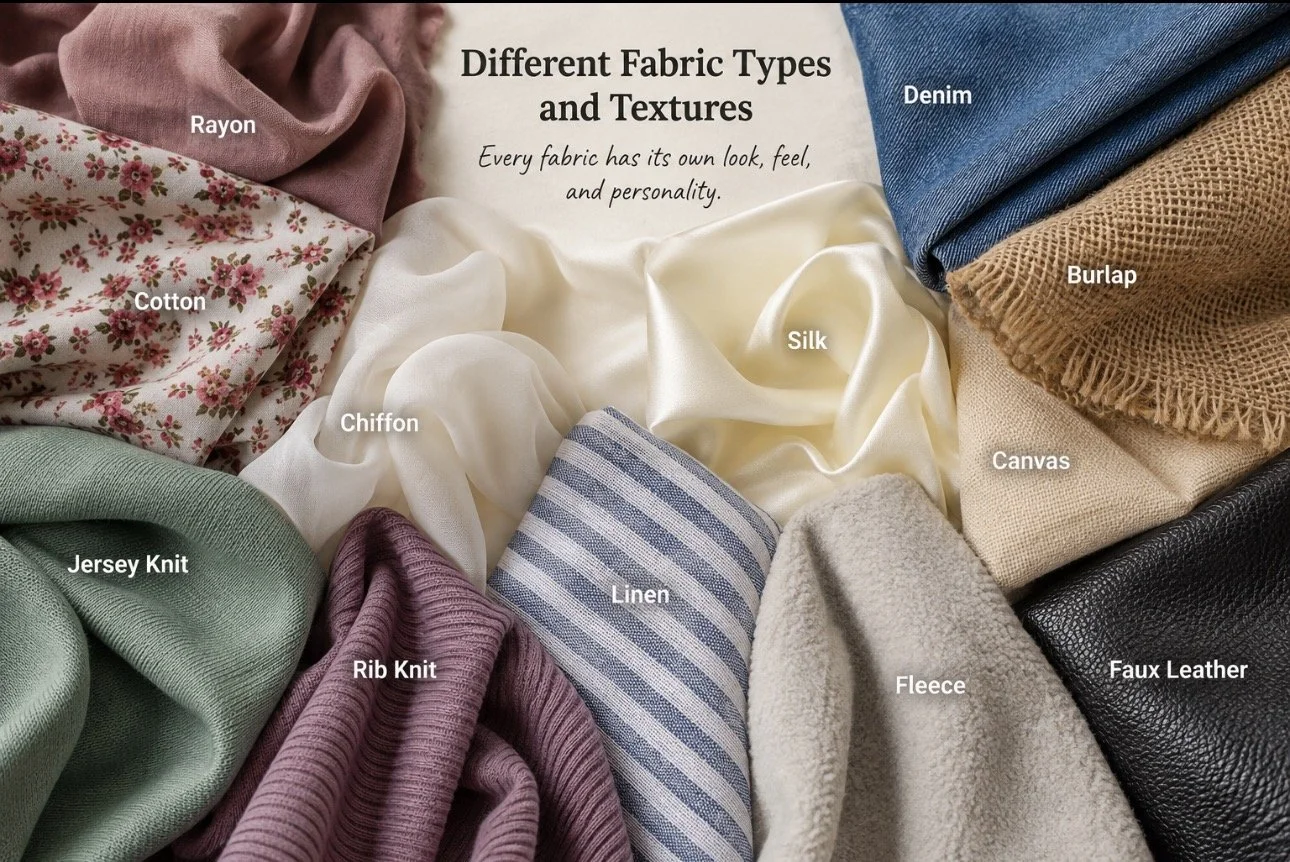
Fabric Matters More Than You Think
Ever wonder why one project turns out exactly as planned while another seems determined to fight you every step of the way?
The secret often isn't the pattern—it's the fabric.
From quilting cotton and denim to rayon, linen, knits, and canvas, every fabric has its own personality, strengths, quirks, and occasional attitude problem. Understanding how different fabrics feel, drape, stretch, and wear can completely change the outcome of your sewing projects.
In this post, we're diving into fabric types, textures, print scale, and why choosing the right fabric can be the difference between "I made this!" and "What on earth happened here?"
Grab your favorite beverage and let's talk fabric—because fabric matters more than you think.
Why Your Fabric Choice Can Make or Break a Project
If you've spent any time around quilters or sewists, you've probably heard someone say, "Fabric is fabric." (More Thoughts on Fabric)
Those people are wrong.
Not necessarily bad people. Just wrong.
Choosing fabric for a project is a little like choosing ingredients for a recipe. Sure, technically you can substitute things. But if a recipe calls for flour and you dump in powdered sugar instead, don't be surprised when things get weird.
The same thing happens with fabric.
One of the biggest surprises for new sewists is discovering that the fabric you choose often matters more than the pattern itself. The same pattern sewn in different fabrics can look, fit, feel, and behave like completely different projects.
That's why understanding fabric is one of the most valuable sewing skills you can develop.
Quilting Cotton: The Reliable Friend
Quilting cotton is the fabric most of us start with. (Read more here: Why I Prefer 100% Cotton)
It's stable, easy to cut, easy to sew, presses beautifully, and generally behaves itself.
Think of quilting cotton as the golden retriever of the fabric world.
Friendly.
Predictable.
Eager to cooperate.
It's perfect for:
Quilts
Tote bags
Table runners
Pillow covers
Home décor projects
Many beginner sewing projects
It comes in an endless variety of colors and prints, which is one reason fabric collections become... well... collections.
And by collections, I mean enough fabric to survive several generations after the zombie apocalypse.
Apparel Fabrics: A Whole Different Personality
Once you move into garment sewing, things get interesting.
Fabric suddenly develops opinions.
Some fabrics drape softly and flow around the body.
Others stand at attention like they just enlisted in the military.
A dress pattern made from rayon will look completely different than the same dress made from linen.
A blouse sewn from cotton lawn will feel different than one sewn from flannel.
This is where terms like:
Drape
Hand
Weight
Stretch
Recovery
start becoming important.
Drape
Drape is how fabric hangs.
Rayon and challis tend to flow and move.
Denim and canvas tend to hold their shape.
Neither is right or wrong.
They're simply different tools for different jobs.
Hand
Hand refers to how fabric feels.
Soft.
Crisp.
Silky.
Smooth.
Textured.
It's one of those sewing terms that sounds strange until you've handled enough fabric to immediately understand it.
The Print Matters Too
Fabric selection isn't just about the type of fabric.
The print matters every bit as much.
A large floral can make a dramatic statement.
A tiny floral can read almost like a solid from a distance.
Buffalo check creates a completely different visual effect than polka dots.
Stripes can lengthen or widen the appearance of a garment depending on how they're used.
Large-scale prints may disappear entirely if they're cut into small pattern pieces.
Ever fall in love with a fabric featuring giant sunflowers only to discover the pattern pieces are so small each one ends up looking like a random yellow blob?
Ask me how I know.
Actually don't.
I'm still recovering.
Scale Changes Everything
One of the biggest lessons in sewing is learning to pay attention to print scale.
Small Prints
Small prints tend to:
Look more subtle
Blend visually
Work well in detailed garments
Play nicely with complicated piecing
Large Prints
Large prints tend to:
Make bold statements
Showcase artwork
Work beautifully on larger garment pieces
Sometimes get lost in small projects
Neither is better.
They're simply creating different effects.
Denim Deserves Its Own Category
Let's talk about denim.
Not because it's difficult.
Because denim seems to multiply when nobody is looking.
Most sewists are completely incapable of throwing away fabric.
Not scraps.
Not remnants.
Not old jeans.
Not shirts with holes.
Not jackets missing buttons.
Because the minute you suggest throwing them away, our brains immediately scream:
"But I could use that for something!"
And honestly?
Sometimes we're right.
Old denim becomes bags.
Patches.
Appliqué.
Rug projects.
Storage baskets.
Journal covers.
Quilt blocks.
Dog toys.
Or it sits in a tote for seven years waiting for the perfect project.
Which is still technically a plan.
Fabric Rules Exist... But They're Not Laws
One thing I love about sewing is that there are recommendations everywhere.
Use this fabric.
Avoid that fabric.
Don't mix these.
Never do that.
And while those recommendations exist for good reasons, they aren't laws.
They're information.
Knowing the rules helps you predict the results.
Once you understand the likely outcome, you can intentionally break every rule in the book if that's the effect you're after.
That's where creativity lives.
The Real Secret
The goal isn't learning which fabrics are "right."
The goal is learning what each fabric does.
Once you understand how a fabric behaves, you stop guessing and start designing.
You begin choosing fabrics intentionally rather than simply because they're pretty.
Although let's be honest...
Sometimes we absolutely buy fabric because it's pretty.
No project.
No plan.
No justification whatsoever.
Just pure fabric-induced loss of self-control.
And that's okay too.
I won't judge.
Mostly because my own fabric shelves are listening.
~Chris
Coming Soon: We'll take a deeper dive into fabric precuts, including fat quarters, fat eighths, jelly rolls, layer cakes, charm packs, mini charms, honey buns, fabric panels, and how fabric collections are designed to work together. Because apparently fabric companies discovered that naming things after desserts is an excellent way to convince quilters to buy more fabric.
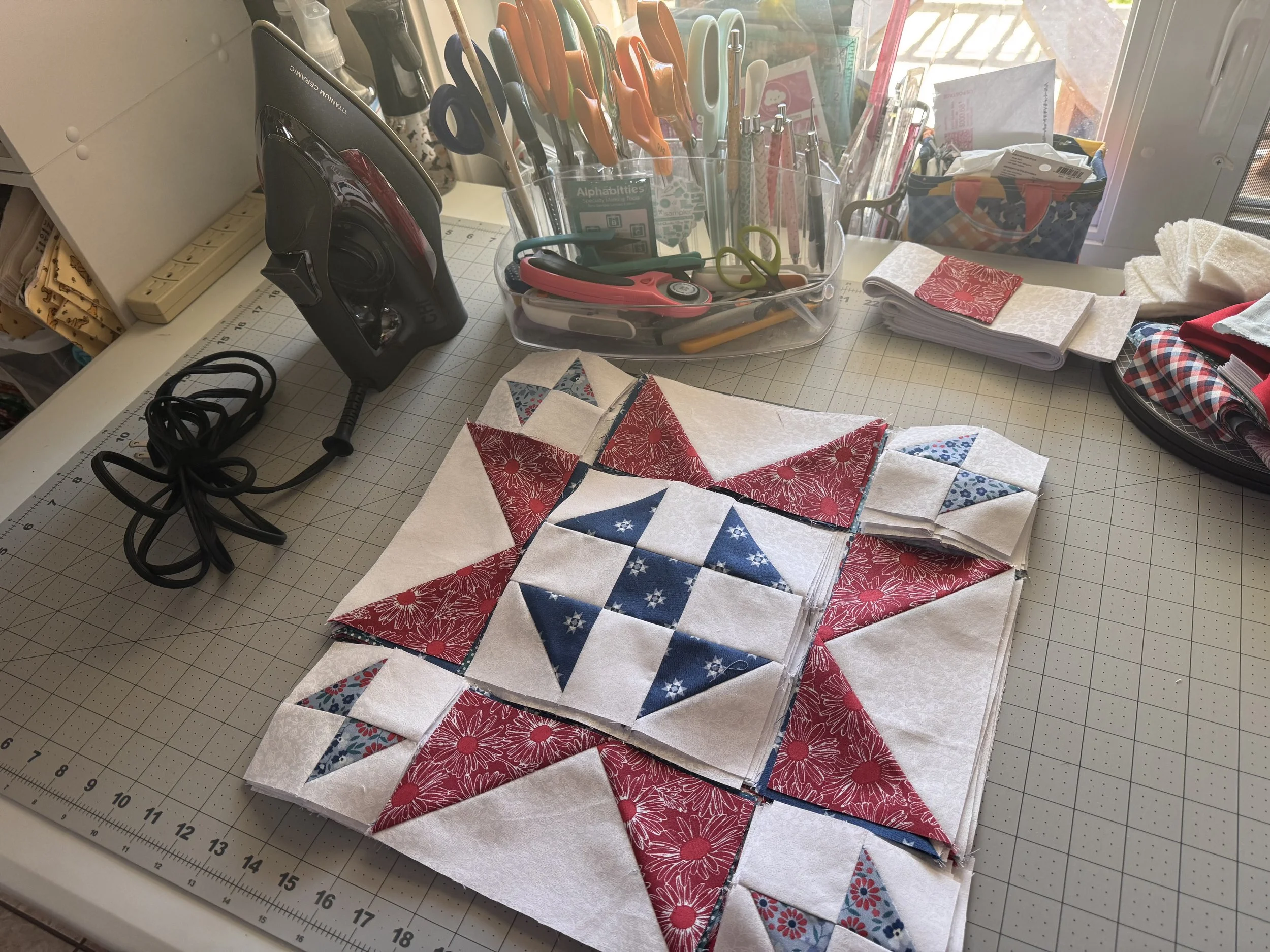
10 Things I Wish Someone Had Told Me Before I Started Sewing
I bought a sewing machine, used it twice, packed it away for fifteen years, and had no idea how much it would eventually change my life. Here are ten things I wish someone had known to tell me before I started sewing.
If you'd told me ten years ago that I'd eventually own more fabric than any reasonable person needs, spend hours debating thread choices, and launch a quilting blog, I would have laughed.
Mostly because my sewing machine was sitting in a closet.
For fifteen years.
I bought my first sewing machine with good intentions. I used it once or twice, packed it away, and didn't touch it again for about fifteen years.
Apparently, I wasn't ready.
Then one day I pulled it back out.
What I expected was a hobby.
What I got was a full-blown obsession, an education, a creative outlet, countless hours of enjoyment, enough fabric to insulate a small house, and a hobby that has taught me far more about myself than I ever expected.
Looking back, here are ten things I really wish someone had told me before I started sewing.
1. THIS HOBBY IS WAY MORE ADDICTIVE THAN ANYONE ADMITS
People talk about sewing like it's a hobby.
A hobby is collecting stamps.
A hobby is occasionally playing golf.
Sewing is more of a lifestyle choice.
At first, you'll make one project.
Then another.
Then you'll start looking at furniture and thinking, I could recover that.
You'll walk through stores evaluating curtains by construction quality.
You'll find yourself inspecting handbags to figure out how they were assembled.
You stop seeing objects and start seeing patterns.
There should probably be a warning label on sewing machines.
Caution: May result in complete obsession.
2. SAVING MONEY IS NOT USUALLY HOW THIS WORKS
I distinctly remember thinking sewing would save me money.
That's adorable.
Technically, yes, sewing can save money.
In the same way that buying a fishing boat can save money on fish.
You'll start with a machine.
Then you'll need fabric.
Then better scissors.
Then a rotary cutter.
Then a cutting mat.
Then rulers.
Then thread.
Then specialty feet.
Then storage containers for all the supplies you now apparently own.
Before long, you've invested enough money that you're explaining purchases using phrases like:
"Well, technically I needed it."
And honestly?
Most of us are perfectly okay with that.
3. FABRIC HAS A MYSTERIOUS ABILITY TO REPRODUCE
Nobody warns beginners that fabric breeding programs apparently exist.
You buy two yards for a project.
Then four.
Then six.
Then a fat quarter bundle follows you home.
Then a jelly roll.
Then an entire fabric collection because you loved one print and somehow convinced yourself the other twenty-six were absolutely necessary too.
Eventually you'll have a fabric stash.
You will stop calling it "too much fabric" and start referring to it as "inventory."
This is normal.
At least that's what we tell each other.
4. YOU WILL DEVELOP STRONG OPINIONS ABOUT THINGS YOU NEVER KNEW EXISTED
Needles.
Pins.
Thread.
Interfacing.
Batting.
Seam allowances.
Fabric grain.
Rotary blades.
You don't know it yet, but someday you'll have an opinion about all of them.
A strong opinion.
Possibly one you're willing to defend.
It's a strange transformation.
One day you're a normal person.
The next you're explaining the difference between a quilting needle and a universal needle to someone who didn't actually ask.
5. SEAM RIPPERS ARE NOT EVIDENCE OF FAILURE
This one would have saved me a lot of frustration.
Beginners think experienced sewists don't make mistakes.
That's adorable too.
Experienced sewists make mistakes all the time.
The difference is they've accepted that mistakes are part of the process.
Sometimes you sew something upside down.
Sometimes inside out.
Sometimes perfectly wrong.
Sometimes you discover your mistake immediately after proudly announcing, "Look how good this is turning out."
The seam ripper isn't proof you're bad at sewing.
It's proof you're sewing.
In fact, if your seam ripper is buried in a drawer, I'm going to assume you're either a beginner or a liar.
6. PRESSING AND IRONING ARE NOT THE SAME THING
I truly did not know this.
I thought ironing was ironing.
Apparently not.
Pressing is one of those things that seems incredibly boring until you realize it can completely change the outcome of a project.
Good pressing can make average sewing look fantastic.
Skipping it can make fantastic sewing look average.
I resisted this lesson.
The lesson won.
7. SEWING WILL TEACH YOU MORE ABOUT YOURSELF THAN YOU EXPECT
This one surprised me.
Sewing isn't just fabric and thread.
It's problem solving.
Patience.
Perseverance.
Creativity.
Humility.
Sometimes all in the same afternoon.
A project will reveal exactly how you handle frustration.
How you react when things don't go according to plan.
How willing you are to try again after you've already tried three times.
There have been projects that taught me more about myself than some self-help books.
Although, to be fair, I was probably listening to a self-help book while making them.
8. AUDIOBOOKS AND SEWING ARE A DANGEROUS COMBINATION
No one prepared me for this relationship.
I started listening to audiobooks years ago, but once sewing entered the picture, my listening hours skyrocketed. There are only so many hours in a day, and apparently I've figured out how to spend most of them either sewing, listening to books, or doing both at the same time.
At this point, I honestly think I should own shares in Audible. My listening stats are ridiculous, my library is enormous, and any fellow book lover would either be impressed or mildly concerned.
You learn new skills.
You hear great stories.
You discover new ideas.
And before long you've created a habit where sewing and learning happen at the same time.
The downside?
You'll occasionally have to rewind because you became completely absorbed in matching seams and have no idea what happened in the last chapter.
Or you'll be listening to a mystery novel and suddenly realize you've spent the last twenty minutes suspecting the wrong character while also sewing two blocks together backwards.
Neither situation is ideal.
9. HANDMADE THINGS CARRY PIECES OF YOUR LIFE
Every project becomes attached to a memory.
A season.
A person.
A stage of life.
I can look at certain quilts and immediately remember where I was emotionally when I made them.
Who they were for.
What was happening in life at the time.
Years later, those stitches still tell the story.
I didn't realize sewing would become a way of documenting life.
But in many ways, that's exactly what it has become.
Every quilt becomes a scrapbook made from fabric instead of paper.
10. SOMETIMES THE RIGHT HOBBY FINDS YOU AT THE RIGHT TIME
For me, sewing wasn't love at first stitch.
I bought the machine.
Used it a couple of times.
Packed it away.
And then ignored it for fifteen years.
Apparently the timing wasn't right.
When I finally pulled it back out, something clicked.
What started as curiosity became creativity.
Creativity became learning.
Learning became confidence.
Confidence became a room full of fabric, a long list of projects, and eventually this blog.
Looking back, I'm glad I didn't force it all those years ago.
Sometimes hobbies come into our lives when we're ready for them.
And sometimes they quietly wait in a closet until then.
FINAL THOUGHTS
If you're just getting started, welcome.
You're about to learn a lot.
You'll make mistakes.
You'll buy fabric you don't technically need.
You'll probably lose your scissors at least once a week.
You'll discover that bobbins are always empty at the worst possible moment.
You'll start referring to fabric purchases as "investments."
And you'll eventually reach the point where non-sewing people ask, "Do you really need more fabric?" while sewists immediately respond, "What did you buy?"
And somewhere along the way, you'll create something with your own two hands that makes you step back and think:
"I made that."
That's the moment that keeps us coming back.
Not because every project turns out perfectly.
Trust me, they don't.
But because sewing teaches us that mistakes can be fixed, skills can be learned, and creativity grows every time we sit down and try again.
Even if that creativity eventually takes over an entire room of the house.
And honestly?
I wouldn't have it any other way.
~Chris
Well… This Happened.
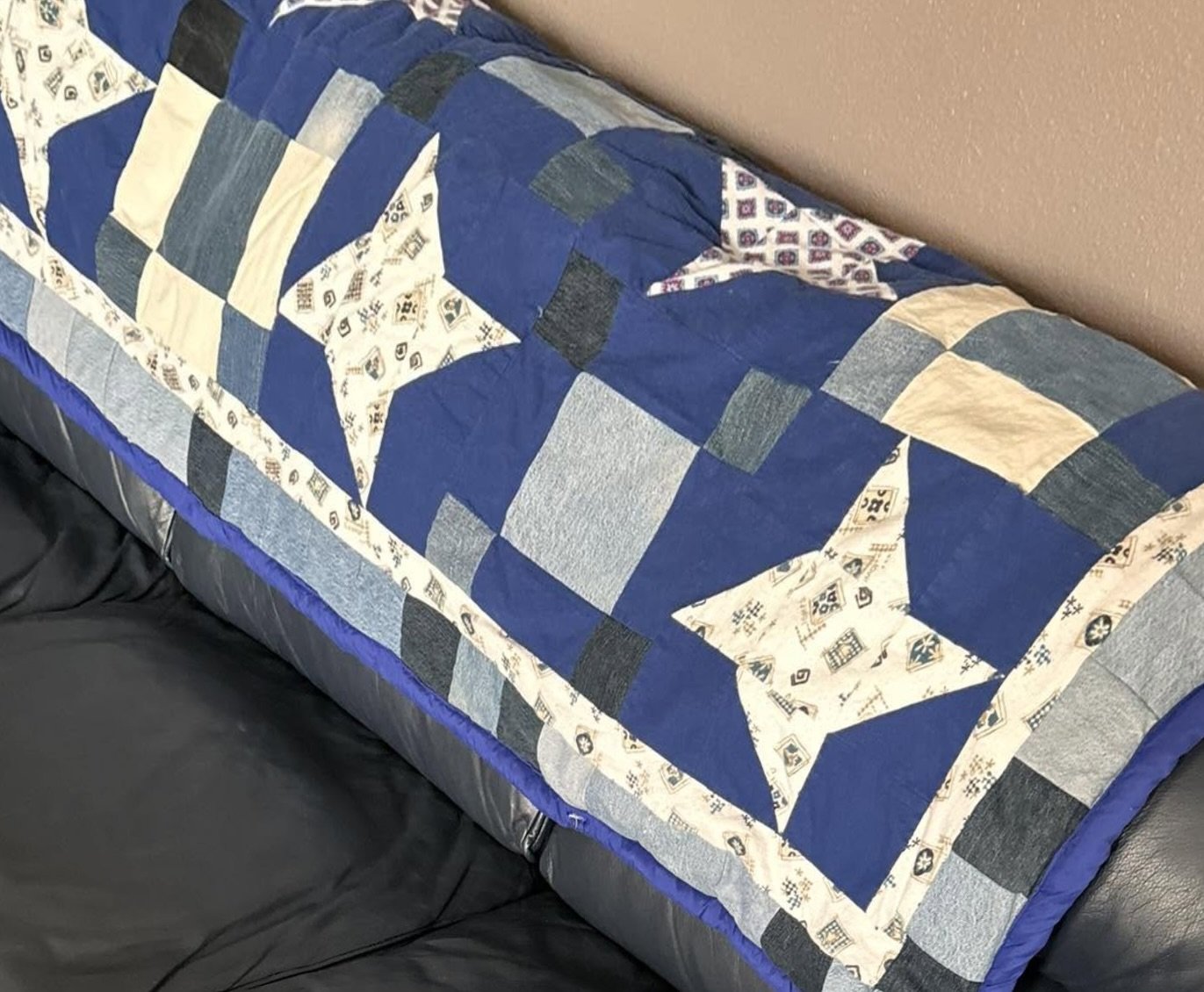
The very first quilt made, using old jeans and scrap fabric from my mother in law.
Welcome to Chris Cross Quilts and More.
Or, as I like to call it, the place where a perfectly reasonable adult somehow developed an unhealthy relationship with fabric.
If you bought fabric 5 years ago for a project you haven’t started yet, hidden another new fat quarter bundle from your spouse, or found yourself explaining why you absolutely needed another shade of blue, you’re among friends here.
A few years ago, I didn’t sew.
Not at all.
I wasn’t raised quilting. I didn’t grow up making my own clothes. I wasn’t one of those people who inherited generations of sewing wisdom or knew what a quarter-inch seam allowance was.
Then one day I decided to learn.
And what started as a simple project quickly turned into a full-blown obsession.
You know how some people collect shoes? I also collect shoes, but that's a whole different story, because I also hate wearing shoes....
I collect fabric.
And rulers.
And thread.
And patterns.
And projects that seemed like a great idea at 11:00 p.m.
Four years later, sewing has become one of my favorite things in the world. It challenges me, frustrates me, teaches me patience, occasionally teaches me new vocabulary when something goes wrong, and somehow keeps pulling me back for more.
So why start a blog? (Aside from simply attempting to embarrass my kids that is).
Because if there’s one thing I’ve learned, it’s that sewing isn’t really about fabric. (If you’re just getting started, check out my post on 10 Things I Wish Someone Had Told Me Before I Started Sewing)
It’s about creating something with your own two hands.
It's about community, friendship and shared lives.
It’s about learning a skill that people have been passing down for generations.
It’s about making gifts that become family treasures.
It’s about fixing things instead of throwing them away.
It’s about creativity, problem-solving, and occasionally staring at a tangled bobbin while questioning your life choices.
Most of all, it’s about the stories.
Every quilt has a story.
Every project teaches something.
Every sewer (sewist) has at least one disaster they can laugh about later.
(If you’ve never sewn a project together upside down, inside out, or backwards, you’re either lying or you’ve been sewing for approximately twelve minutes.)
This little corner of the internet will be a place where we talk about all of it.
The successes.
The mistakes.
The projects.
The tools.
The history of sewing and quilting.
The things that work.
The things that definitely do not work.
I’ll share tutorials, tips for beginners, projects I’m working on, things I’m learning, and probably a few stories that begin with, “So there I was, and this seemed like a good idea at the time…”
Whether you’ve been sewing for forty years or just bought your first machine and are wondering why it’s making that noise, you’re welcome here.
Pull up a chair.
Grab a cup of coffee.
Try not to step on any pins.
Let’s see where this adventure takes us.
And if it turns out to be a misadventure?
Well, those usually make the best stories anyway.
— Chris